
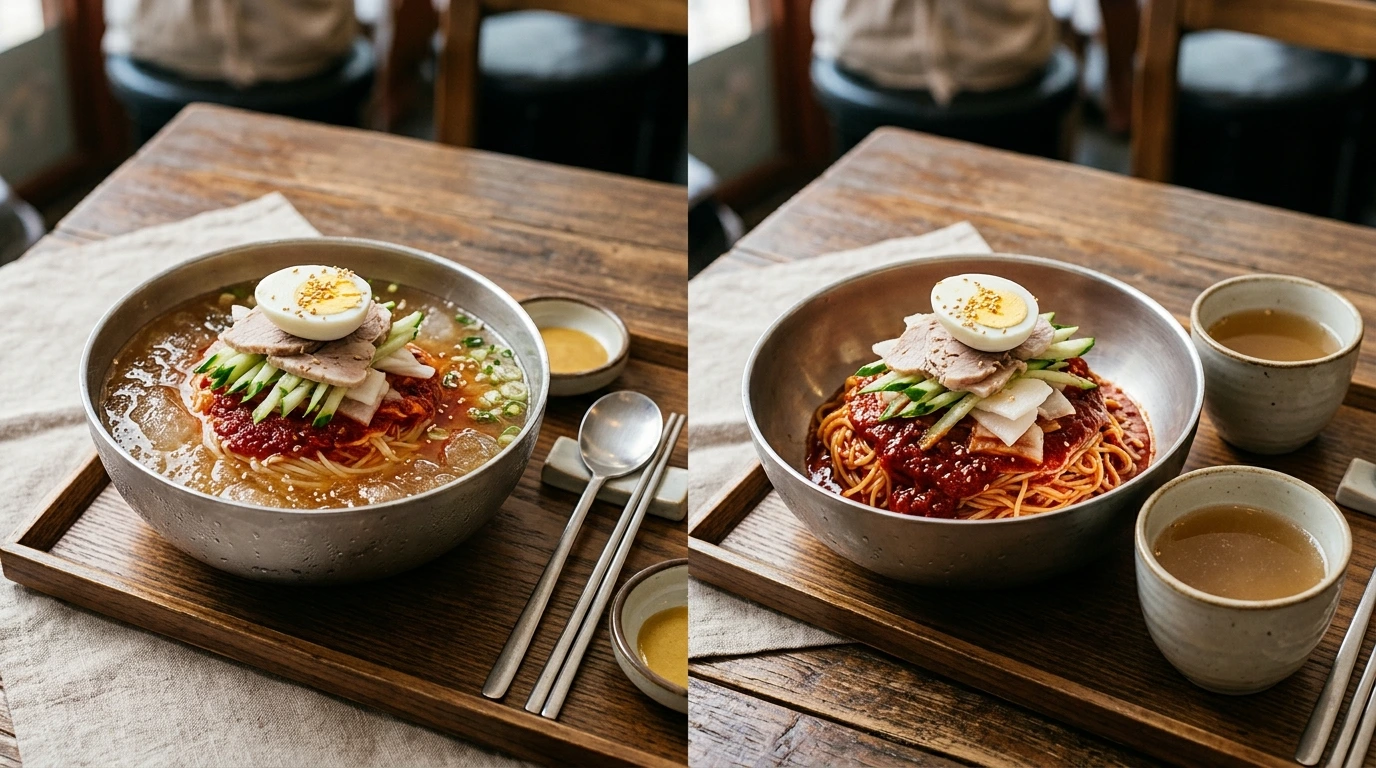
 Whenever the warm coastal breeze sweeps through the bustling streets of Busan, locals and travelers alike seek out a specific culinary comfort. Having spent a significant portion of my life traversing the vast culinary landscapes of North America, from the rich multicultural food scenes of Toronto and Vancouver to the vibrant streets of New York and Los Angeles, I have learned that the best dishes are those born out of necessity and human resilience. Among the many global comfort foods I have experienced, Busan’s Milmyeon, or wheat noodles, holds a profound story that rivals any classic soul food found across the globe. It is a dish that beautifully marries the sorrow of history with the vibrant, spicy, and refreshing flavors of Korean culinary tradition.
A Bowl Born from Resilience: The History of Milmyeon
To truly appreciate a bowl of Milmyeon, one must understand the heavy history carried in its broth. During the Korean War in the early 1950s, countless refugees from the northern regions of the peninsula fled southward, eventually settling in the port city of Busan. Displaced and yearning for a taste of their hometowns, these refugees longed for the familiar, icy bowls of Pyongyang Naengmyeon (cold buckwheat noodles). However, in the midst of the chaos and poverty of war, the traditional ingredients like buckwheat and potato starch were incredibly scarce.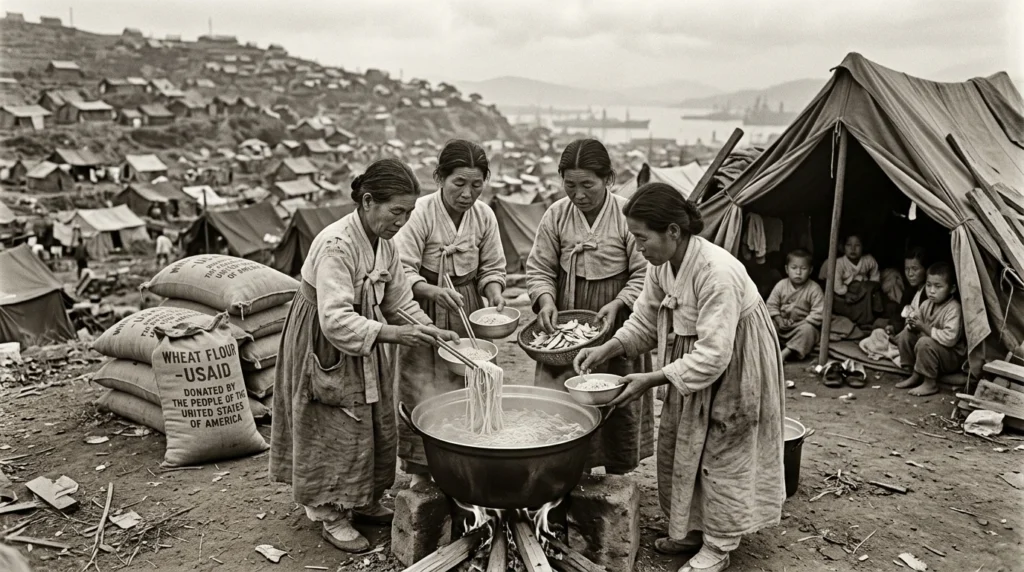
Adaptability became the key to survival. The refugees turned to what was available: wheat flour, which was being distributed as part of relief supplies from the United States military. By mixing this common wheat flour with a small amount of available starch, they managed to pull noodles that mimicked the beloved cold noodles of their past. This ingenious adaptation not only fed the hungry masses but also gave birth to a completely new culinary icon. Over the decades, what started as a desperate substitute transformed into a beloved regional specialty, officially recognized for its historical and cultural significance as one of Busan’s representative local foods.
The Unique Characteristics of Milmyeon: A Symphony of Flavors
If you have ever enjoyed Italian pasta al dente or the delicate chew of Japanese udon, the texture of Milmyeon will be a delightful discovery. The precise blend of wheat flour and starch creates a noodle that is notably softer than traditional chewy Naengmyeon, yet possesses a resilient bounce that is much more satisfying than ordinary wheat somen.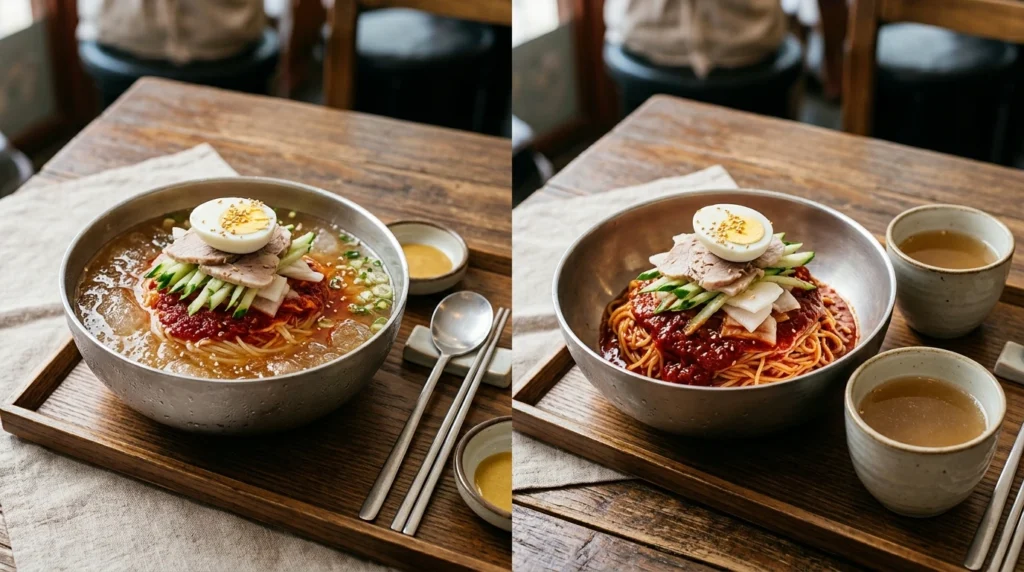
The dish is traditionally served in two primary variations. The first is Mul-milmyeon, where the noodles are submerged in an icy, savory meat broth. What sets it apart is the generous dollop of Dadaegi—a sweet and spicy red chili paste—that you mix into the broth, turning the icy liquid into a vibrant crimson soup. It is topped with thin slices of tender pork, crisp cucumbers, pickled radishes, and a perfectly boiled egg. The contrast of the freezing broth, the fiery chili paste, and the savory meat creates a flavor profile that is electrifying.
The second variation is Bibim-milmyeon, which foregoes the icy broth in favor of a generous coating of the spicy, sweet, and tangy red sauce. It is a richer, more intense flavor experience, often accompanied by a small side cup of warm, deeply savory meat broth to soothe the palate. The balance of spice, sweetness, and savory umami makes it an unforgettable meal.
Best Places to Experience Authentic Milmyeon in Busan
When navigating the vibrant culinary map of Busan, knowing where to find the most authentic Milmyeon is crucial for any food enthusiast. Here are some of the most celebrated local spots that offer a true taste of this historic dish.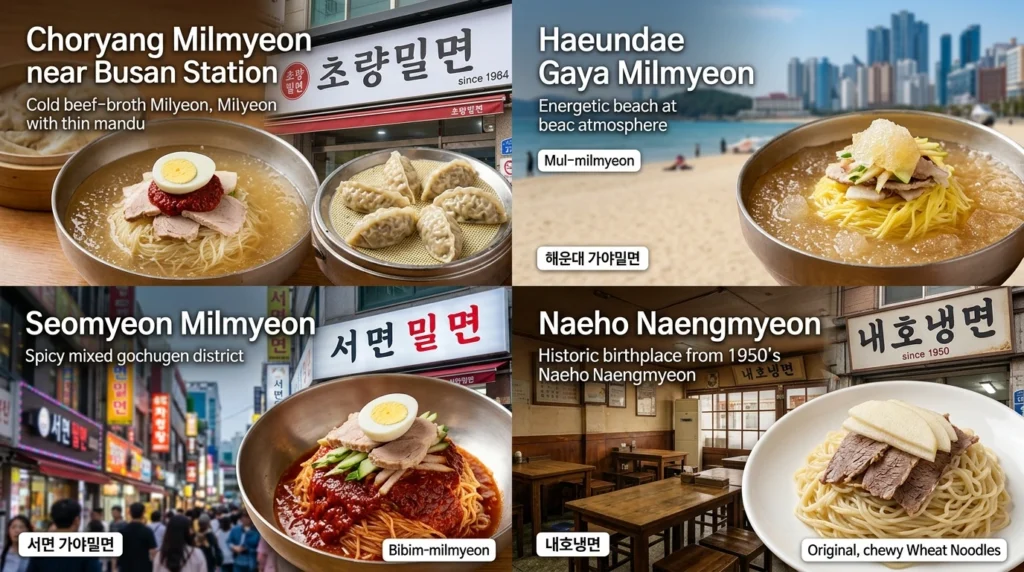
📌 Click the restaurant names below to explore our deep-dive reviews and insider tips!
👉 Choryang Milmyeon and Yeongdong Milmyeon
Located conveniently near Busan Station, these establishments are the perfect first stop for travelers arriving in the city. They offer a highly accessible yet profoundly authentic introduction to the local flavor. The savory dumplings served alongside the cold noodles here are an absolute must-try, providing a warm, juicy contrast to the icy meal.
👉 Haeundae Gaya Milmyeon
Situated near the famous Haeundae area, this spot is a favorite among beachgoers. After a long day under the sun, nothing revitalizes the spirit quite like their signature icy broth. The flavor here strikes a perfect balance, appealing to both purists and those trying the dish for the first time.
👉 Seomyeon Milmyeon
Nestled in the bustling, energetic district of Seomyeon, this restaurant continuously draws a lively crowd of younger locals and tourists. The vibrant atmosphere of the neighborhood perfectly complements the energetic, spicy kick of their famous Bibim-milmyeon.
👉 Naeho Naengmyeon
For those looking to taste history itself, this establishment is the absolute pinnacle. Founded by a refugee from the north who settled in Busan, it is widely considered the original birthplace of Milmyeon. Eating here is not just a meal; it is a direct connection to the resilience and culinary ingenuity of the 1950s.
💡 Finished your refreshing cold noodles? Now it’s time to warm your soul with Busan’s other legendary comfort food!
FAQ
What exactly is Milmyeon?
Milmyeon is a traditional cold noodle dish from Busan, South Korea, made primarily from a mixture of wheat flour and starch, served either in an icy meat broth or mixed with a spicy red sauce.
How is Milmyeon different from Naengmyeon?
While Naengmyeon uses buckwheat or potato starch making the noodles very tough and chewy, Milmyeon uses wheat flour, resulting in a noodle that is softer and easier to bite through.
Is Milmyeon a spicy dish?
It can be. Mul-milmyeon (with broth) has a spicy paste that you can adjust to your liking, while Bibim-milmyeon is thoroughly mixed in a spicy and sweet sauce, making it noticeably hotter.
Can I eat Milmyeon during the winter?
Absolutely. While it is incredibly popular as a refreshing summer dish to beat the heat, locals enjoy Milmyeon year-round.
What kind of meat is typically served with Milmyeon?
Thin slices of boiled pork are the traditional topping for Milmyeon, adding a rich, savory element to the light and refreshing noodles.
Is Milmyeon vegetarian-friendly?
Typically, it is not. The broth is usually made from boiling beef or pork bones for hours, and the dish is topped with sliced meat.
How do I eat Mul-milmyeon properly?
Use scissors to cut the noodles once or twice for easier eating. Then, thoroughly mix the spicy red paste (Dadaegi) into the icy broth before taking your first bite.
What is the warm broth served before the meal?
Most restaurants will serve a cup of hot, savory meat stock before your cold noodles arrive. It warms the stomach and prepares your palate for the bold flavors of the main dish.
Why was wheat flour used instead of buckwheat?
During the Korean War, traditional ingredients were scarce. Wheat flour was abundant due to relief supplies provided by the US military, leading refugees to adapt their recipes.
Are there dumplings served with Milmyeon?
Yes, many restaurants offer Mandu (Korean dumplings) as a side dish. The hot, juicy pork dumplings pair perfectly with the cold, spicy noodles.
Where is the best place to try Milmyeon in Busan?
Areas near Busan Station (like Choryang Milmyeon) or historical spots like Naeho Naengmyeon are highly recommended for authentic experiences.
Is Milmyeon expensive?
No, Milmyeon remains a very accessible and affordable comfort food, beloved by the working class and tourists alike for its generous portions and reasonable prices.
🎁 The Ultimate Guide to Experiencing Busan Like a Local
Don’t miss out on the authentic flavors and hidden local stories of Busan during your BTS concert trip!
💜 Essential Guide for BTS Concert Attendees