
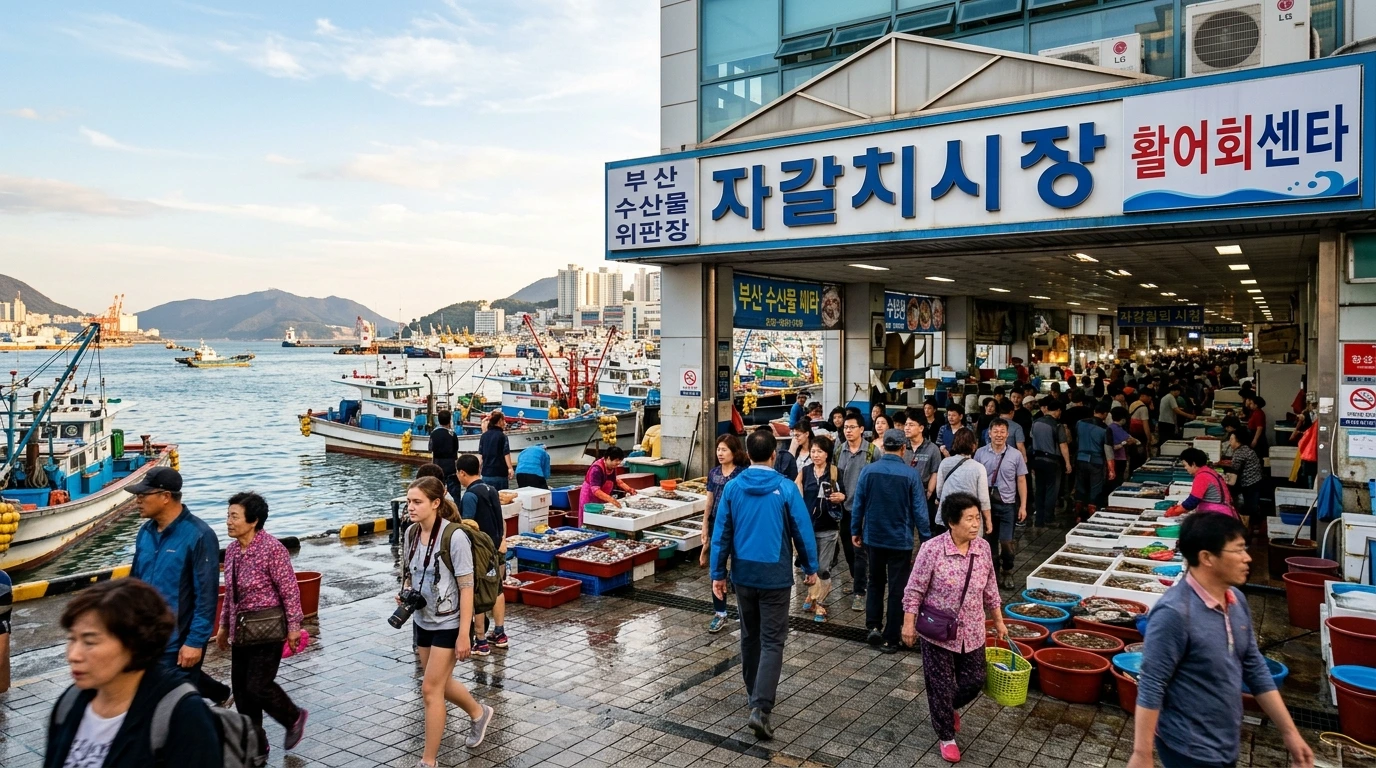
Wandering through bustling coastal markets has always been a favorite pastime of mine. Having spent decades exploring vibrant farmer’s markets and historic seafood piers across North America—from the flying fish of the Pacific Northwest to the historic culinary halls of the East Coast—I have developed a deep appreciation for the way a city’s culture is reflected in its local food hubs. Yet, nothing quite compares to the raw, unpolished, and thoroughly captivating energy of Jagalchi Market in Busan. It is a place where the ocean’s bounty meets the fierce, welcoming spirit of the locals. If you are looking for an authentic culinary adventure, this iconic fish market is an absolute must-visit destination.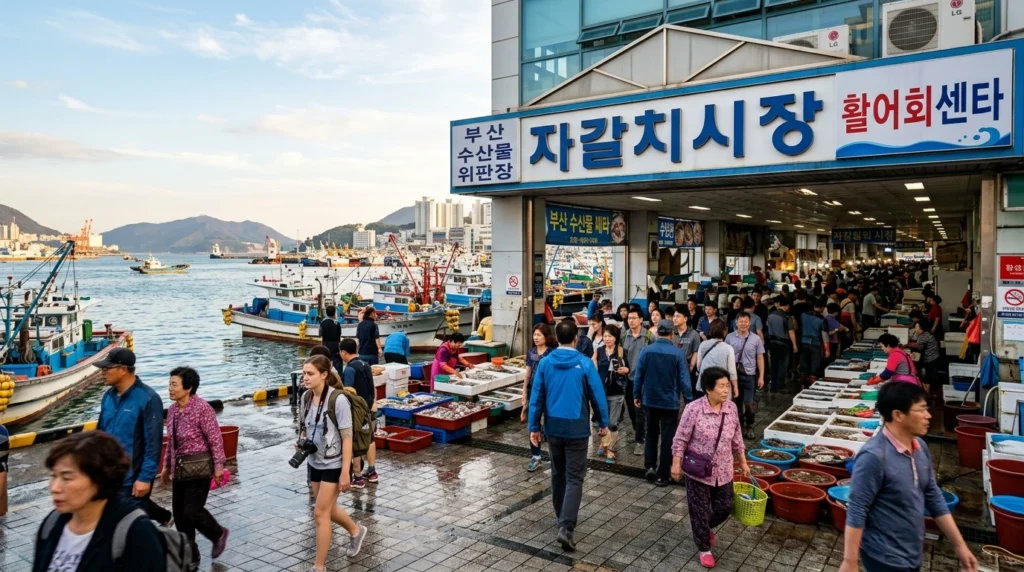
The Heartbeat of Busan: Essential Market Information
Located right at the edge of the sea, Jagalchi Market is incredibly accessible for travelers. It is just a short five-minute walk from either Jagalchi Station or Nampo Station. This prime location makes it incredibly easy to link your seafood tour with other famous nearby attractions like the Bupyeong Kkangtong Market, BIFF Square in Nampo-dong, and Yongdusan Park.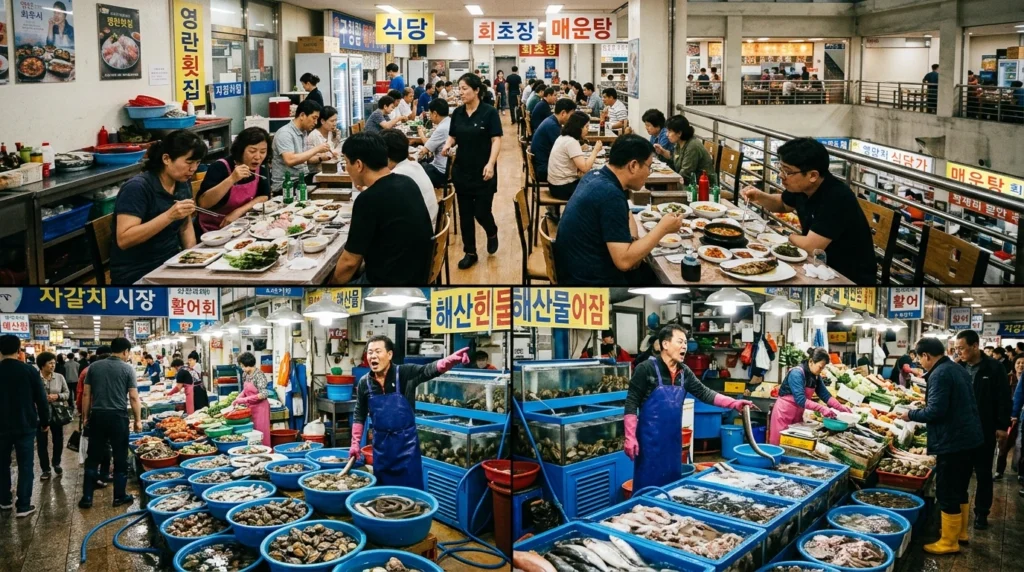
The market operates from the early hours of the morning, opening at 5:00 AM and closing around 10:00 PM, though it is best to enter by 9:00 PM if you plan to eat. Keep in mind that the market is closed on the first, third, and fifth Tuesdays of every month. For those driving, parking inside the main building costs 700 KRW per 10 minutes, with a daily maximum of 21,000 KRW. However, if you purchase seafood or dine at the market, you can receive a parking voucher good for up to two hours. A great local tip for budget-conscious travelers is to use the nearby Jagalchi Public Parking Lot, which is slightly cheaper at 500 KRW per 10 minutes.
The Two-Step System: From Tank to Table
One of the most exciting aspects of Jagalchi Market is its intuitive, interactive dining system that allows you to see exactly what you are getting. The process is divided into two distinct steps that make for a memorable culinary journey.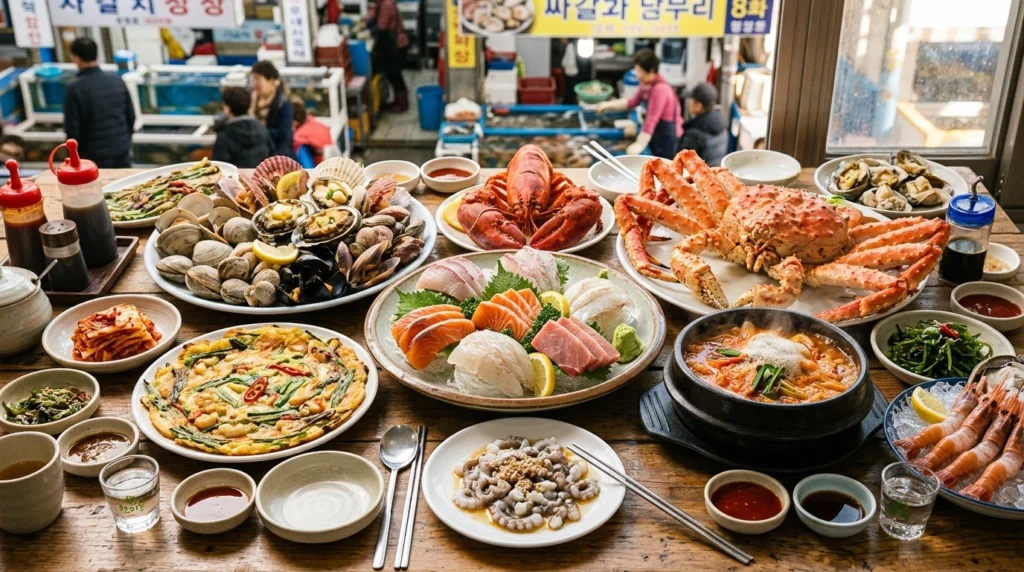
First, you explore the ground floor, which is a sprawling wet market packed with hundreds of vendors. Here, you can browse an endless array of live fish, abalone, shellfish, and eels. The vendors are passionate, and the sheer variety of marine life is staggering. You simply pick the freshest catch that catches your eye and purchase it directly from the merchant.
Next, you take your freshly purchased seafood up to the second floor, which houses a massive dining area. For a small “table setting fee,” the restaurant staff will expertly prepare your seafood—whether sliced raw for sashimi, grilled, or steamed—and serve it with an array of side dishes. If you prefer a more straightforward dining experience, you can always skip the first floor, head straight to one of the second-floor restaurants, and order directly from their menu.
A Feast of Ocean Flavors: What to Eat
The culinary offerings at Jagalchi are as diverse as the ocean itself. For lovers of raw seafood, the fresh sashimi is a revelation. Depending on the season, you might also find delicacies like the incredibly sweet Dokdo shrimp, massive snow crabs, king crabs, and steamed lobsters sold at market prices.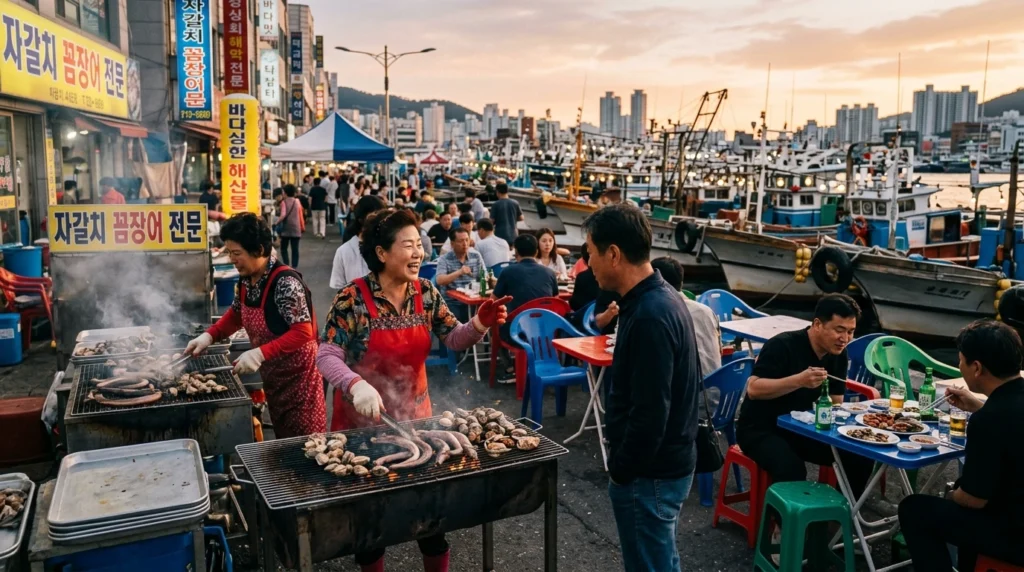
For international visitors looking for a unique culinary challenge, trying “Sannakji” (live octopus) is highly recommended. The freshly prepared tentacles are served while still squirming, offering a fascinating texture and a burst of sesame oil flavor that you will not soon forget.
If raw food is not your preference, step just outside the main building to the outdoor stalls and alleyways. Here, the air is thick with the mouthwatering aroma of grilled seafood. Hagfish (꼼장어), grilled abalone, and assorted shellfish are local favorites. The pan-fried seafood pancakes and spicy fish stews (Maeuntang) serve as the perfect side dishes to complete your coastal feast.
The Local Vibe: Sights, Sounds, and Sea Breezes
Beyond the food, the true magic of Jagalchi lies in its atmosphere. The outdoor street stalls lining the waterfront offer a sensory overload in the best way possible. The rhythmic sounds of the Busan dialect, the energetic calls of the vendors, and the constant flow of fresh catches arriving from the boats create a distinctly rugged and vibrant local vibe.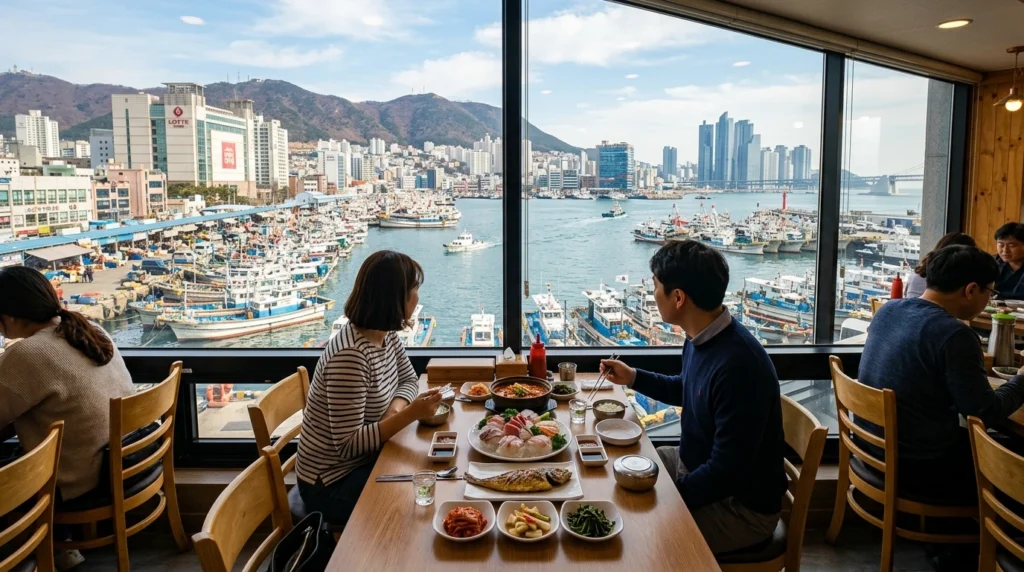
When you dine on the second floor, try to grab a window seat. Eating incredibly fresh seafood while looking out over the Busan harbor and the docked fishing vessels elevates the entire experience, perfectly marrying the visual and the gustatory.
After your meal, take a stroll to the Jagalchi Cruise Plaza located just behind the main building. It is a fantastic spot to breathe in the salty sea breeze, take a few memorable photos with the ocean backdrop, and digest your incredible meal while soaking in the maritime charm of the city.
FAQ
What is the best time of day to visit Jagalchi Market?
The market is lively throughout the day, but visiting in the late morning to early afternoon ensures all stalls are fully operational and you can enjoy a fantastic lunch.
Is it easy to communicate with vendors if I don’t speak Korean?
Yes, many vendors are used to international tourists. Pointing, using simple gestures, and using a translation app on your phone will work perfectly fine.
Do I have to buy seafood on the first floor to eat on the second floor?
No, you do not have to. You can easily go straight to the second-floor restaurants and order directly from their menus without buying from the wet market below.
Are credit cards accepted at the market stalls?
Most indoor stalls and restaurants accept credit cards, but it is always a good idea to carry some Korean Won (cash) for smaller outdoor vendors or street food.
What is the “table setting fee” (Chojang fee)?
It is a small per-person charge applied by the second-floor restaurants for preparing the seafood you bought downstairs and providing side dishes, sauces, and seating.
Is the market wheelchair and stroller accessible?
The main indoor building is modern and equipped with elevators, making it accessible. However, the outdoor alleyways can be crowded and wet, which might be a bit challenging to navigate.
What should I wear when visiting the market?
Wear comfortable, non-slip shoes. The floors in the wet market area on the first floor are constantly washed down and can be quite slippery.
Is Sannakji (live octopus) safe to eat?
Yes, it is a common and safe local delicacy. Just make sure to chew thoroughly before swallowing, as the suction cups can still be active.
Can I buy dried seafood to take home?
Absolutely. There are designated sections in and around the market selling dried fish, seaweed, and salted seafood (Jeotgal) which make great culinary souvenirs.
How do I know if I am getting a fair price?
Prices for standard fish are generally uniform across the market. For luxury items like king crab, it is best to ask a few different vendors to compare the daily market rate.
Is there a place to sit outside and enjoy the view?
Yes, the Jagalchi Cruise Plaza behind the building offers open space with benches where you can sit and enjoy the ocean view and sea breeze.
Are there options for people who do not eat seafood?
While the market is heavily focused on seafood, some restaurants may offer basic vegetable side dishes or you can find plenty of non-seafood street food in the nearby Bupyeong Kkangtong Market.
🗺️ Open Direct Navigation
(Note: Google Maps may be inaccurate in Korea. Please use this native app!)
🎁 The Ultimate Guide to Experiencing Busan Like a Local
Don’t miss out on the authentic flavors and hidden local stories of Busan during your BTS concert trip!
💜 Essential Guide for BTS Concert Attendees