
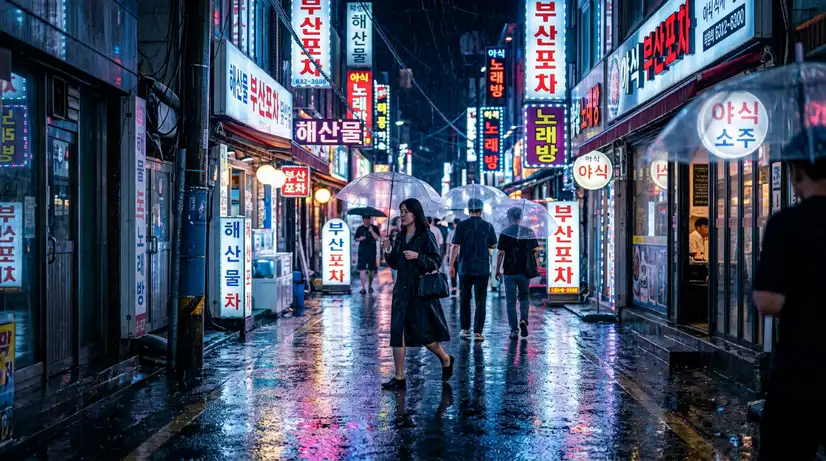
There is a particular kind of magic that settles over a coastal city when the summer clouds roll in. In Busan, the rain isn’t just a weather event; it’s a shift in the city’s soul. The vibrant neon lights of Seomyeon reflect off the slick asphalt, the salty air from the East Sea grows thick and evocative, and the rhythmic sound of raindrops hitting the ocean creates a cinematic backdrop that most travelers rarely get to experience. While many associate Busan with sun-drenched beaches and surfing, a rainy day Busan offers a sophisticated, cozy, and deeply cultural alternative that might just become the highlight of your trip.
If you find yourself caught in the Busan summer rain, don’t retreat to your hotel room. Instead, lean into the mood. This guide is designed for those who want to navigate the city’s best indoor sanctuaries, from sky-high observatories to the steaming bowls of comfort food that define the local identity. Let’s explore how to turn a drizzly forecast into an unforgettable urban adventure.
The Art of the Urban Sanctuary: Premium Spas and Wellness
When the humidity of the summer rain hits, there is no better antidote than the refined heat of a traditional Korean spa, elevated to world-class standards. Busan is home to some of the most luxurious wellness centers in Asia, offering a “staycation” vibe that makes you forget the gray skies outside.
Club D Oasis, located within the iconic LCT landmark in Haeundae, is the pinnacle of modern relaxation. As a designated “healing hot spring,” it utilizes mineral-rich waters that are as therapeutic as they are relaxing. Imagine soaking in an indoor infinity pool where the water temperature is perfectly calibrated, watching the mist dance over the Haeundae shoreline through floor-to-ceiling glass. The facility bridges the gap between a high-end water park and a traditional Jjimjilbang. On a rainy day, the outdoor foot bath—protected yet open to the fresh, damp air—provides a sensory experience that grounds you in the coastal landscape.
If you are looking for something closer to the city center, Centum City Spa Land is a legendary destination for Busan indoor travel. Located within the Shinsegae Centum City department store (one of the largest in the world), Spa Land is a sprawling complex featuring 22 different tubs and 13 distinct themed saunas. From the Roman Room to the Finnish Sauna, it’s a global tour of wellness. The convenience of being attached to a massive shopping complex means you can transition from a restorative soak to a gourmet meal or a cinema visit without ever needing an umbrella.
Cultural Refuges: Where Art and Industry Meet
For those who find inspiration in the quiet pitter-patter of rain, Busan’s art scene offers a sophisticated retreat. The city has a knack for repurposing its industrial past into avant-garde cultural spaces, and these venues truly shine when the weather turns somber.
The Museum of Contemporary Art Busan (MOCA), situated on the eco-friendly island of Eulsukdo, is an architectural marvel in itself. The “Vertical Garden” on its exterior—a living wall of plants—looks particularly lush and vibrant under a rainy sky. Inside, the museum hosts experimental and thought-provoking exhibitions that often utilize digital media and large-scale installations. The spacious, minimalist halls provide a peaceful environment to reflect on modern aesthetics while the rain washes over the island’s marshes outside.
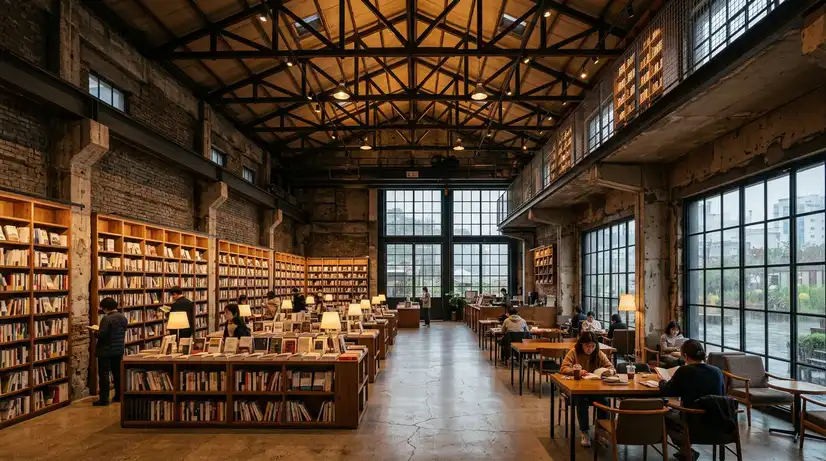
Equally captivating is F1963. Once a wire factory owned by Kiswire, it has been transformed into a sprawling “eco-friendly multicultural space.” This is the ultimate rainy-day hangout for the culturally curious. You can lose yourself in the endless aisles of the Yes24 flagship bookstore, admire contemporary art in the gallery, or grab a world-class coffee at Terarosa Coffee. The industrial-chic aesthetic—exposed steel beams, high ceilings, and concrete floors—complements the moody atmosphere of a rainy day perfectly. It’s the kind of place where you can spend hours reading, writing, or simply soaking in the creative energy of the city.
Navigating the Markets: A Feast for the Senses Under Cover
One might think a market visit is off the table during a downpour, but Busan’s traditional markets are remarkably resilient. Many of the city’s most famous hubs are equipped with modern arcade roofing, ensuring that the bustling trade and mouth-watering aromas continue regardless of the weather.
Bupyeong Kkangtong Market is a must-visit. Known historically as “Tin Can Market” due to the surplus of canned goods sold after the Korean War, it is now a culinary hotspot. The arcade covers the main walkways, keeping you dry as you navigate between stalls selling everything from vintage clothing to imported snacks. As the sun sets, the market transforms into the Bupyeong Kkangtong Night Market. The smell of sizzling pans and the steam rising from giant vats of broth create an intoxicating environment. Here, you can try “Kkang-dwae-hu”—a local phenomenon of deep-fried pork galbi that offers a crunch more satisfying than any chicken you’ve ever had.
Just a short walk away is the legendary Jagalchi Market. While the outdoor stalls are quintessential Busan, the massive modern building houses a pristine indoor seafood market on the first floor. You can watch the “Jagalchi Ajummas” expertly prep the day’s catch and then head to the second floor to have your selection cooked fresh for you. Watching the rain lash against the windows of the market while you enjoy a steaming platter of grilled fish or a spicy seafood stew is a core Busan experience.
The Culinary Soul: Busan Comfort Food for Rainy Days
In Korean culture, there is a deep-seated emotional connection between the sound of rain and the sound of food frying in a pan. The pitter-patter on the roof is said to mimic the sizzle of Pajeon (green onion pancakes) hitting hot oil. Consequently, a rainy day Busan itinerary is incomplete without a dedicated food tour focusing on “soul food.”
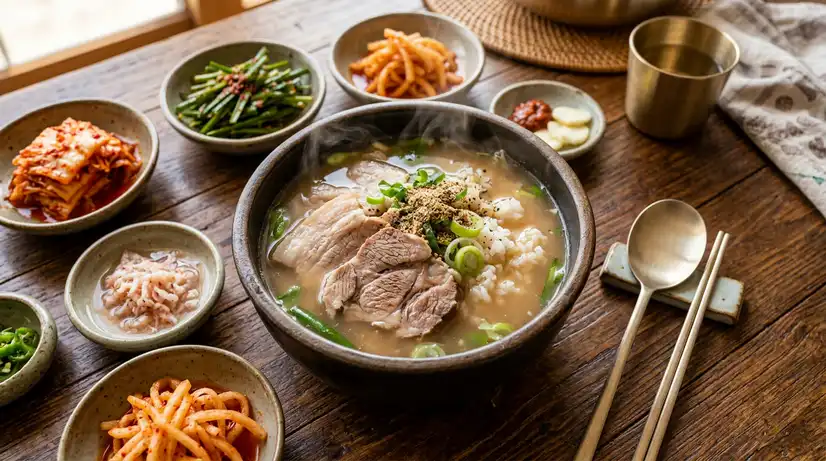
Dwaeji-gukbap (pork rice soup) is the undisputed champion of Busan’s culinary identity. This hearty, milky-white broth, loaded with tender slices of pork and topped with a handful of chives and a dollop of spicy paste, is the ultimate “hug in a bowl.” On a damp, humid summer day, the heat of the soup helps regulate your body temperature and provides a deep sense of satisfaction. Local favorites near Busan Station, such as Bonjeon Dwaeji-gukbap, often have lines out the door even in the rain—a testament to the soup’s restorative power.
For those seeking the traditional rainy-day pairing, head to the “Pajeon Alleys” in Nampo-dong or near the universities. A crispy, seafood-laden Haemul Pajeon paired with a bowl of chilled Makgeolli (traditional rice wine) is the classic way to wait out a storm. The creaminess of the Makgeolli cuts through the richness of the fried pancake, creating a balance that is pure bliss. Don’t forget to try Mool-tteok—chewy rice cakes simmered in savory fish cake broth. It’s a simple, warm snack that tastes significantly better when the sky is gray.
Sky-High Views and Panoramic Cafes
The rain brings a different perspective to Busan’s geography. The mountains are often shrouded in mist, and the sea takes on a powerful, darker hue. To appreciate this scale without getting wet, head to the clouds.
Busan X the Sky, located on the upper floors of the Haeundae LCT Landmark Tower, is the second-highest observatory in Korea. From the 100th floor, the view of the coastline during a rainstorm is ethereal. You can watch the clouds move across the city from above, a perspective that makes you feel entirely removed from the hustle and bustle below. It also houses the world’s highest Starbucks, where you can sip a latte while literally sitting inside a cloud.
If you prefer to stay closer to the ground but still want the view, Busan’s cafe culture is your best friend. Areas like Yeongdo and Gijang are famous for massive, multi-story cafes with oversized windows designed specifically for ocean viewing. Cafes like EL 16.52 or Suwol Gyeonghwa offer “theater-style” seating where every chair faces the sea. Watching the waves crash against the cliffs while you are cocooned in a stylish, climate-controlled space with a pastry and a book is perhaps the most sophisticated way to enjoy a Busan summer rain.
FAQ
Q: Is it easy to get around Busan in the rain?
A: Absolutely. Busan has an excellent subway system that connects most major indoor attractions. Many stations are also connected to underground shopping malls (like the ones in Seomyeon or Nampo-dong), allowing you to walk long distances without going outside.
Q: Does Centum City Spa Land have an age limit?
A: Yes, Spa Land generally allows children over the age of 7 (elementary school age). It is more of a relaxation-focused “adult” spa compared to a family water park.
Q: Are the night markets open if it rains heavily?
A: The Bupyeong Kkangtong Night Market is covered by a high-tech arcade roof, so the stalls usually operate even during rain. However, in cases of extreme weather like typhoons, some vendors may close early for safety.
Q: Which pork soup place is the best for tourists?
A: While “best” is subjective, the area near Busan Station is famous for its “Gukbap Alley.” Bonjeon Dwaeji-gukbap is a safe and delicious bet for first-timers, but don’t be afraid to try any local spot that looks busy.
Q: Is Busan X the Sky worth it if it’s very cloudy?
A: It depends on the vibe you want. If the fog is very thick, visibility might be low, but the experience of being “inside a cloud” is quite unique. Check the live cameras at the ticket desk before heading up.
Q: What should I wear during the summer rain in Busan?
A: Summer rain is warm but humid. Lightweight, quick-dry clothing is best. Sandals with good grip are recommended, as tiled sidewalks can become slippery.
Q: Is the Museum of Contemporary Art Busan free?
A: Most of the permanent and special exhibitions at MOCA Busan are free to the public, though some world-touring exhibitions may require a small fee.
Q: Can I see the ocean from Jagalchi Market’s indoor area?
A: Yes, the building has large windows overlooking the harbor, and there is a rooftop observation deck (some parts are covered) that offers a great view of the Yeongdo Bridge.
Q: What is the most famous “rainy day” drink in Korea?
A: Makgeolli (rice wine) is the go-to drink. For a local Busan twist, try “Geumjeongsanseong Makgeolli,” which is made in the mountains of Busan using traditional methods.
Q: Where can I store my luggage while exploring indoor spots?
A: Major subway stations like Busan Station, Seomyeon, and Haeundae have various sizes of lockers. Most department stores like Shinsegae Centum City also offer luggage storage services for shoppers.