
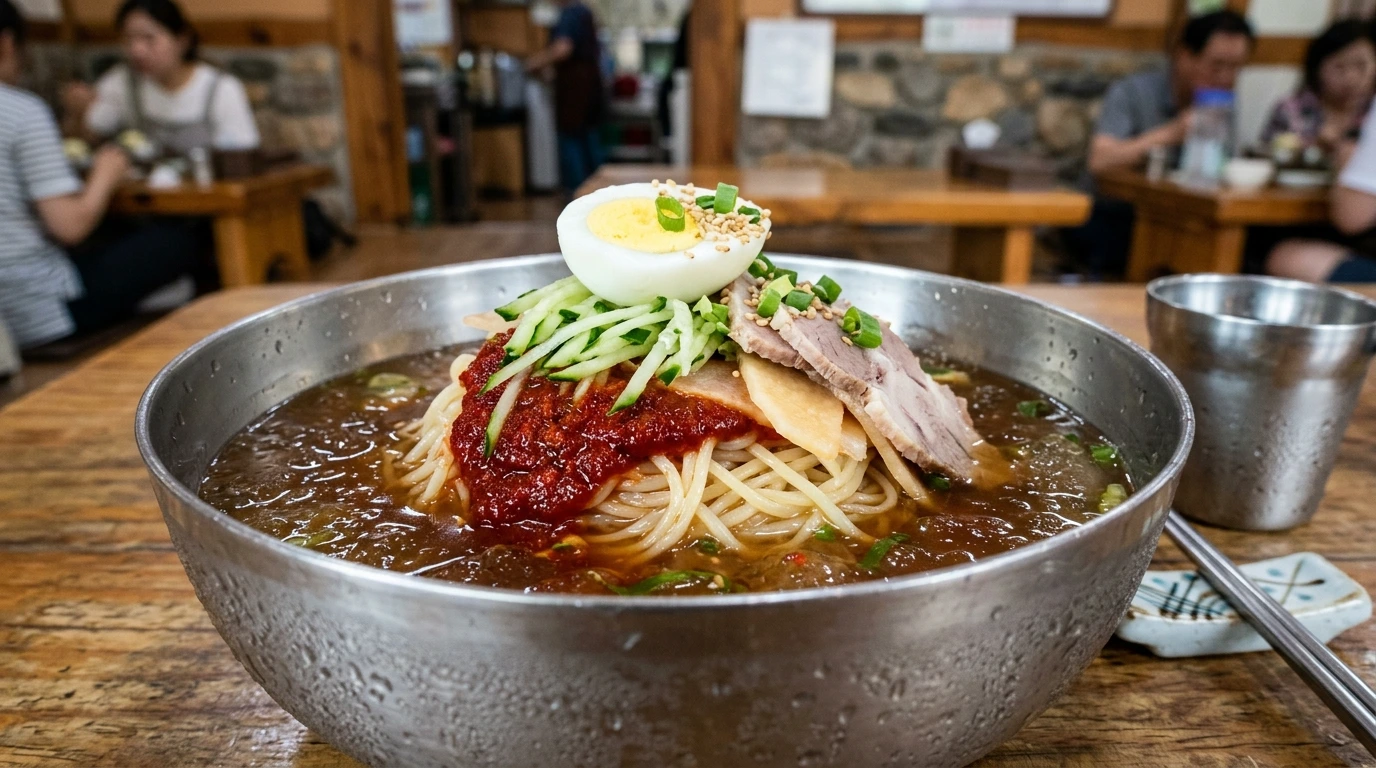
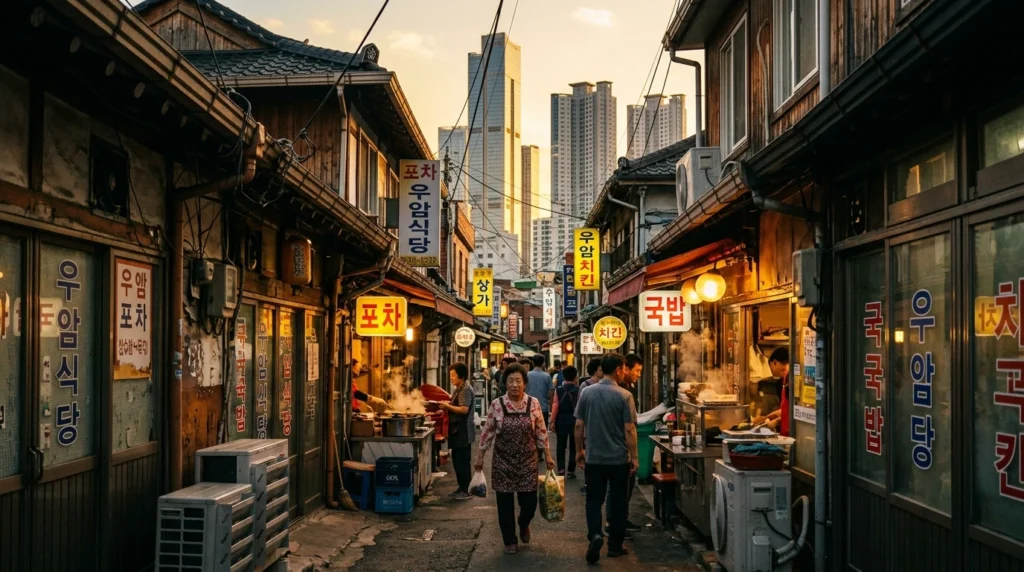
Having explored diverse culinary landscapes across continents and experiencing the vibrant food scenes of North America and Asia, I have come to realize that the most profound and soul-stirring dishes are often born from sheer necessity and resilience. When you wander through the bustling port city of Busan, amidst the modern skyscrapers and trendy cafes, there lies a deep, flavorful history hidden in its narrow alleyways.
Among the myriad of local delicacies, one dish stands out as a true testament to survival, adaptation, and the longing for home: Milmyeon. Taking a journey to the very first restaurant that served this iconic noodle dish is not just about having a meal; it is about stepping into a culinary time machine that transports you straight back to the 1950s.
History & Story
The origin of Busan’s beloved Milmyeon is deeply intertwined with the tragic yet resilient history of the Korean War. The story begins with a humble establishment named “Naeho Naengmyeon,” located in Uam-dong, Nam-gu, Busan. However, the true roots of this legendary restaurant trace back to Heungnam, South Hamgyong Province in North Korea, where a family originally operated a noodle shop called “Dongchun Myeonok.” During the harrowing Heungnam Evacuation, the family fled south as refugees, eventually settling in the unfamiliar southern port city of Busan. Desperate to recreate the taste of their hometown and make a living in a strange land, they inadvertently sparked a culinary revolution.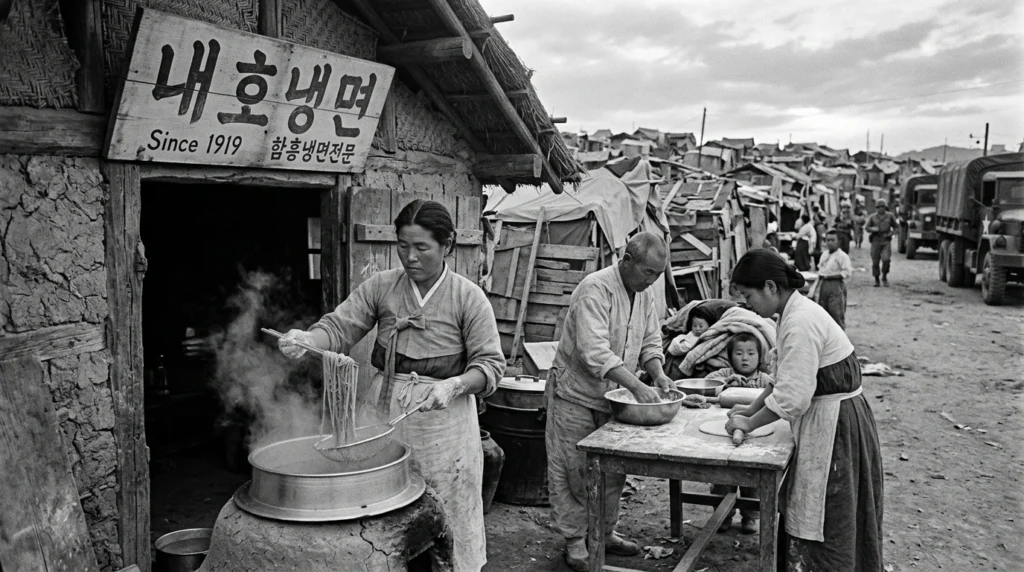
The environment they settled in was far from glamorous. Naeho Naengmyeon first set up shop in what was known as “Somak Village” in Uam-dong. During the Japanese colonial era, this area served as a quarantine station and barracks for cattle that were being exported.
When nearly a million refugees flooded into Busan during the war, these cattle sheds were hastily converted into human shelters. In an era where finding even a dilapidated shack was considered a luxury, living in a converted cow shed was seen as a stroke of luck. It was within this environment of profound sorrow, displacement, and desperate survival that the first bowl of Busan Milmyeon was lovingly prepared, serving as a warm, comforting reminder of a home left behind.
Flavor Style
For the displaced refugees from the north, the craving for their traditional cold noodles (Naengmyeon) was incredibly strong. However, the primary ingredients for authentic northern-style noodles—buckwheat and potato starch—were virtually impossible to find in war-torn Busan. Necessity, being the mother of invention, led to a brilliant adaptation. The refugees turned to the most readily available ingredient at the time: wheat flour, which was widely distributed as relief supplies by the US military and international aid organizations.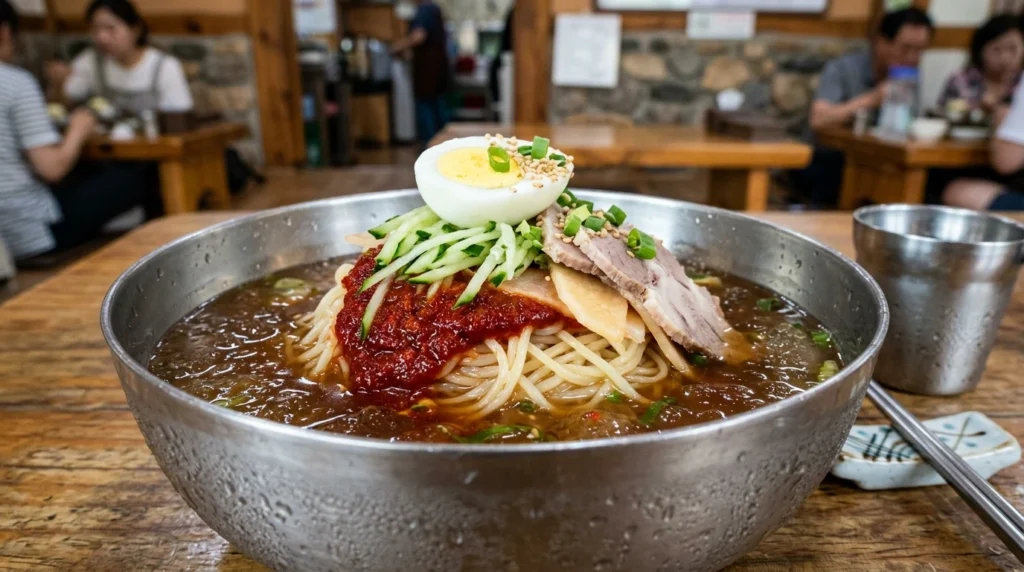
By mixing this relief wheat flour with a small amount of available starch, they managed to pull a noodle that was uniquely soft yet possessed a delightful, chewy bounce, somewhat reminiscent of Jjolmyeon. This inventive noodle was then bathed in a rich, deeply savory meat broth and topped with a fiery, robust North Korean-style spicy paste known as dadaegi.
The result was a brilliant fusion of international relief supplies and traditional Korean culinary heritage. The flavor profile is an unforgettable harmony of savory, sweet, and spicy notes, with a refreshing chill that perfectly combats the humid coastal summers. It is a flavor that carries the weight of history in every slurp, offering a uniquely satisfying texture that sets it apart from traditional buckwheat noodles.
Customer Reviews & Essential Waiting Tips
Today, Naeho Naengmyeon continues to draw massive crowds, beloved by both lifelong locals and curious food enthusiasts from around the globe. Visitors frequently note that eating here is an emotional experience, with reviews often highlighting the deep, complex flavors of the broth and the surprisingly perfect chewiness of the wheat noodles. Food lovers appreciate the unpretentious, nostalgic atmosphere of the restaurant, noting that the taste remains remarkably consistent, untainted by the passage of time or the modernization of the city around it.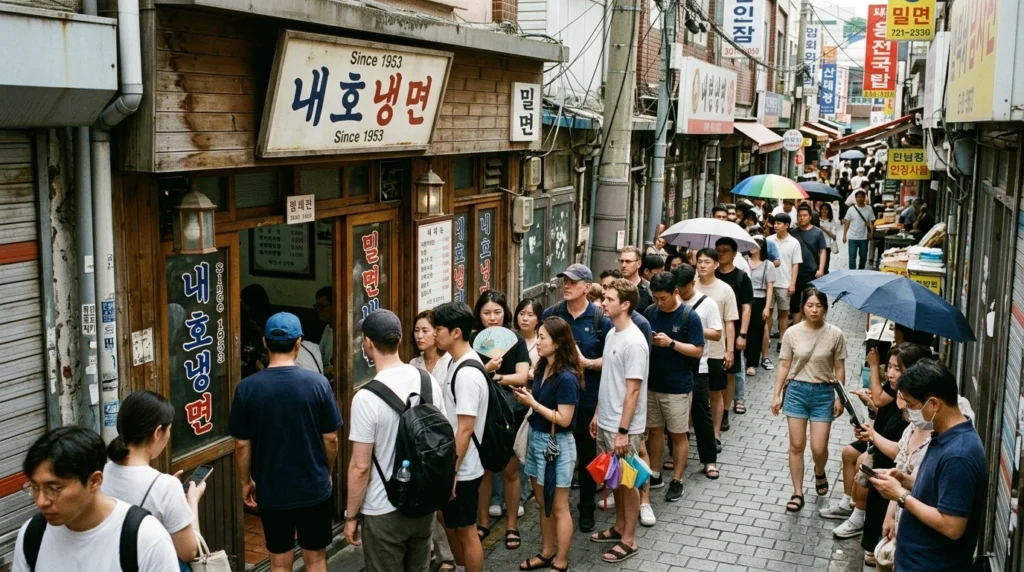
Because this historic gem is still located in its original, narrow alleyway inside the Uam Market, navigating your visit requires a bit of strategy. The space is small, honoring the founder’s wish to remain in the very spot where their story began. Consequently, long lines are a daily occurrence, especially during the sweltering summer months.
To make the most of your visit, it is highly recommended to arrive slightly before the standard lunch or dinner rush. The alleyways are tight, so bringing a large group can make seating difficult; visiting in groups of two or four is ideal. While waiting, take a moment to look around the Uam Market area. The rustic surroundings offer a poignant glimpse into the past, making the wait feel like an integral part of the historical experience rather than a mere inconvenience.
The Signature Highlight
What truly elevates Naeho Naengmyeon from a simple noodle shop to a landmark of immense cultural significance is its status as a “living museum.” Despite the immense success and popularity of their creation, the family has steadfastly refused to relocate to a larger, more modern facility. By preserving the humble, cramped space in the alleys of Uam-dong, they have preserved the spirit of the refugees who built the foundation of modern Busan.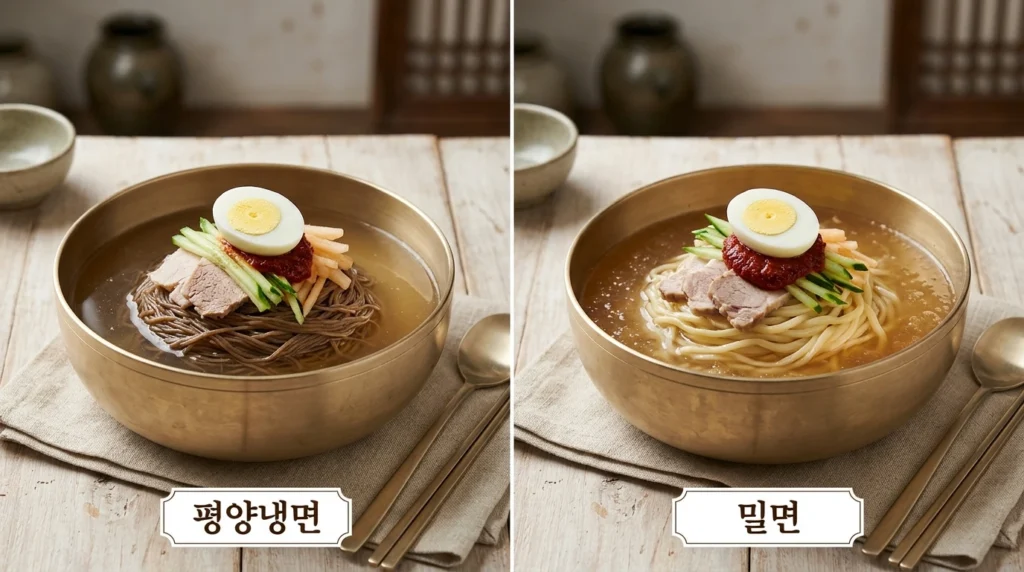
The ultimate signature highlight of dining here is the rare opportunity to taste history in transition. The menu still proudly features the original North Korean-style cold noodles (both the soup-based Mul-naengmyeon and the spicy mixed Bibim-naengmyeon) alongside their historical offspring, the Milmyeon. Food enthusiasts are highly encouraged to order both. By tasting the traditional buckwheat Naengmyeon alongside the wheat-based Milmyeon, you can literally taste the adaptation, comparing the earthly, delicate chew of the original with the robust, elastic bite of the survival dish. It is a side-by-side tasting menu curated by history itself, offering a profound culinary narrative that simply cannot be replicated anywhere else in the world.
💡 Finished your refreshing cold noodles? Now it’s time to warm your soul with Busan’s other legendary comfort food!
FAQ
Q: What exactly is Milmyeon?
A: Milmyeon is a popular noodle dish from Busan made primarily from wheat flour and a bit of starch, served either in a chilled meat broth (Mul-milmyeon) or mixed with a spicy sauce (Bibim-milmyeon).
Q: How is Milmyeon different from traditional Naengmyeon?
A: While traditional Naengmyeon is made primarily from buckwheat or potato/sweet potato starch, Milmyeon is made from wheat flour, resulting in a softer yet distinctively chewy texture.
Q: Why was wheat flour used instead of buckwheat?
A: During the Korean War, buckwheat was scarce in Busan. Refugees adapted by using wheat flour, which was abundant due to US military relief supplies.
Q: Where is the birthplace of Busan Milmyeon?
A: The birthplace is a restaurant called Naeho Naengmyeon, located in the Uam-dong neighborhood of Busan.
Q: Is the original restaurant still in operation?
A: Yes, Naeho Naengmyeon is still operating in its original location within the narrow alleys of Uam Market.
Q: Can I still get traditional Naengmyeon at this restaurant?
A: Absolutely. They serve both their original North Korean-style Naengmyeon and the historically adapted Milmyeon.
Q: What is the historical significance of Somak Village?
A: Somak Village was originally a Japanese cattle quarantine facility that was later converted into emergency housing for Korean War refugees, making it a powerful symbol of survival.
Q: Is the food very spicy?
A: The broth itself is savory and mild, but it is typically served with a spicy paste (dadaegi). You can mix in as much or as little of the paste as you prefer.
Q: When is the best time to visit to avoid long waits?
A: It is best to visit right when they open or during off-peak hours (mid-afternoon) to avoid the long lines, especially during the summer.
Q: Is the restaurant easy to find?
A: It is tucked away inside the Uam Market. While GPS gets you close, you will need to look for the signs and follow the narrow alleyways to find the exact storefront.
Q: What is the atmosphere of the restaurant like?
A: The restaurant is a traditional “nopo” (historic, old shop). It is small, cozy, and unpretentious, offering a highly authentic and nostalgic dining experience.
Q: Why hasn’t the restaurant moved to a bigger location?
A: The owners have kept the restaurant in its original spot to honor the founder’s legacy and to preserve the deep historical connection to the refugee community that started it all.
🎁 The Ultimate Guide to Experiencing Busan Like a Local
Don’t miss out on the authentic flavors and hidden local stories of Busan during your BTS concert trip!
💜 Essential Guide for BTS Concert Attendees