
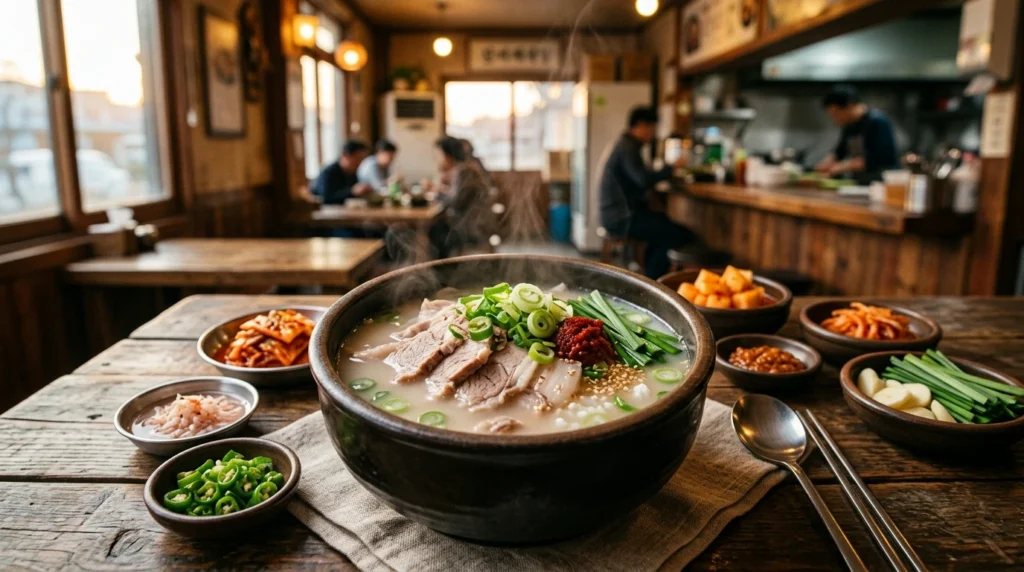
 Whenever you travel to a new city, there is always that one local dish you simply cannot miss. Much like a hearty bowl of chicken noodle soup on a cold winter day or a thick, comforting chowder by the coast, Busan has its own iconic soul food: Dwaeji Gukbap (Pork Soup with Rice). It is a humble, steaming bowl of comfort that tells the story of a city, its people, and their unyielding spirit. Let’s dive deep into the fascinating history and local secrets of this beloved dish, and discover why it remains a must-try for any food lover visiting South Korea’s vibrant southern port city.
Born from Resilience: The History and Origin
Every spoonful of Dwaeji Gukbap carries a profound historical weight. While its roots can be traced back to the late Joseon Dynasty as an economical dish utilizing every part of the pig—a cheaper alternative to beef—it was the Korean War that truly shaped it into the iconic Busan staple we know today.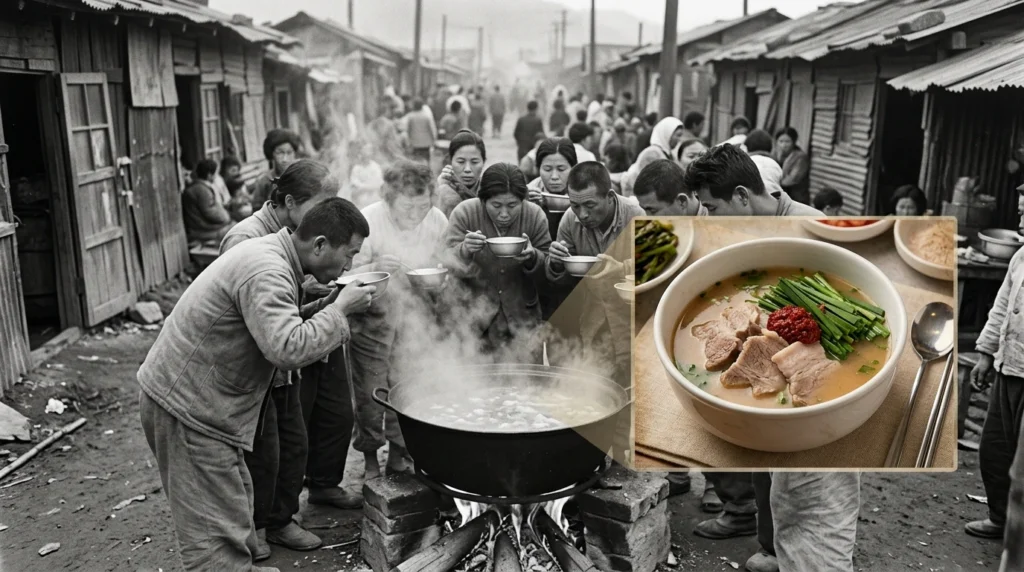
During the war, refugees from all over the country flooded into Busan. Food was extremely scarce. To survive, people began utilizing pork by-products and bones, some of which were sourced from nearby US military bases. By boiling these inexpensive ingredients for hours, they created a nutrient-dense, filling soup that could feed many. After the war, Busan continued to thrive as a bustling port city. The dock workers and local merchants needed a quick, affordable, and energizing meal to sustain their grueling physical labor. Dwaeji Gukbap perfectly fit the bill, cementing its status as the ultimate local fast food and soul food.
The Three Legends: Exploring the Different Styles of Broth
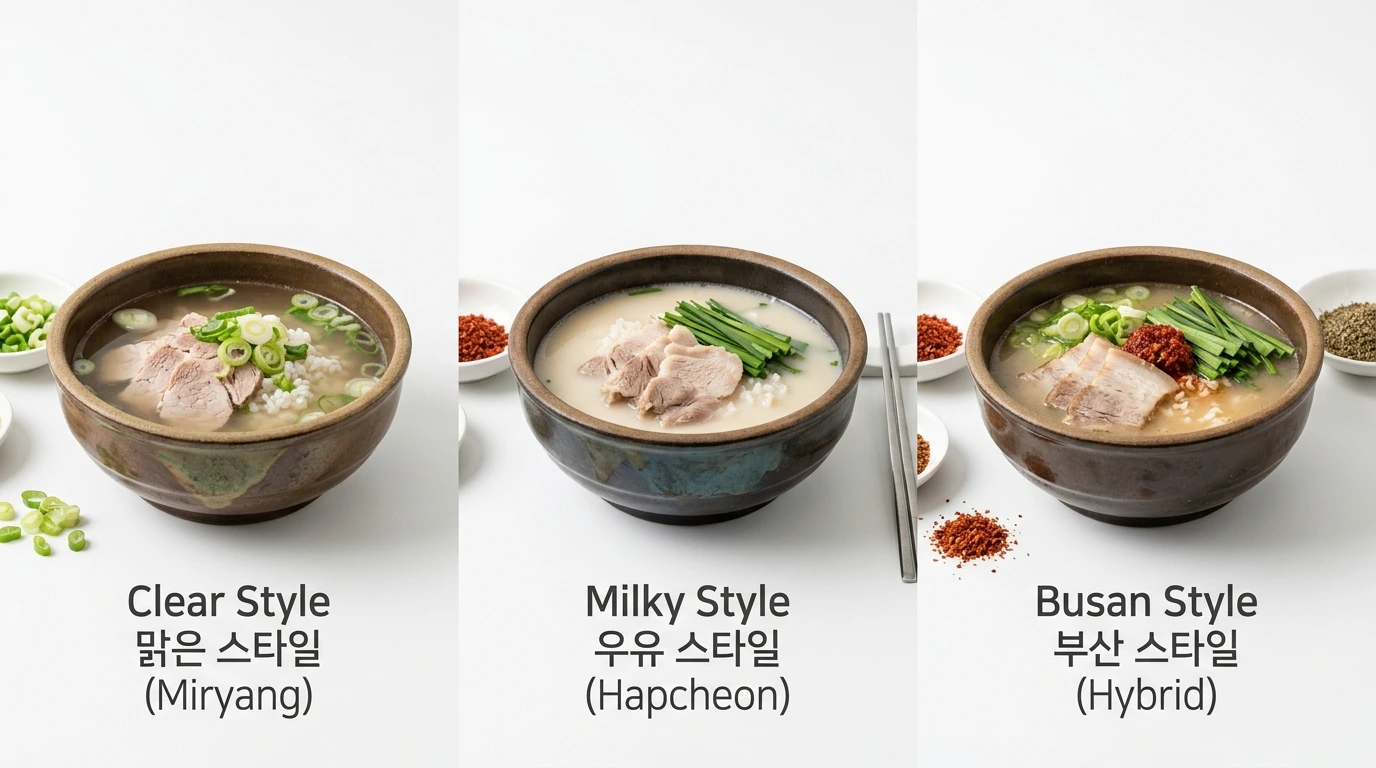
While other regions in Korea might favor thick, heavily spiced, or red-based broths, traditional Busan Dwaeji Gukbap is celebrated for its surprisingly clear, clean, and delicate soup. Over time, distinct styles have emerged, often referred to by locals as the legends of the broth world.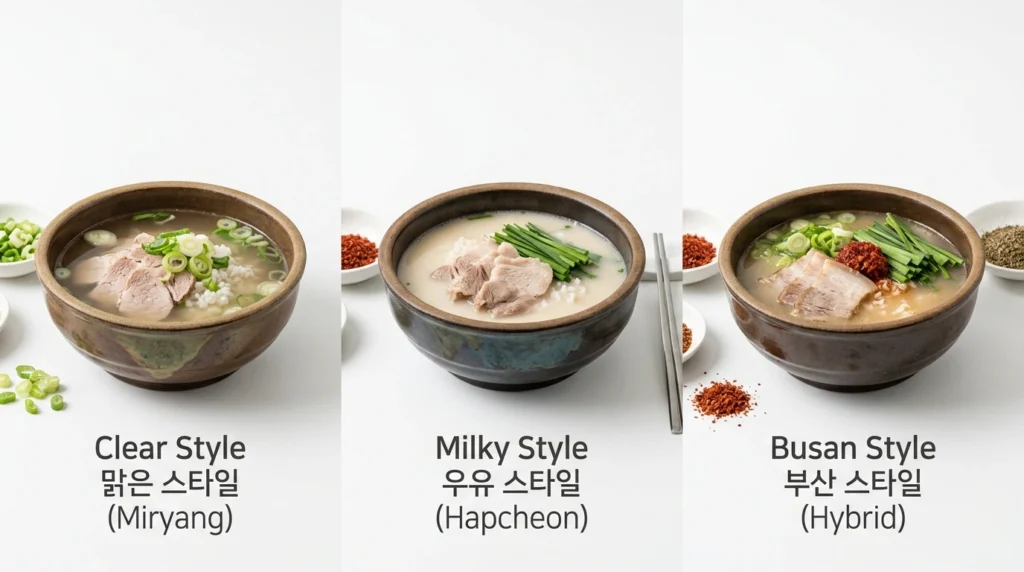
- The Clear Style (Miryang Style): Focuses heavily on brewing the pork meat rather than just the bones, resulting in a clearer, more refined broth that looks almost like a delicate consommé.
- The Milky Style (Hapcheon Style): Uses pork bones boiled for an extended period, creating a rich, milky-white broth that feels incredibly creamy and deeply comforting.
- The Hybrid Busan Style: A perfect middle ground that blends both meat and bone broths, offering a balanced, savory depth without being overly heavy.
Many traditional spots also serve “Ttaro Gukbap,” where the rice and soup are served in separate bowls, allowing the diner to control the texture of their meal.
How to Eat Like a True Busan Local: Table Etiquette
Eating Dwaeji Gukbap is an interactive experience. The broth usually arrives under-seasoned, and the true secret lies in how you customize it. Think of it as crafting your own perfect bowl of chili or pho; the condiments are crucial.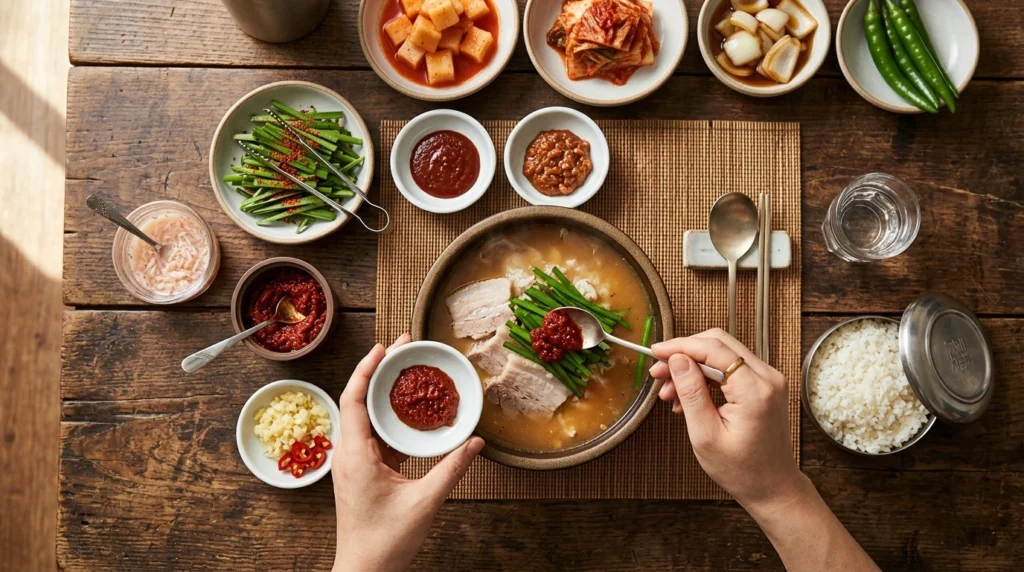
First, taste the bare broth. Then, add saeujeot (salted fermented shrimp). This not only seasons the soup perfectly but the enzymes in the shrimp aid in digesting the pork. Next, generously add jeongguji (the local dialect for garlic chives) tossed in chili powder. The chives wilt slightly in the hot broth, adding a sweet, onion-like aroma. Finally, if you like a kick, stir in some dadaegi (spicy red pepper paste). Mix it all together, and you have crafted a masterpiece tailored exactly to your palate.
Behind the Scenes: Fun Episodes and Local Lore
There is a saying in Busan that everyone has their own “secret” favorite Gukbap spot, and locals will passionately debate whose favorite is the best. The culture around these restaurants is warm, fast-paced, and deeply communal.
For visitors looking to explore, here is a quick guide to some of the most famous local haunts:
📌 Click the restaurant names below to explore our deep-dive reviews and insider tips!
| Restaurant Name | Location | Notable Feature |
|---|---|---|
| 👉 Bonjeon Dwaeji Gukbap | Choryang-dong, Dong-gu | Extremely close to Busan Station, famous for its clean taste. |
| 👉 Hapcheon Ilryu Dwaeji Gukbap | Gwaebeop-dong, Sasang-gu | The undisputed king of the West Busan area. Garlic-Rich Bold Flavor. |
| 👉 Kukdong Dwaeji Gukbap | Jung-dong, Haeundae-gu | Great spot near the beautiful Dalmaji Hill. Premium Clear Broth. |
| 👉 Yeongdong Milmyeon & Gukbap | Choryang-dong, Dong-gu | Perfect for trying both cold wheat noodles and hot pork soup. |
| 👉 Yeongjin Dwaeji Gukbap | Daeyeon-dong, Nam-gu | Melt-in-your-mouth pork jowl slices paired with stir-fried kimchi. |
Whether you are shaking off the cold ocean breeze or recovering from a long night out, joining the locals at one of these bustling tables will give you a taste of Busan’s true, unpretentious heart.
💡 Craving something refreshing after that hot soup? Don’t miss out on Busan’s other legendary noodle dish!
FAQ
What exactly is Dwaeji Gukbap?
It is a traditional South Korean soup made by boiling pork bones and meat for hours, served with rice and various side dishes.
Is the soup spicy?
No, the base broth is not spicy. It is mild and savory. You can make it spicy by adding the provided red pepper paste (dadaegi) to your liking.
Why do people put shrimp paste in pork soup?
Shrimp paste (saeujeot) adds a deep umami flavor and saltiness. Traditionally, it is also believed to help digest the pork meat easily.
What is the difference between Dwaeji Gukbap and Seolleongtang?
Seolleongtang is made from beef bones and meat, whereas Dwaeji Gukbap is made entirely from pork.
Can I eat Dwaeji Gukbap if I don’t like fatty meat?
Yes! Many restaurants allow you to request “salgogi man” (lean meat only) when you place your order.
What does “Ttaro Gukbap” mean?
“Ttaro” means separate. It means the rice is served in a separate bowl rather than submerged inside the soup bowl.
Are there vegetarian options at a Dwaeji Gukbap restaurant?
Unfortunately, no. The entire menu revolves around pork broth and meat, so it is not suitable for vegetarians.
How do I eat the garlic chives (jeongguji)?
You should take a large pinch of the seasoned garlic chives and put them directly into the hot soup to flavor the broth and enjoy them with the meat.
Is it a popular breakfast food?
Absolutely. Because it is warm, fast, and comforting, many locals eat it for breakfast, and many Gukbap restaurants are open 24 hours.
What side dishes usually come with the soup?
You will typically get kkakdugi (radish kimchi), cabbage kimchi, raw garlic, onions, spicy green peppers, and ssamjang (dipping paste).
Do I need to leave a tip at the restaurant?
No, tipping is not practiced in South Korea. You just pay the total amount on the bill at the front counter when you leave.
Which area in Busan has the best Dwaeji Gukbap?
There is no single best area, as amazing spots are scattered everywhere! However, Seomyeon has a famous “Gukbap Alley” packed with traditional restaurants.
🎁 The Ultimate Guide to Experiencing Busan Like a Local
Don’t miss out on the authentic flavors and hidden local stories of Busan during your BTS concert trip!
💜 Essential Guide for BTS Concert Attendees