
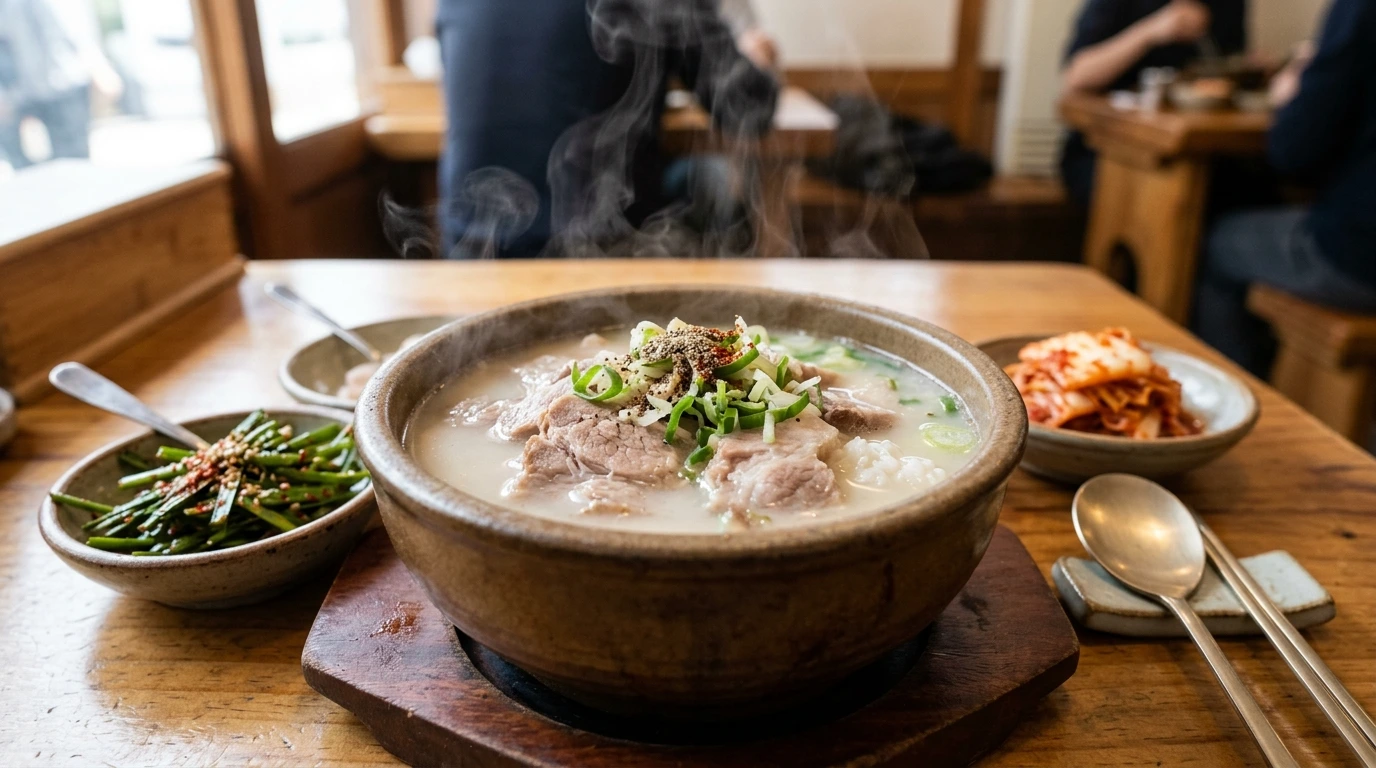
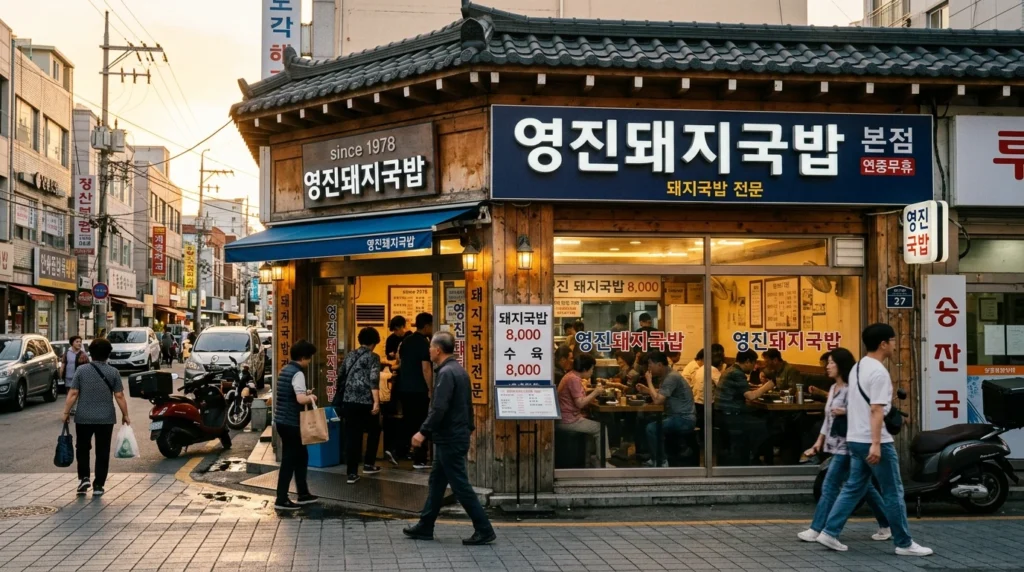
 There is something universally comforting about a hot bowl of soup. Whether it is a rich, slow-simmered beef stew on a freezing winter evening in North America or a delicate chicken noodle soup meant to cure a cold, every culture has its soul food. In Busan, South Korea, that undisputed soul food is Dwaeji Gukbap, or pork soup with rice. Among the countless local establishments claiming to be the absolute best, Yeongjin Dwaeji Gukbap consistently rises to the top of the list. With its legendary pork jowl slices and a broth that captures the hearts of both locals and international visitors, it stands out as a culinary landmark. But with the notorious lines wrapping around the building during lunch hours, the ultimate question remains: is it truly worth the wait? Let us dive into the details of this iconic eatery, exploring its rich history, unique menu offerings, and the secret behind its massive popularity.
History & Story: A Time-Honored Local Favorite
The story of Yeongjin Dwaeji Gukbap begins in Sinpyeong-dong, Busan, where the original main branch first opened its doors to hungry locals craving a hearty, affordable meal. Over the decades, it has transformed from a humble neighborhood diner into a city-wide phenomenon, expanding with branches in Nam-gu near the university districts, Buk-gu in Hwamyeong, and Gangseo-gu in Myeongji. Despite its expansion, the establishment has never compromised on its foundational promise: serving deeply flavorful, meticulously prepared pork soup that feels like a warm embrace.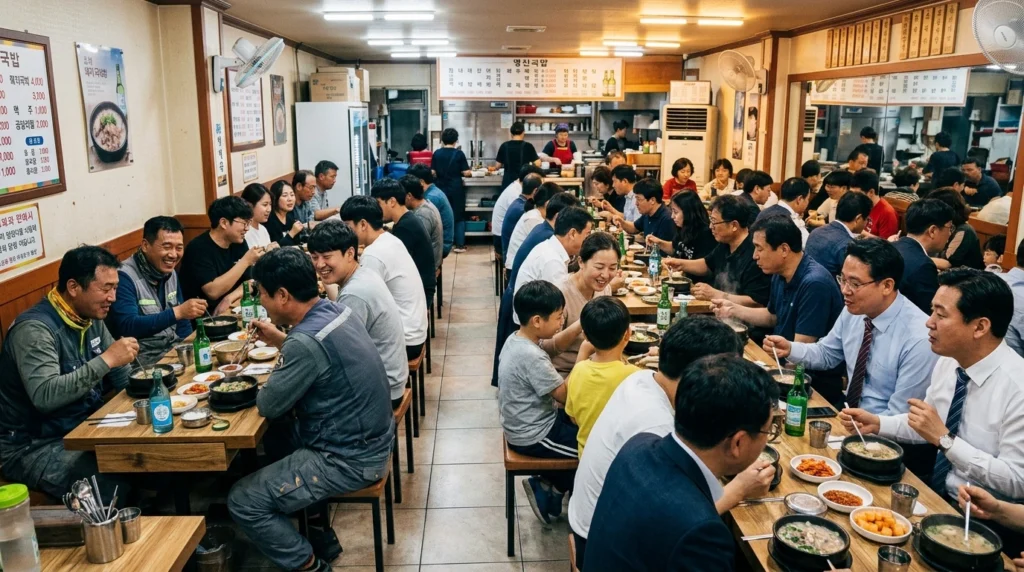
When you step into any of their branches, you can immediately feel the vibrant, bustling energy that characterizes traditional Korean dining halls. It is a place where construction workers, university students, business executives, and families all sit shoulder-to-shoulder, united by their love for this exceptional dish. Experiencing different culinary scenes around the world teaches you that the best restaurants are often those that bring diverse communities together under one roof, and this place does exactly that. It is not just a meal; it is a cultural experience that offers a genuine taste of Busan’s dynamic and warm-hearted spirit.
Broth Style: Deep, Clear, and Beginner-Friendly
For many international food lovers or those trying Dwaeji Gukbap for the first time, there is often a slight apprehension about the “porky” odor that can accompany bone broths. However, the broth here is a masterclass in balance and refinement. It is characterized by a milky, opaque appearance, achieved through hours of boiling, yet it remains surprisingly clean and light on the palate. There is absolutely no unpleasant gamey smell, making it the perfect gateway dish for beginners who might be hesitant about traditional Korean pork soups.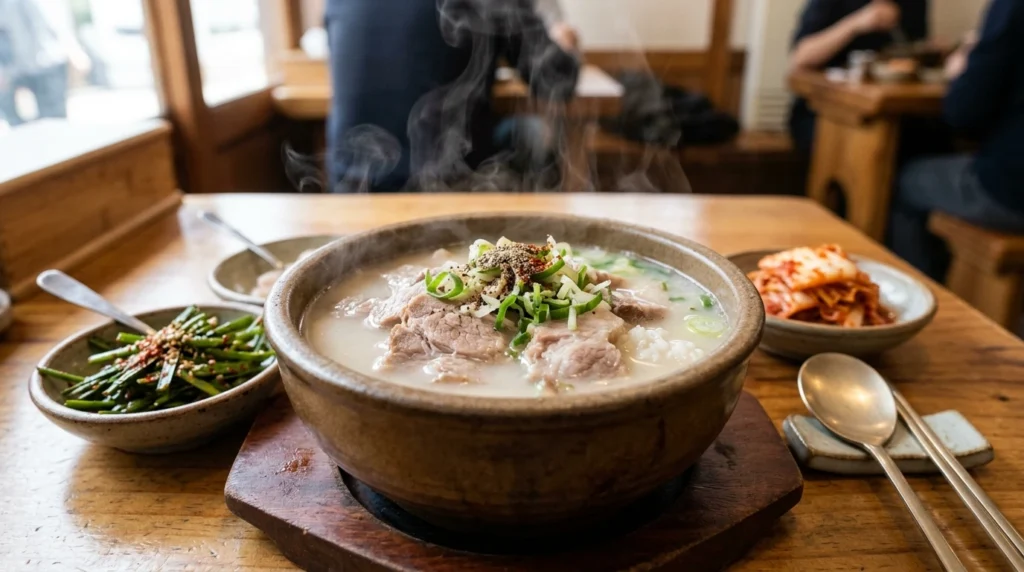
The menu offers a variety of options, including the standard pork soup, mixed meat soup, and intestine soup. A standout is the Sundae Gukbap (Korean blood sausage soup). Unlike places that use cheap glass-noodle sausages, this establishment uses premium, meat-stuffed sundae that adds a luxurious texture and deep flavor to the dish. Furthermore, the restaurant is incredibly family-friendly. If you are visiting with young children, the staff are known to provide a complimentary serving of clear, unseasoned broth specially tailored for toddlers, ensuring that guests of all ages leave completely satisfied.
Customer Reviews & Essential Waiting Tips
Given its stellar reputation, encountering a line outside the restaurant is practically guaranteed, especially during peak lunch and dinner hours. However, do not let the crowd deter you. The restaurant operates with the breathtaking efficiency of “K-Fast Food.” The turnover rate is incredibly high, meaning a line of twenty people might only result in a fifteen-minute wait. Instead of modern digital kiosks, some branches still use charming, old-school queuing methods like handing out wooden rice paddles or spoons with numbers written on them.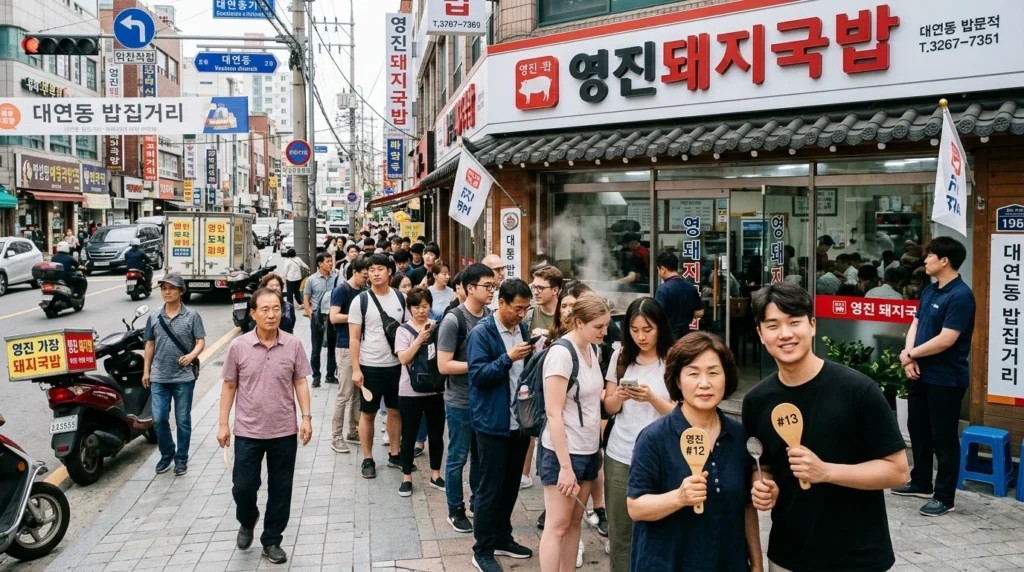
A crucial tip for first-time visitors is to check the operating days, as many branches, including the main Sinpyeong location and the Hwamyeong branch, are strictly closed on Sundays. Once seated, you will be greeted by a table setting featuring traditional earthenware pots filled with fresh kimchi, specially seasoned chives (buchu), raw onions, and garlic. There is also a convenient self-service bar where you can unlimitedly refill your side dishes and grab extra portions of thin wheat noodles (somen) to dip into your hot soup. The seamless service and the speed at which the piping hot food arrives make the brief wait entirely worthwhile.
The Signature Highlight: What Makes This Place Unique
While the standard soups are phenomenal, the absolute star of the show and the reason for the restaurant’s legendary status is the Suyuk Baekban (Boiled Pork Platter with Rice and Soup). Priced reasonably around 13,000 KRW, this dish is not your average boiled pork. Instead of the typical pork belly or shoulder, the restaurant serves premium Hangjeongsal (pork jowl). This specific cut is renowned for its beautiful marbling, resulting in slices that are impossibly tender, moist, and flavorful.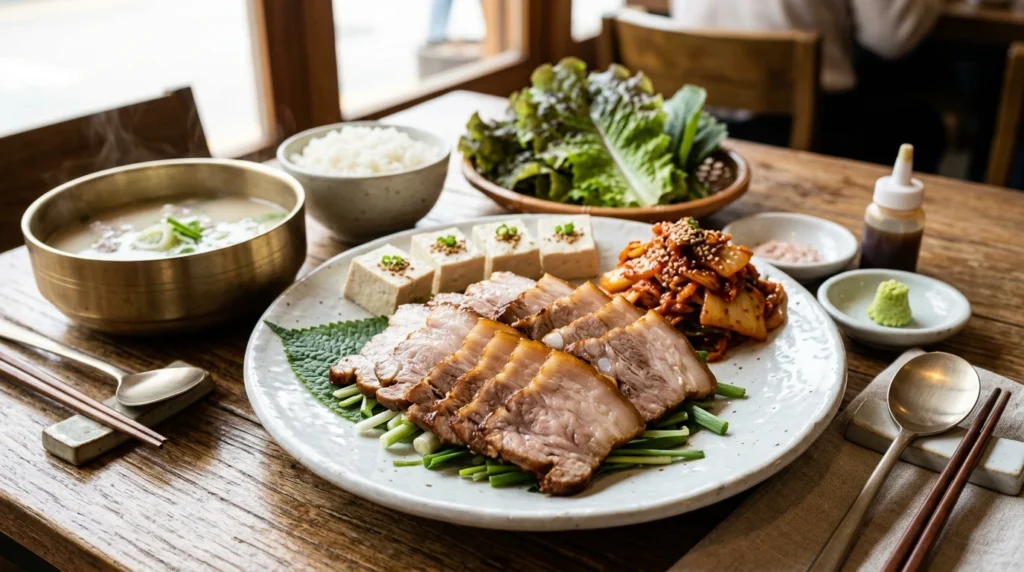
The plating itself is a work of art and offers a unique culinary twist. The glistening pork jowl slices are served on a platter alongside warm tofu, sweet and savory stir-fried kimchi, and a dab of raw wasabi. The recommended way to enjoy this masterpiece is to build a “ssam” (lettuce wrap). Place a piece of the tender pork, a slice of tofu, and a generous portion of the stir-fried kimchi onto a fresh lettuce leaf, topping it off with just a hint of wasabi for a sharp, refreshing kick. It elevates the humble gukbap joint into a high-end dining experience. After enjoying the meat platter like a gourmet appetizer, you can mix the remaining rice, seasoned chives, and noodles into the provided bowl of hot, milky broth to finish off the meal in the most comforting way possible.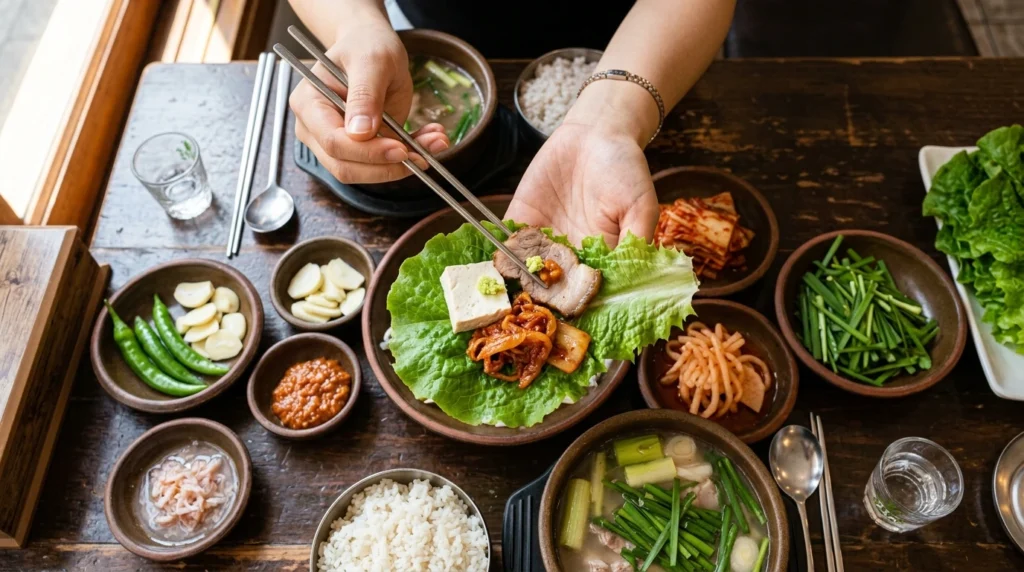
💡 Craving something refreshing after that hot soup? Don’t miss out on Busan’s other legendary noodle dish!
FAQ
What is the signature dish I must order?
The absolute must-order dish is the Suyuk Baekban (Boiled Pork Platter with Rice and Soup), which features incredibly tender pork jowl.
Is the restaurant English-friendly for tourists?
While English menus might be limited depending on the branch, the menu is straightforward, and the staff are very accommodating. Pointing to the Suyuk Baekban is usually all you need to do.
Does the pork soup have a strong, gamey smell?
Not at all. The broth is famously clean, deep, and completely free of any strong pork odors, making it perfect for beginners.
How long is the typical wait time during lunch?
Despite long lines, the turnover is very fast. You can generally expect to wait anywhere from 10 to 20 minutes during peak hours.
Are they open every day of the week?
No, most of the major branches, including the main branch and the Hwamyeong branch, are closed on Sundays. Always check before visiting.
Is it a good place to bring young children?
Yes, it is very family-friendly. They even offer a separate, unseasoned clear broth specifically for babies and toddlers.
What kind of sundae (sausage) do they use in their soup?
They use high-quality, meat-stuffed sundae rather than the cheaper glass-noodle versions, providing a much richer taste.
Can I get refills on the side dishes?
Yes, there is a self-service bar where you can freely refill kimchi, garlic, onions, chives, and even the somen noodles.
How should I eat the pork jowl platter?
Wrap the pork jowl, tofu, and stir-fried kimchi in a lettuce leaf, and add a small amount of raw wasabi for the best flavor combination.
Do I eat the soup and the pork platter at the same time?
Most locals enjoy the pork platter first as a sort of appetizer or side dish, and then mix their rice into the hot broth to finish the meal.
Are there multiple branches I can visit?
Yes, the original is in Sinpyeong-dong, but there are highly rated branches in Nam-gu, Buk-gu, and Gangseo-gu across Busan.
Is parking available at the restaurant?
Most branches have dedicated parking lots or street parking nearby, but spaces can fill up quickly during peak lunch and dinner hours.