
Traveling between Seoul and Busan is one of the most popular routes in South Korea, connecting the bustling capital with the vibrant southern coastal city. Having experienced long-distance travel across vast North American landscapes, I am constantly amazed by how efficiently and comfortably you can cross the Korean peninsula. Whether you are craving the bustling street food of Myeongdong or the relaxing ocean breeze of Haeundae Beach, knowing the best way to travel between these two hubs is essential for a seamless itinerary.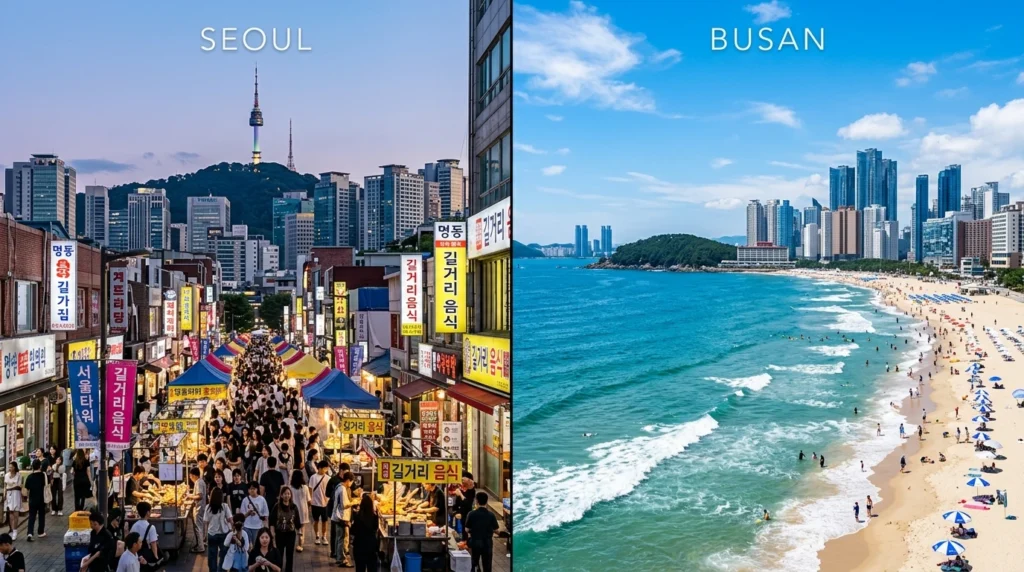
There are three primary ways to make this journey: the high-speed KTX train, a domestic flight, or an express bus. Each mode of transportation offers distinct advantages and disadvantages depending on your budget, schedule, and personal preferences. In this comprehensive guide, we will dive deep into the details of each option to help you decide which is the absolute best fit for your travel style.
The KTX Train: The Punctual and Central Choice
For most travelers, the Korea Train eXpress (KTX) is the gold standard for getting from Seoul to Busan. It is the equivalent of a highly efficient commuter network that completely removes the stress of highway traffic.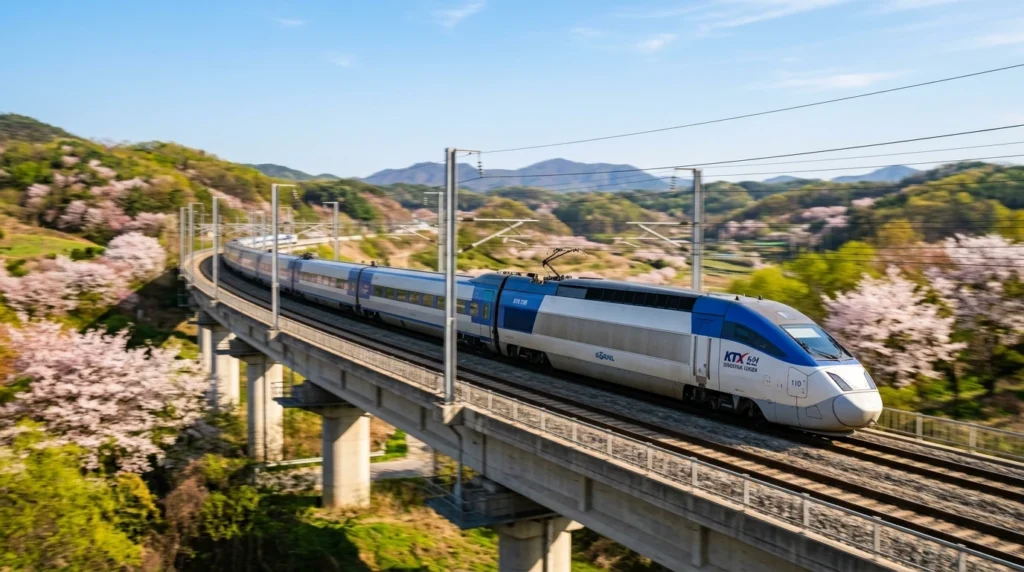
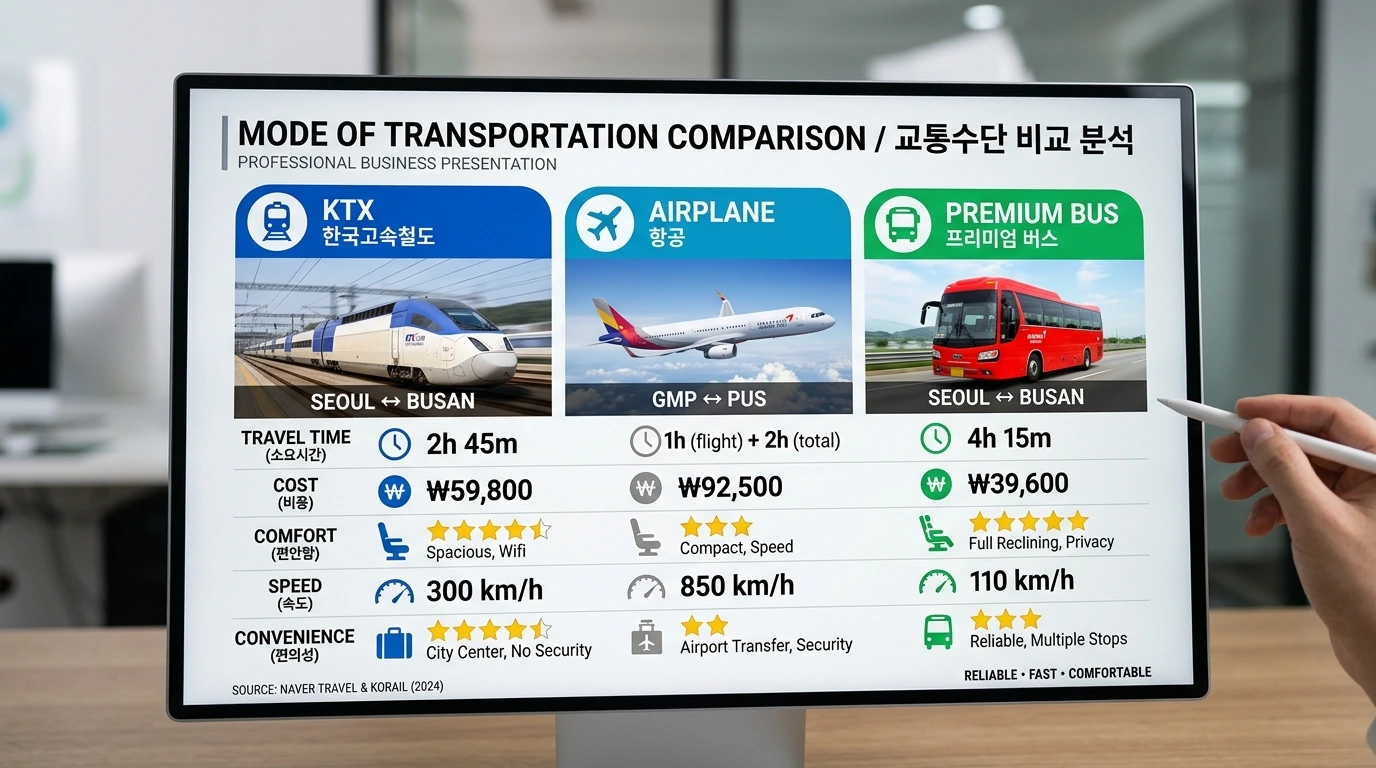
The KTX journey takes approximately 2 hours and 30 minutes to 3 hours and 15 minutes, depending on the number of stops the specific train makes. A standard class ticket ranges from 53,500 KRW to 59,800 KRW, while a first-class ticket will cost around 83,700 KRW.
The most significant advantage of the KTX is its unparalleled punctuality. You can plan your itinerary down to the minute without worrying about unexpected traffic jams. Furthermore, both Seoul Station and Busan Station are located right in the heart of their respective downtown areas. This means that once you step off the train, you are immediately connected to the local subway lines, saving you precious time and transit costs. You also have the freedom to stand up, stretch your legs, and use the onboard restrooms whenever you please.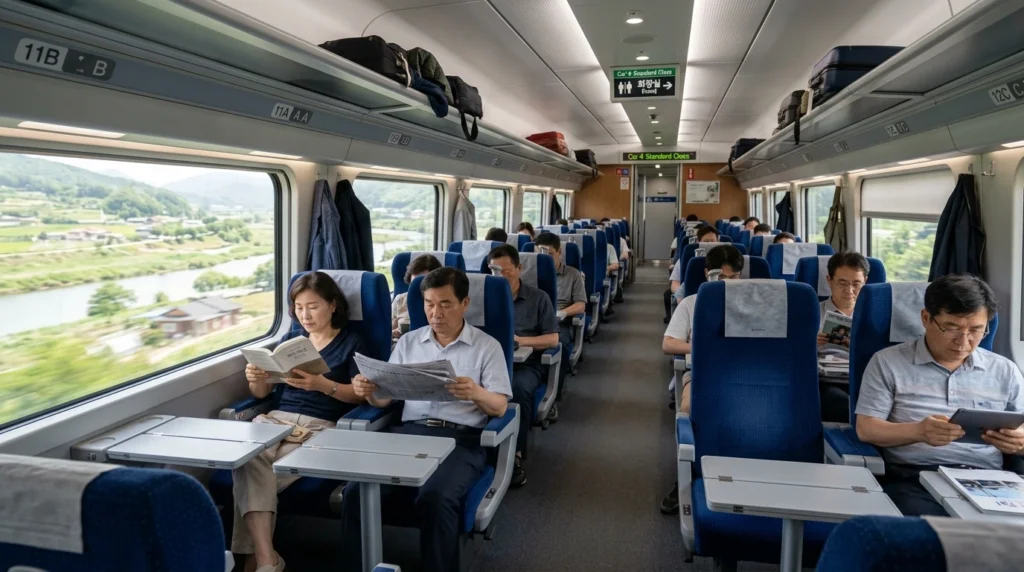
However, the KTX does have a few minor drawbacks. Standard class seats can feel a bit narrow, especially if you are accustomed to the spacious seating of North American intercity transit. Additionally, late-night or early-morning schedules are somewhat limited compared to the bus system. KTX is highly recommended for travelers who prioritize time management and want to arrive directly in the city center.
Domestic Flights: The Speedy Option
If pure travel time is your primary concern, hopping on a domestic flight from Seoul to Busan might catch your eye. The flight itself is incredibly brief, taking only about 1 hour and 5 minutes in the air.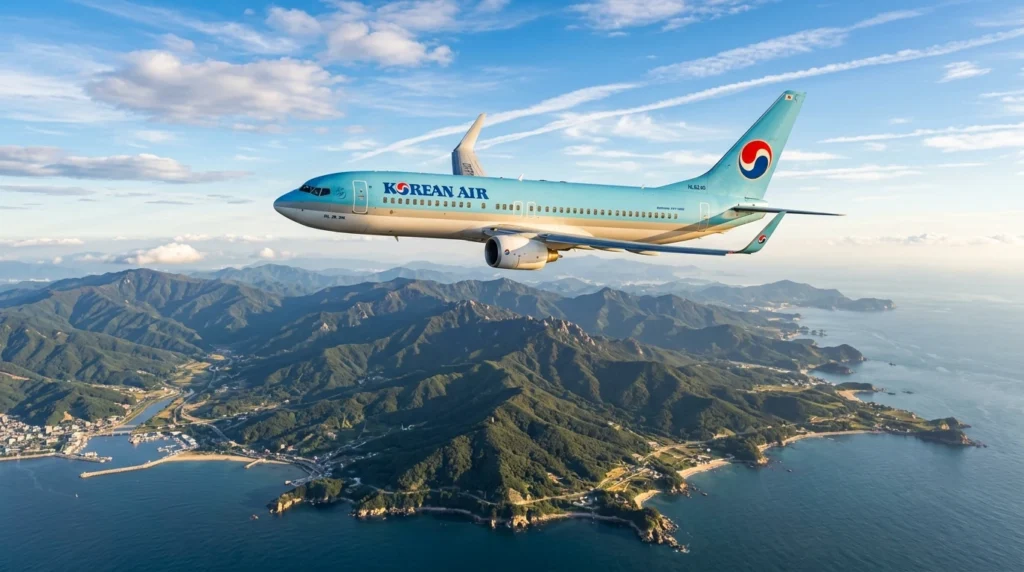
Ticket prices typically range from 60,000 KRW to 90,000 KRW. However, if you keep an eye out for special promotions and book in advance, you can sometimes snag fares in the 40,000 KRW to 50,000 KRW range, making it cheaper than the KTX. The absolute biggest perk of flying is the minimal time spent sitting in a seat, which greatly reduces travel fatigue.
Despite the fast time in the air, you must factor in the door-to-door travel time. You need to arrive at Gimpo Airport at least 30 to 45 minutes before departure for security and boarding. More importantly, both Gimpo Airport in Seoul and Gimhae Airport in Busan are located far from the main tourist hubs. Traveling from Gimhae Airport to a popular destination like Haeundae Beach can easily add another hour or more to your journey. Flights are also more susceptible to delays due to bad weather. This option is best suited for travelers whose starting or ending points are naturally close to the airports.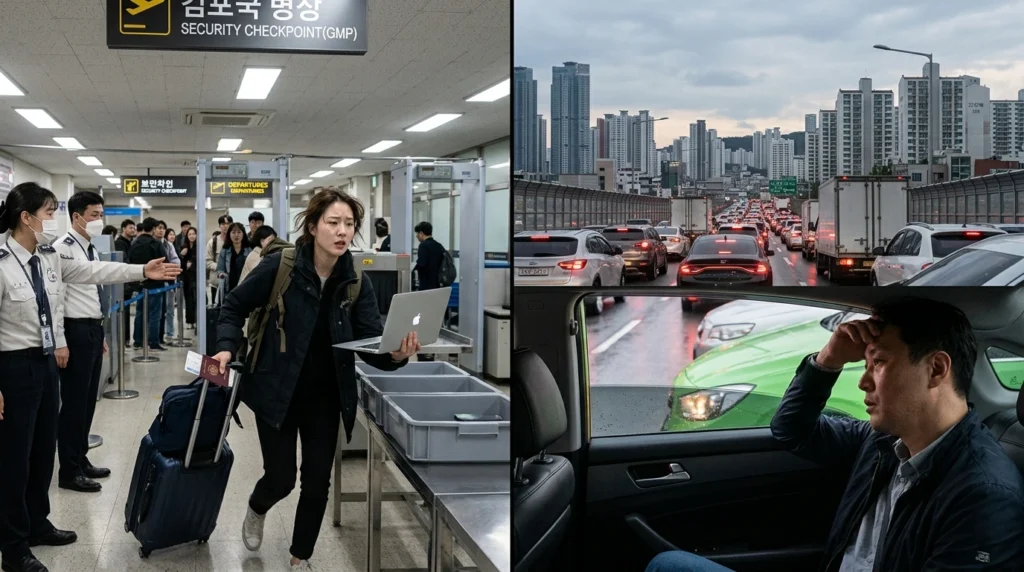
Premium Express Bus: The Ultimate Comfort Enabler
For those who value comfort over speed, the Premium Express Bus is a luxurious revelation. While bus travel in many Western countries might conjure images of cramped seats and bumpy rides, the Korean premium bus system feels like flying in a first-class cabin on wheels.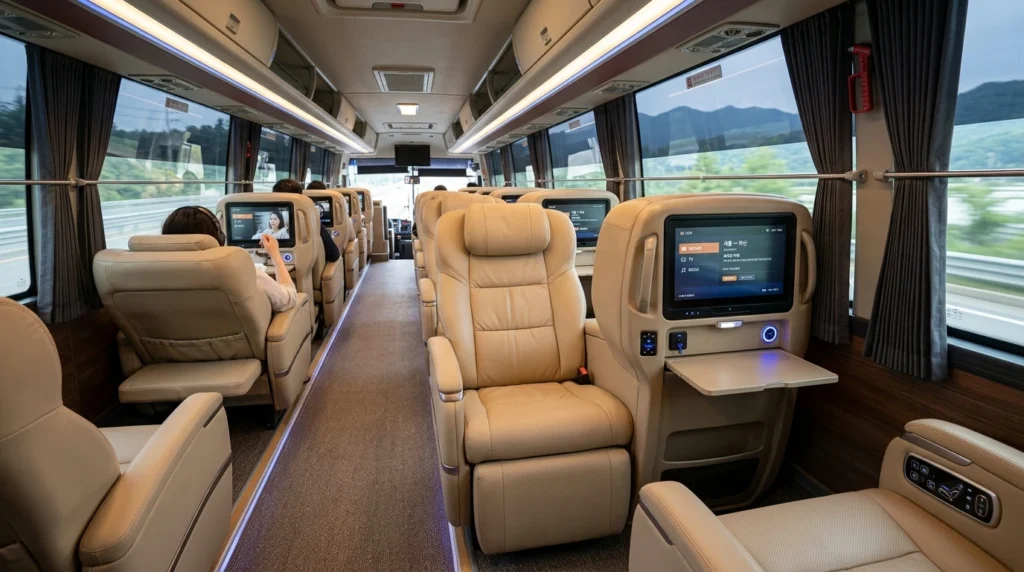
The journey takes about 4 hours, though this can fluctuate depending on highway traffic. A ticket costs 51,600 KRW during regular hours and 61,900 KRW for late-night departures.
The main selling point of the premium bus is the seating. You get a wide, plush seat that reclines almost entirely flat, perfect for getting a solid nap. Privacy curtains, personal entertainment monitors, free Wi-Fi, and USB charging ports make it an incredibly private and relaxing experience. Furthermore, buses run late into the night and early in the morning, offering “red-eye” options for maximizing your daylight hours.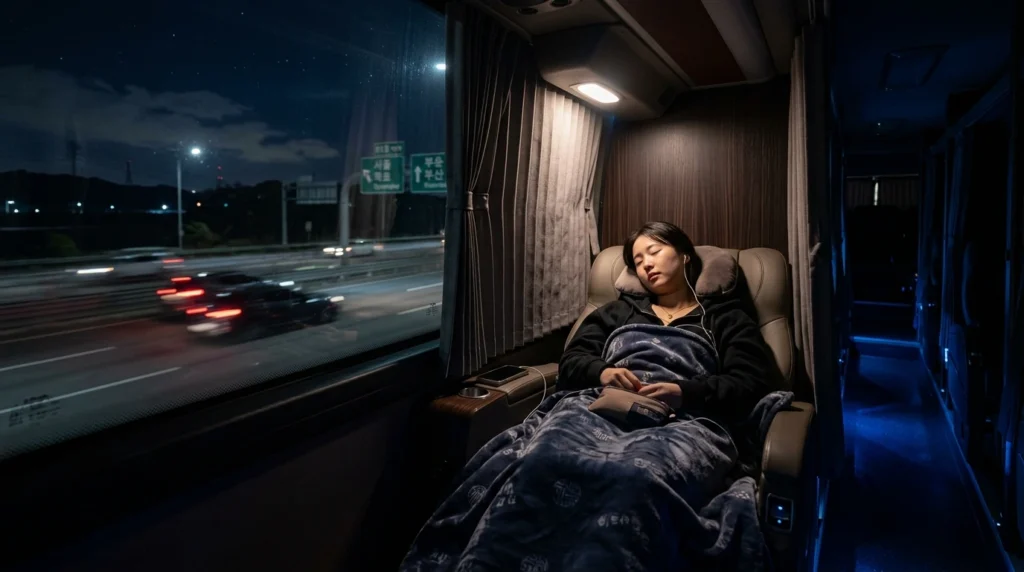
The downside is the longer travel time and the potential for traffic delays. Also, unlike trains, there are no onboard restrooms, meaning you must wait for the scheduled rest stop break or kindly ask the driver to pull over in an emergency. The premium bus is the top choice for travelers who want to sleep through the journey, save on a night’s accommodation by traveling late, and value personal space.
Transportation Comparison Overview
| Transportation | Travel Time | Average Cost (KRW) | Best Feature |
|---|---|---|---|
| KTX Train | 2.5 – 3.25 hrs | 53,500 – 83,700 | Punctuality & City Center Access |
| Flight | 1 hr 5 mins (Air time) | 40,000 – 90,000 | Fastest physical transit |
| Premium Bus | 4+ hrs | 51,600 – 61,900 | Lie-flat seats & Privacy |
Editor’s Verdict: Which is the Best Way?
After weighing all the variables, here is the ultimate breakdown of which transport mode to choose:
Top Overall Pick: The KTX Train. For the vast majority of travelers, KTX strikes the perfect balance. The reliability of arriving exactly on time, combined with the sheer convenience of stepping out right into the downtown cores of Seoul and Busan, makes it the most efficient and stress-free choice.
Best for Comfort and Budget: Premium Express Bus. If you have a relaxed schedule and view travel time as a chance to rest, the premium bus is unbeatable. Booking a single solo seat on a late-night premium bus ensures you wake up refreshed in Busan.
Best for Airport Proximity: Domestic Flight. Choose the flight only if your hotel is very close to Gimpo or Gimhae airports, or if you managed to score an unbelievably cheap promotional fare that offsets the extra local transit times.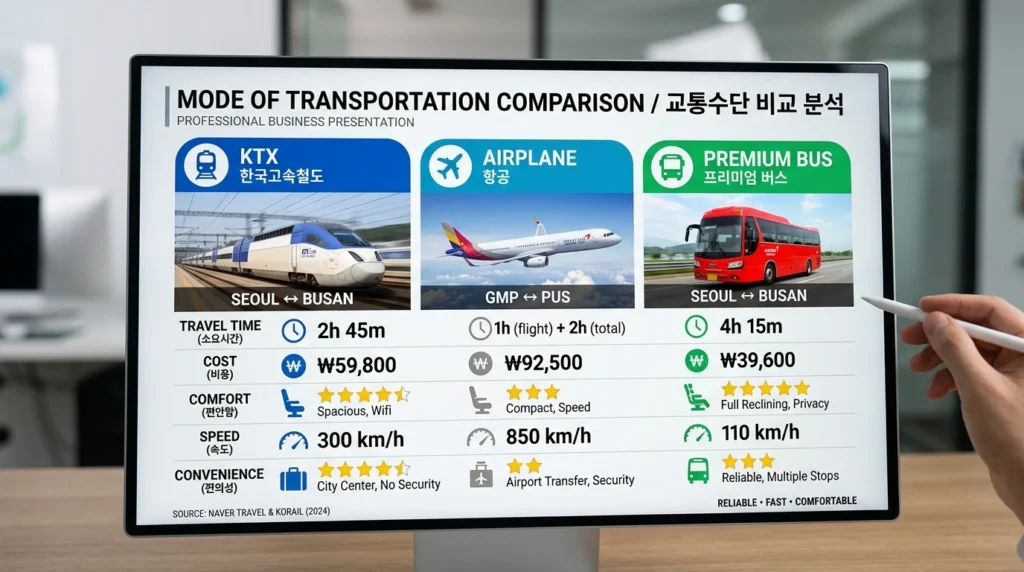
Frequently Asked Questions (FAQ)
Q: Do I need to book KTX tickets in advance?
A: Yes, it is highly recommended to book KTX tickets in advance, especially on weekends and national holidays when trains sell out very quickly.
Q: Where can I buy KTX tickets?
A: You can purchase tickets directly at the station, or online via the official Korail website and the KorailTalk mobile app.
Q: How much luggage can I bring on the KTX?
A: There are no strict weight limits for luggage on the KTX. However, you must be able to carry your bags onto the train and store them in the designated overhead racks or luggage compartments at the end of each car.
Q: Is there food available on the KTX?
A: KTX trains no longer have dining cars, but you are allowed to bring your own food and drinks on board to consume at your seat. There are also vending machines for snacks and water.
Q: Which airports do I use for Seoul to Busan flights?
A: You will fly out of Gimpo International Airport (GMP) in Seoul and land at Gimhae International Airport (PUS) in Busan.
Q: Is the premium bus worth the extra cost over a standard bus?
A: Absolutely. For a relatively small price difference, the premium bus offers lie-flat seats, privacy curtains, and significantly more legroom, making the 4-hour journey incredibly comfortable.
Q: Do express buses have restrooms on board?
A: No, Korean express buses do not have onboard restrooms. The bus will make a 15-minute stop at a highway rest area roughly halfway through the journey.
Q: Can I take a night bus from Seoul to Busan?
A: Yes, there are late-night “심야” (simya) buses that run past midnight, allowing you to sleep through the trip and arrive in Busan in the early morning.
Q: Are there outlets to charge my phone on the train or bus?
A: Yes, KTX trains have power outlets (though shared or limited depending on the seat type), and Premium buses have personal USB charging ports at every seat.
Q: Is there Wi-Fi available during the journey?
A: Both KTX trains and Premium express buses offer complimentary Wi-Fi for passengers.
Q: How far is Busan Station from Haeundae Beach?
A: Busan Station is about a 45-minute to 1-hour subway or bus ride away from the popular Haeundae Beach area.
Q: Can foreigners easily navigate the bus terminals?
A: Yes, major terminals like Seoul Express Bus Terminal have English signage, and automated ticket machines offer multiple language options, making it very straightforward for international travelers.