
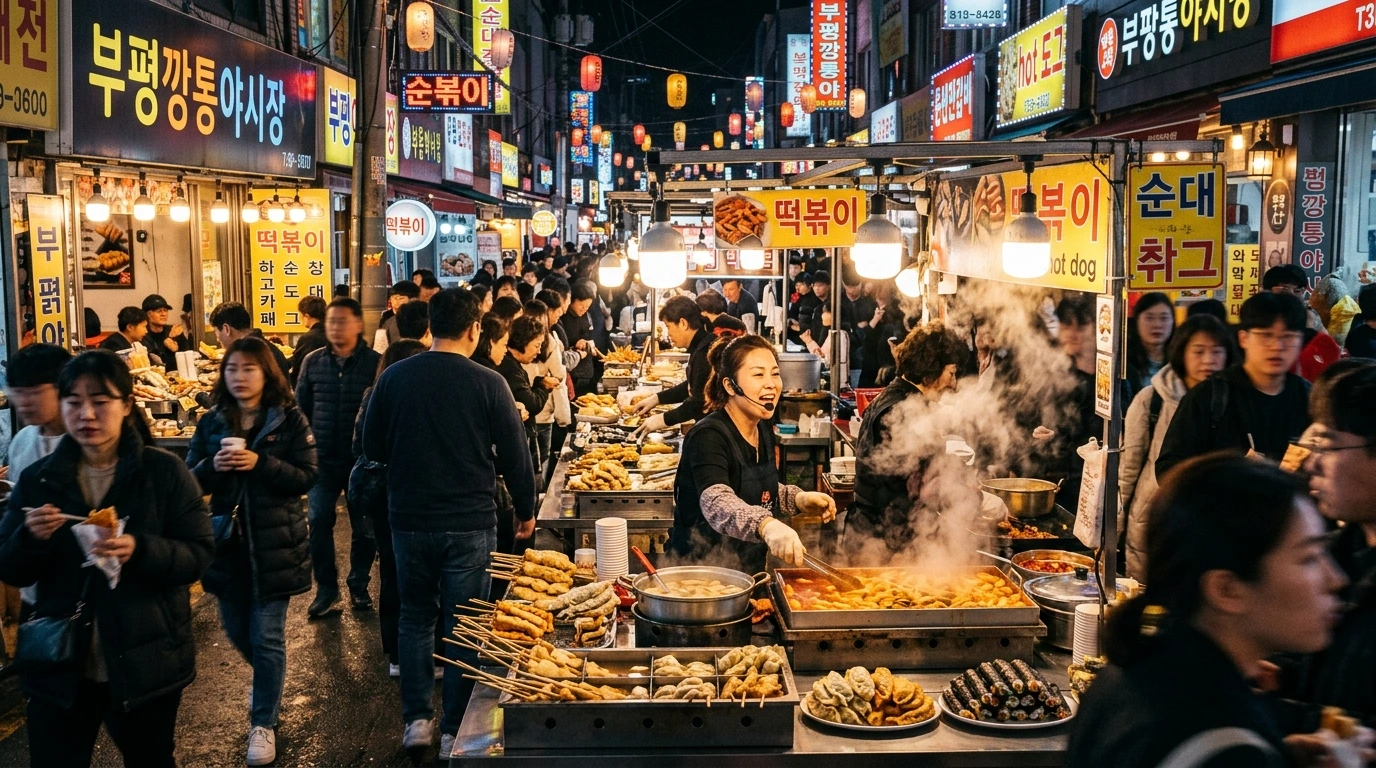
The Magic of Busan’s Street Food Scene
Walking through a bustling night market brings back memories of vibrant food alleys across North America and Asia. The sizzle of grills, the sweet aroma of caramelized sugar, and the energetic shouts of vendors create a universal language of culinary delight. In Busan, specifically around Gwangbok-dong and Bupyeong Kkangtong Market, this vibrant food culture reaches an entirely new level. Nestled closely with Nampo-dong, Gukje Market, and Jagalchi Market, this area is a paradise for street food lovers and urban explorers alike. Whether you are a local resident or a traveler looking to experience the heart of South Korea’s coastal city, navigating these vibrant streets offers an unforgettable gastronomic adventure.
Must-Try Street Eats at Bupyeong Kkangtong Market
When exploring the lively alleys of Kkangtong Market, pacing yourself is essential. The variety of grab-and-go treats is staggering, and you will want to save room for everything.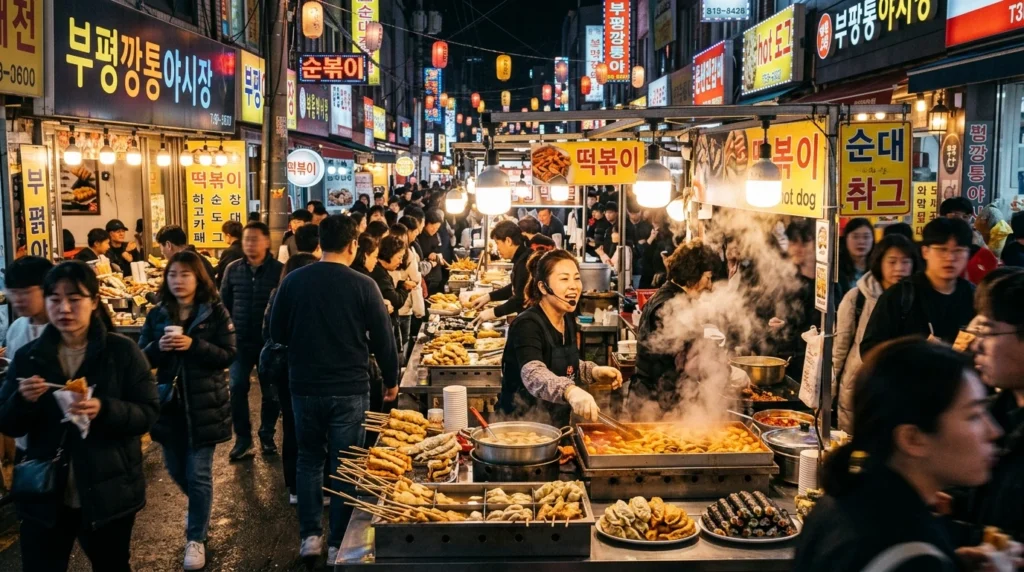
Ssiat Hotteok (Seed Pancake)
This is not your average sweet pancake. The Busan variation involves deep-frying the dough in generous amounts of oil or butter until the exterior reaches a perfectly golden, crispy texture. The vendor then slices the belly of the hotteok open and generously stuffs it with a mixture of brown sugar and mixed seeds (sunflower, pumpkin, and peanuts). The resulting bite is a masterful contrast of extreme nuttiness, satisfying crunch, and warm, melting sweetness. It is common to see long lines for this iconic snack, but the wait is always worth it.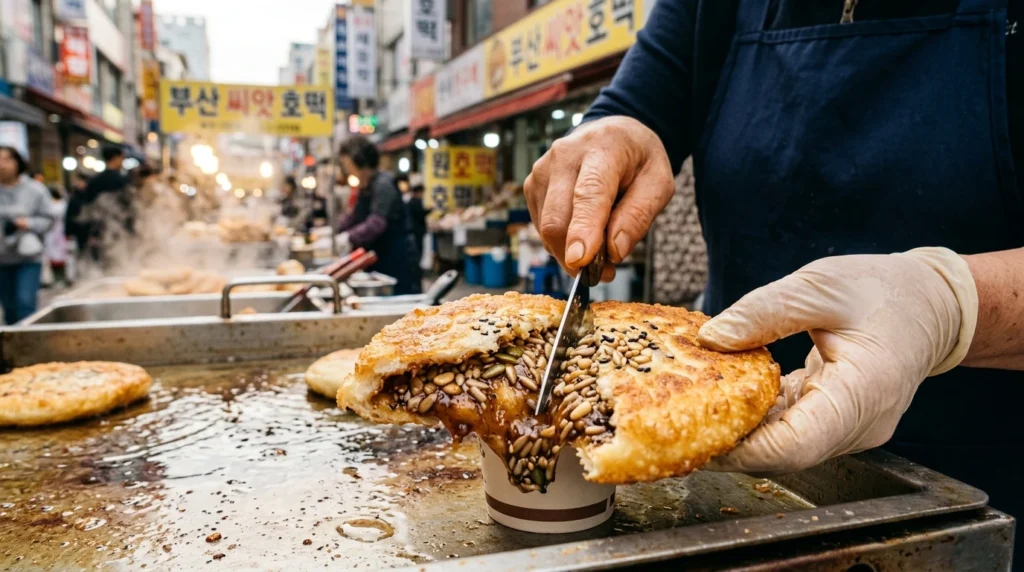
Bibim Dangmyeon (Spicy Glass Noodles)
For a unique local flavor, Bibim Dangmyeon is a must-try. This humble dish consists of boiled sweet potato glass noodles topped with simple vegetable garnishes like pickled radish (danmuji) and chives. Tossed with a drizzle of sesame oil and a special spicy mixing sauce, it offers a savory, nutty, and slightly spicy profile. It lacks the heavy richness of fried foods, making it a perfectly comforting and light interlude during your food tour.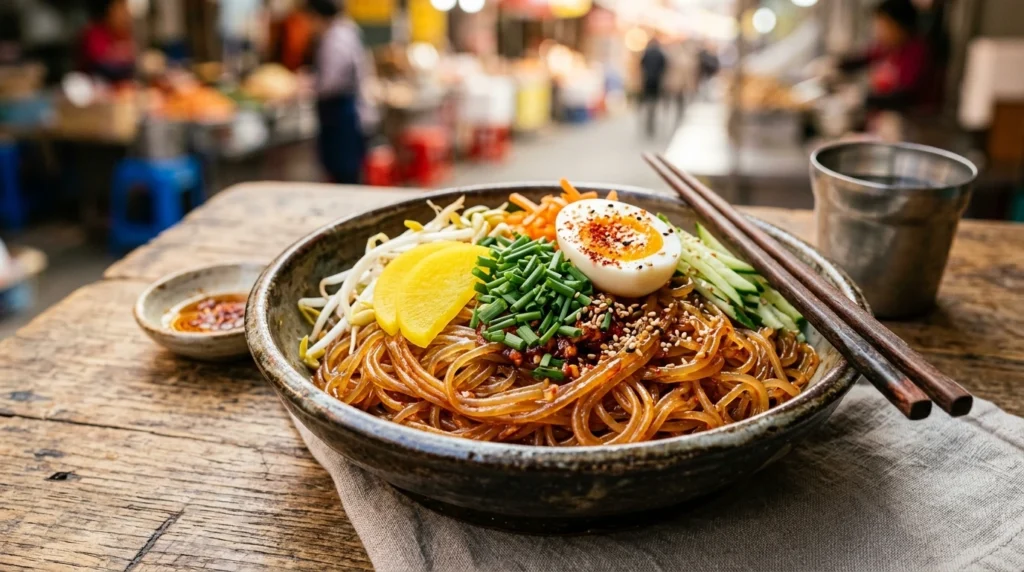
Busan Eomuk (Fish Cake) & Tteokbokki
No visit to a Busan market is complete without tasting the city’s legendary Eomuk. Thanks to a high fish meat content, the fish cakes here have an incredibly chewy texture and yield a deeply flavorful broth. Paired alongside this is the local style of Tteokbokki—featuring a thick, intensely rich gochujang sauce rather than a watery one. Legendary spots like ‘Igane Tteokbokki’ serve up these fantastic combinations, turning simple street food into a gourmet experience.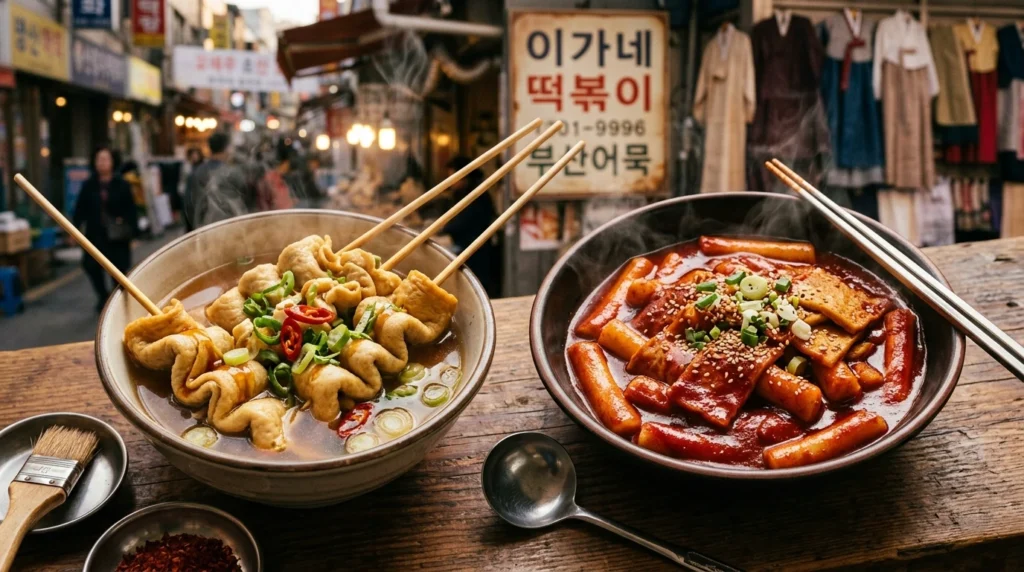
Exotic Skewers
As you weave through the market stalls, you will encounter numerous pop-up carts grilling various skewers on the spot. From savory chicken heart (yeomtong) skewers to unique conch (horn turban) skewers, the smoky aromas are irresistible. These quick bites add an element of fun and variety to your walking tour.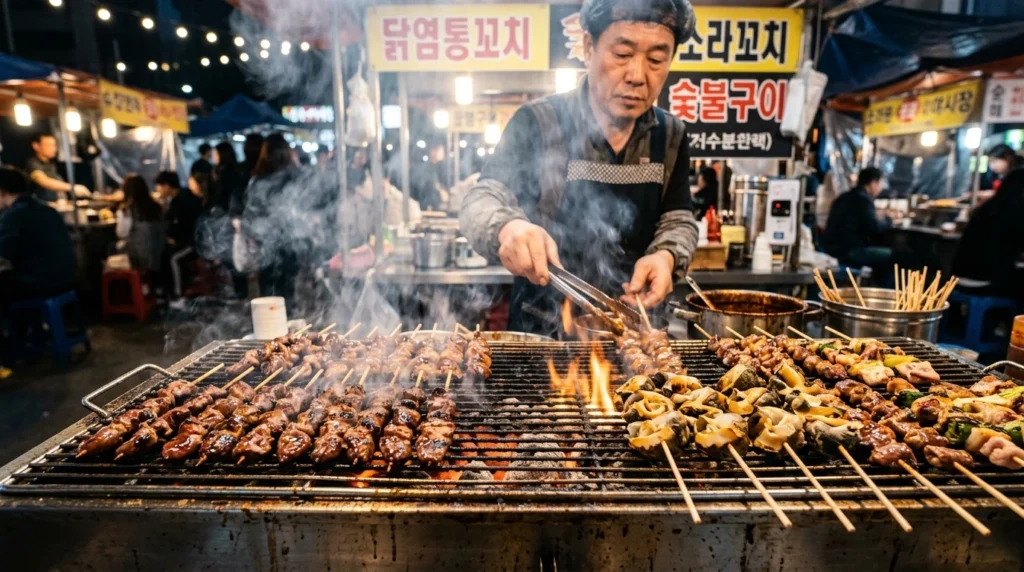
Sit-Down Local Favorites Around Nampo-dong
After grazing on street food, you might crave a more substantial meal or a place to sit down with a cold drink. The Gwangbok-dong and Bupyeong-dong commercial districts are home to highly-rated local restaurants focusing on high-quality meats.
Michin Makchang / Yeon Makchang
Located near Kkangtong Market, these spots are perfect for those wanting to experience authentic Korean BBQ, specifically focusing on beef and pork intestines (gopchang and makchang). The chewy texture and rich flavors pair perfectly with a glass of soju.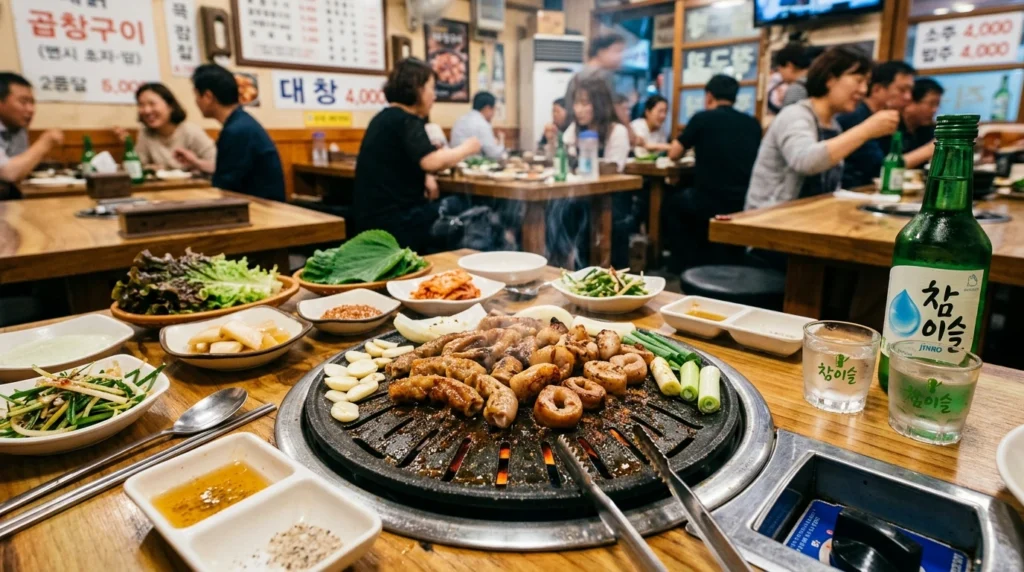
Chopilsal Dwaejigui / Yuksikdo
If pork is your preference, these restaurants are beloved hot spots. They serve thick, premium cuts of pork that are expertly grilled to retain their juices, offering a hearty and satisfying dining experience for meat lovers.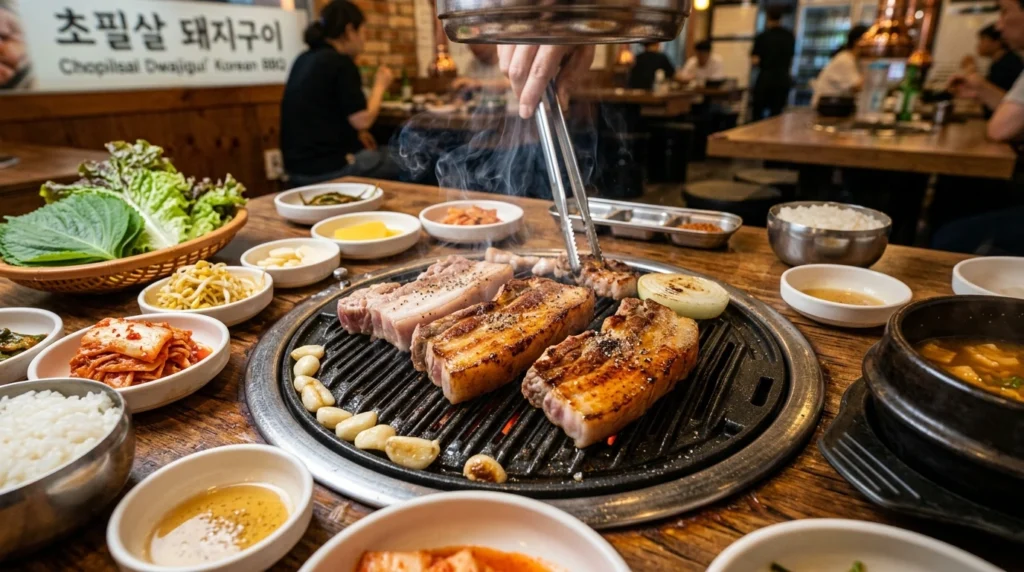
Wonjo Seomyeon Sogalbisal (Nampo Branch)
For beef enthusiasts, this restaurant offers excellent value and mouth-watering grilled beef ribs (sogalbisal). It is highly popular among both tourists and discerning locals seeking high-quality meat without a pretentious atmosphere.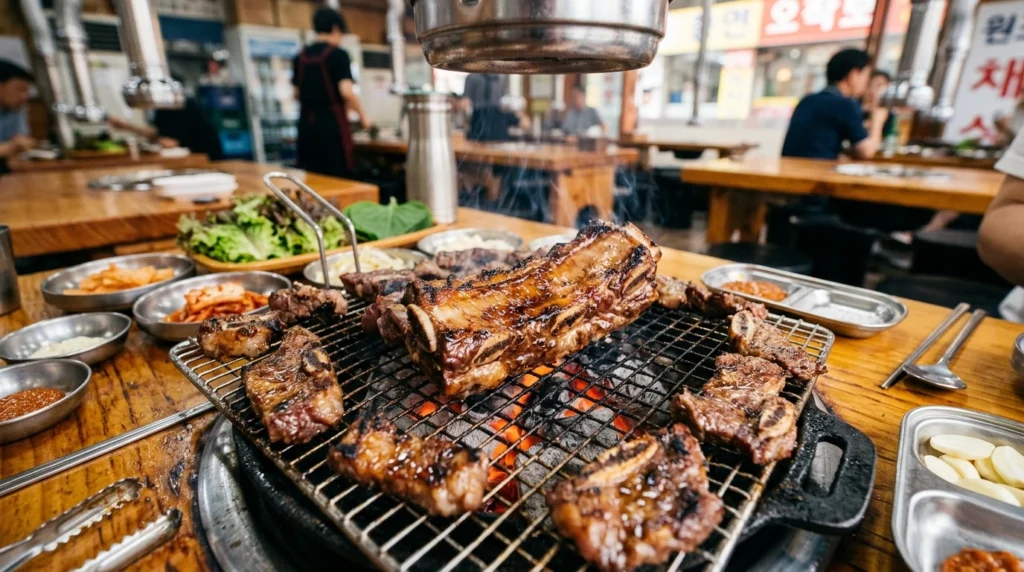
Pro Tips for the Ultimate Market Experience
To make the most of your Busan market walk, a little strategic planning goes a long way.
Recommended Walking Route
Start your journey at Bupyeong Kkangtong Market to satisfy your immediate street food cravings. Once you have fueled up, cross over to Gukje Market for some eclectic shopping and cultural exploration. Finally, make your way toward the waterfront to Jagalchi Market, where you can take in the ocean breeze and explore endless rows of fresh seafood.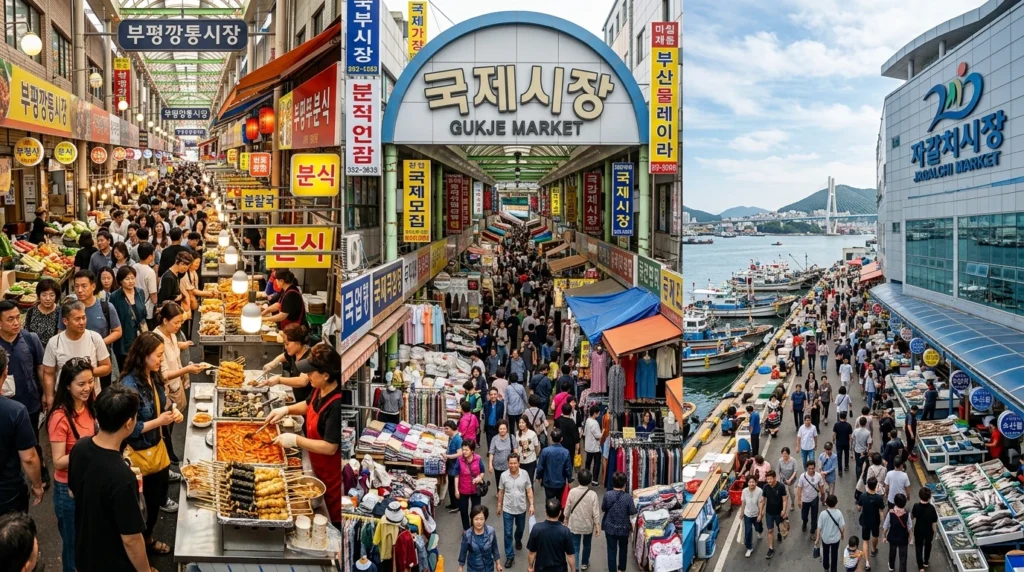
Atmosphere & Parking
Kkangtong Market buzzes with youthful energy and is highly popular among tourists, whereas Jagalchi Market leans towards a nostalgic, traditional vibe favored by older generations. Be prepared for crowds; many popular stalls have minimal seating, and you may need to take a number and wait. Navigating by car can be highly stressful due to heavy traffic. For peace of mind, utilize paid parking facilities such as the Bupyeong Public Parking Lot, Bupyeong Underground Parking, or Gukje Parking Lot.
FAQ
What is the best time to visit Bupyeong Kkangtong Market?
The market is vibrant throughout the day, but the true magic happens in the evening when the night market stalls open, bringing a wider variety of street food options and a lively atmosphere.
Is it necessary to carry cash?
While many permanent shops accept credit cards, having cash is highly recommended for the smaller street food stalls and pop-up carts.
How spicy is the Bibim Dangmyeon?
It is generally mildly spicy, balancing savory, sweet, and nutty flavors. If you are sensitive to heat, you can ask the vendor to put a little less sauce.
Where can I find the famous Ssiat Hotteok?
Ssiat Hotteok stalls are prominently located at the entrances of Kkangtong Market and BIFF Square in Nampo-dong. Just look for the longest lines and follow the sweet aroma.
Are the markets wheelchair or stroller accessible?
The main aisles are paved and generally accessible, but it can get extremely crowded during peak evening hours, making navigation difficult for wheelchairs or strollers.
What makes Busan Eomuk different from other fish cakes?
Busan Eomuk has a significantly higher percentage of real fish meat compared to flour, resulting in a firmer, chewier texture and a richer seafood flavor.
Can I easily walk between Kkangtong Market and Jagalchi Market?
Yes, the markets are adjacent to each other. It is a very manageable and enjoyable walk that allows you to experience the transition from street food to shopping, and finally to fresh seafood.
Do the sit-down BBQ restaurants require reservations?
Most local BBQ spots in this area operate on a walk-in basis. Expect a wait during prime dinner hours, so arriving slightly before or after the rush is a good strategy.
Is there a lot of seafood at Kkangtong Market?
While Kkangtong focuses more on prepared street foods, snacks, and imported goods, you will find some seafood skewers. For raw and fresh seafood, nearby Jagalchi Market is the primary destination.
Are there vegetarian options available?
Vegetarian options can be somewhat limited, but you can enjoy Ssiat Hotteok, plain glass noodles (check if the sauce contains meat broth), and various fresh fruits sold throughout the market.
How do I get to Nampo-dong using public transit?
Take the Busan Metro Line 1 and get off at Nampo Station or Jagalchi Station. Both stations put you right in the heart of the market district.
Is it safe to eat street food in Busan?
Absolutely. The street food in Busan is highly regulated, and the high turnover rate means the food is constantly being freshly cooked right in front of you.
🎁 The Ultimate Guide to Experiencing Busan Like a Local
Don’t miss out on the authentic flavors and hidden local stories of Busan during your BTS concert trip!
💜 Essential Guide for BTS Concert Attendees