
Busan, a coastal gem wrapped around the sea, is famous for its sun-drenched beaches on clear days, but there’s a quiet, evocative magic that unfolds when the rain settles in. The thick sea fog drifting across the coastline and the rhythmic pitter-patter of rain falling from eaves have a way of pulling at any traveler’s heartstrings. Yet, the true soul of Busan on a gloomy day isn’t just in its scenery—it’s in its food, where deep, comforting flavors come alive with striking clarity.
Whenever I recall misty, rain-soaked mornings spent in coastal towns across North America, my mind instinctively drifts back to Busan’s piping-hot broths and sizzling savory pancakes. When the rain falls and the temperature drops, our bodies naturally crave rich, hearty nourishment, and Busan happens to be the ultimate culinary haven to satisfy that exact craving. Today, let me guide you through Busan’s best rainy-day eats—a culinary journey where even the sound of falling rain feels like part of the recipe.
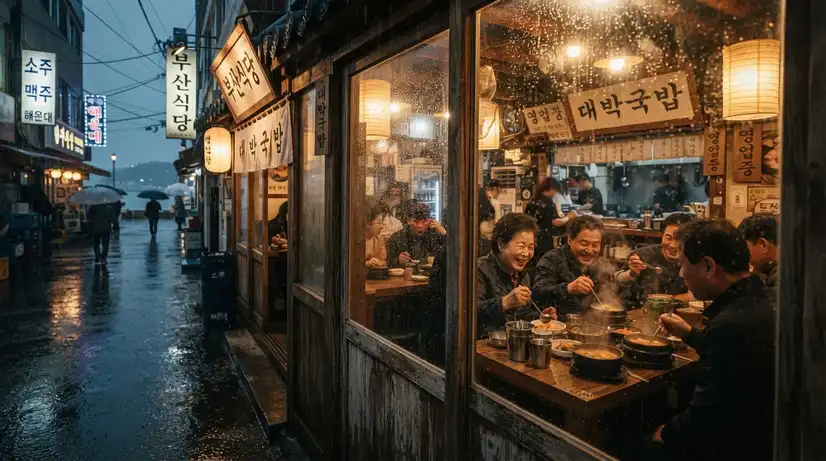
Sizzle That Echoes the Rain: The Art of Jijimi and Dongnae Pajeon
What’s the very first sound that comes to mind for Koreans on a rainy day? It’s the satisfying sizzle of a savory pancake frying in hot oil on a skillet. Perhaps it’s because the frequency of that sizzle mirrors the sound of rain falling outside. In Busan, locals lovingly refer to these fried pancakes in their regional dialect as ‘Jijimi.’
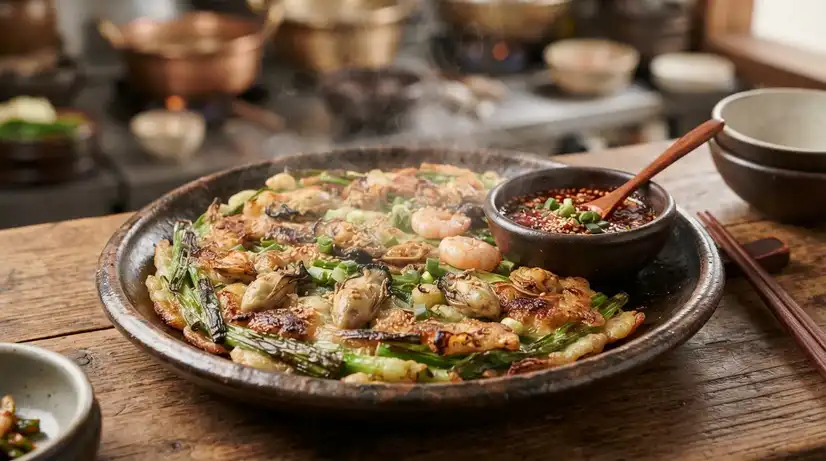
Among them, Dongnae Pajeon stands as the undisputed crown jewel of Busan’s food scene. While standard green onion pancakes lean heavily into crispiness, Dongnae Pajeon uses a soft rice-flour batter base, resulting in a unique, velvety, and tender texture. Layered generously with sweet scallions and an abundance of fresh oysters, clams, mussels, and shrimp, it is cooked almost like a steamed delicacy—a true labor-of-love dish.
The authentic local way to enjoy it is by dipping a thick slice into chogochujang (a tangy, sweet, and spicy red chili dipping sauce). It might sound surprising at first to western palates accustomed to savory soy dips, but once you taste how the ocean sweetness of the seafood and the mild bite of the scallions blend with the zesty sauce, you’ll instantly get why Busanites swear by this combination. Historic spots like Somunnan Dongnae Pajeon near Oncheonjang or the legendary Dongnae Halmae Pajeon offer an unforgettable atmosphere that doubles in charm when it rains. If you prefer extra-crispy mung bean pancakes (bindaetteok), head over to the historic alleys of Bupyeong Market or Beomil-dong for a deep, nutty crunch.
Busan’s Ultimate Soul Food: The Warm Embrace of Dwaeji Gukbap
When damp air and chills settle in, the very first place a local heads to is a humble pork soup joint. Dwaeji Gukbap (Pork Rice Soup) is far more than just a meal; it is the ultimate local comfort food, steeped deeply in Busan’s history and resilient working-class spirit.
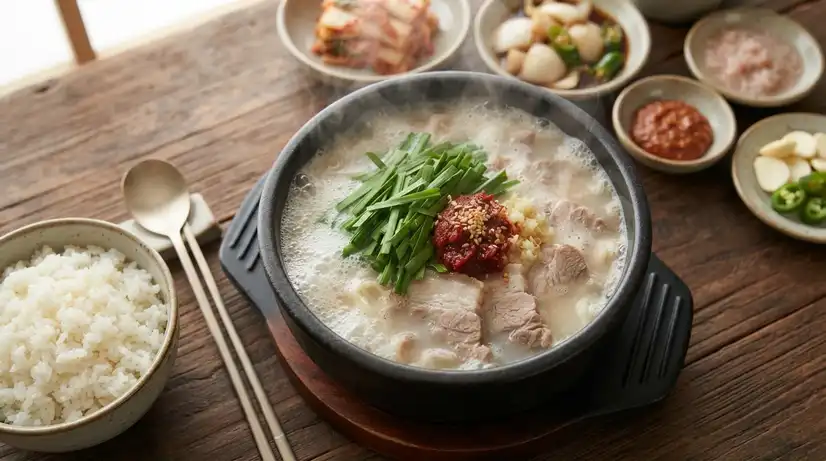
A bubbling earthenware pot filled with deeply rich pork bone broth and loaded with tender slices of pork meat warms your soul before you even take the first bite. Busan’s pork soup generally comes in two culinary styles: a clear, clean broth style reminiscent of traditional beef gomtang (like the Sinchang-dong style), or a milky, velvety broth similar to seolleongtang. Whichever style you choose, the non-negotiable rainy-day garnish is jeongguji (seasoned chives).
Tossing a generous handful of these zesty, seasoned chives into the steaming broth releases their fresh aroma into the soup, creating a perfectly balanced flavor profile. Even standing in line under an umbrella at Bonjeon Dwaeji Gukbap near Busan Station turns into part of the rainy-day romance once you taste that broth. Or seek out local hidden gems like Oki-ne Dwaeji Gukbap in Yeongdo, tuck in with the sound of rain as your ambient background music, and watch your travel fatigue melt away bowl by bowl.
Carb Comfort in the Mist: The Masterclass of Kalguksu and Sujebi
Why do we crave carbs when it rains? Scientists point to drops in blood sugar brought on by rising humidity, but I like to think it’s more about emotional warmth—the soothing comfort that warm, freshly hand-kneaded dough brings against a grey, misty backdrop. Busan’s tucked-away alleyways are lined with incredible noodle shops ready to satisfy that craving.
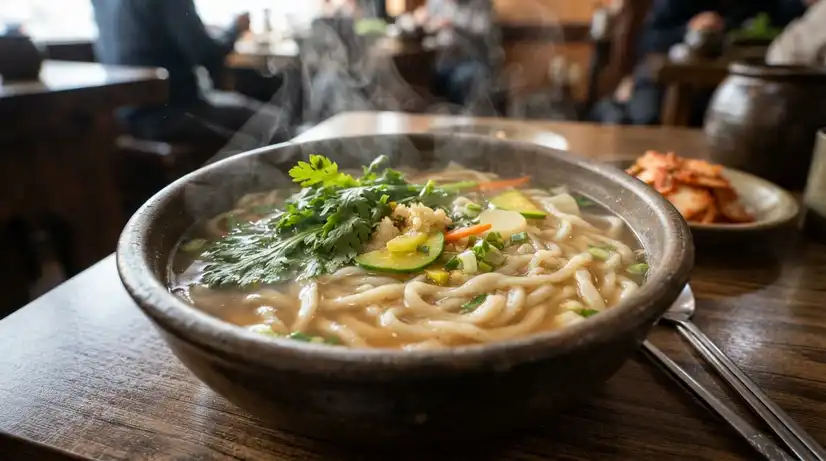
At Seomyeon Market, Gijang Kalguksu draws even longer lines on dreary days. Their thick, rustic hand-cut noodles served in a deeply savory dried-anchovy broth, topped generously with aromatic crown daisy leaves, cut right through the damp gloom. That first sip of steaming broth delivers a hearty comfort that hits even deeper than a classic bowl of chicken noodle soup on a cold winter day.
For something with a kick, check out Cha Ae-jeon Halmae Kalguksu in Yeonsan-dong, where crispy tempura bits and a special spice paste make for a rich, delightfully savory broth. And if you want to dial the seafood flavor up to eleven, head to Bada-jip in Nampo-dong for their signature seafood hot pot (sujung-jeongol), then toss in hand-cut kalguksu noodles at the end. It feels as if the very essence of Busan’s ocean breeze is washing over your palate.
The Perfect Pair: Busan’s Heritage Brew, Makgeolli
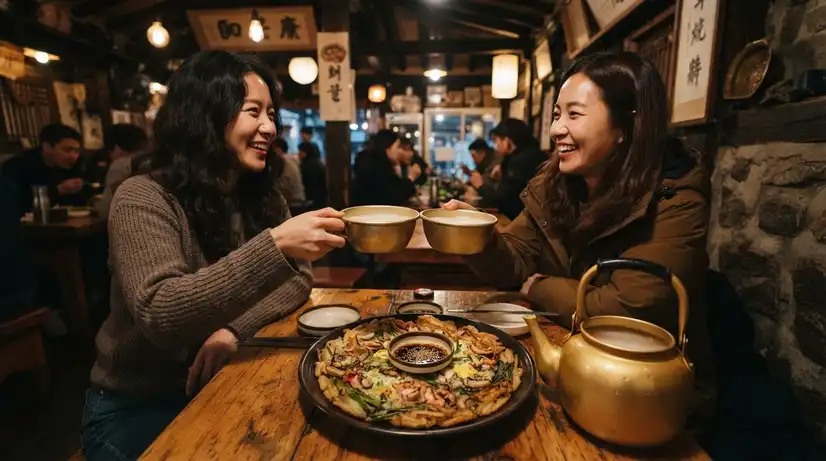
Talking about savory pancakes without mentioning Makgeolli (sparkling Korean rice wine) would be a culinary sin in Busan. Sitting down to a golden pancake paired with a ice-cold bowl of unfiltered rice wine on a rainy afternoon is one of the simple, elevated pleasures of Korean culture. Busan happens to brew some of the finest traditional rice wines in the nation, making it a dream destination for beverage enthusiasts.
Designated as South Korea’s Folk Liquor No. 1, Geumjeongsanseong Makgeolli is a local treasure you simply have to try. Crafted using pure mountain spring water and traditional starter cultures (nuruk), it boasts a distinctive, lively acidity reminiscent of a fine craft dry cider. That bright tartness cuts effortlessly through the rich, oily savory pancakes, creating a match made in food heaven.
If you prefer a smoother, lighter profile, Saengtak is the go-to everyday favorite for Busan locals. Softly effervescent with a gentle touch of sweetness, it goes down remarkably smooth. Sitting on a wooden bench at a historic tavern, listening to the rain fall while clinking cold brass bowls of makgeolli—it feels as though someone hit the pause button on life’s daily hustle, leaving you in pure tranquility.
Indoor Gourmet Escapes: Discovering Centum City and Underground Arcades
If the downpour gets too heavy for outdoor wandering, take advantage of Busan’s world-class indoor infrastructure. With mega shopping complexes and sprawling underground networks, you can embark on a top-tier food tour without letting a single drop of rain touch your clothes.
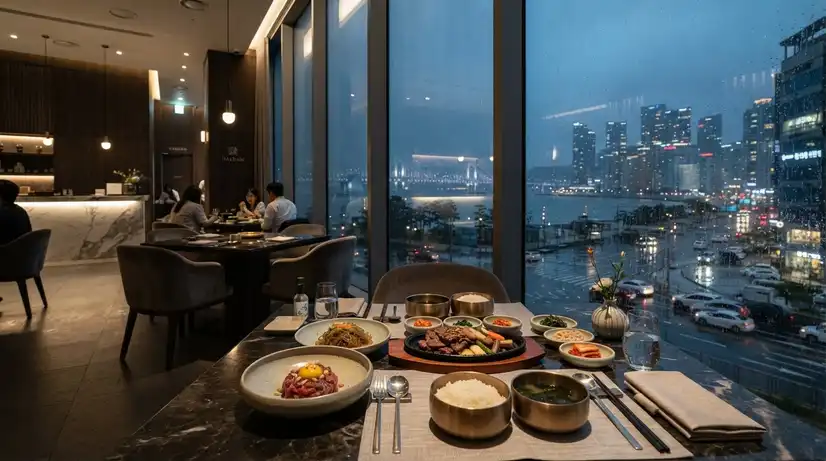
Spa Land in Haeundae’s Centum City is one of my absolute favorite rainy-day retreats. After unwinding in natural hot spring baths and Korean saunas, enjoy a bowl of hot seaweed soup (miyeok-guk) or bibimbap at their in-house restaurant—it rivals many top stand-alone eateries. Sitting by floor-to-ceiling windows with a steaming dish while watching the rain beat down outside feels like a luxury resort getaway.
Meanwhile, the underground shopping arcades in Seomyeon and Nampo-dong form a bustling indoor food labyrinth of their own. You can sample classic Busan street bites like glass noodle salad (bibim dangmyeon), tteokbokki, and fish cakes in complete climate-controlled comfort. Standing at a counter down in the arcade, cupping a warm paper cup of hot fish cake broth, is the kindest welcome a rainy-day traveler could ask for.
Rain in Busan isn’t an obstacle—it’s an invitation to slow down and discover a depth of flavor you might otherwise pass right by. With the satisfying crunch of a savory pancake, the comforting warmth of pork broth, and the refreshing crispness of local makgeolli, a rainy day in Busan will stay with you far longer than any sunny afternoon. Grab an umbrella and step out into Busan’s charming alleys to find your own hidden culinary treasures.
FAQ
Q: If I could only choose ONE dish on a rainy day in Busan, what should it be?
A: While personal tastes vary, nothing captures Busan’s rainy-day soul quite like pairing Dongnae Pajeon with a cold bowl of Geumjeongsanseong Makgeolli. Listening to the rain while savoring the sizzle of seafood pancake is an experience you won’t forget.
Q: How is Dongnae Pajeon different from regular green onion pancakes?
A: Unlike standard pajeon, which focuses heavily on a thin, crispy crust, Dongnae Pajeon features a thick, soft, and moist texture. Made with a rice-flour batter and packed with fresh seafood, it’s finished with beaten egg and cooked gently almost like a savory steamed pie.
Q: Why do people always add seasoned chives (jeongguji) to Dwaeji Gukbap?
A: In traditional Korean culinary philosophy, chives possess warming properties that balance out the cool nature of pork, boosting digestion and stamina on chilly, damp days. Flavor-wise, the fresh, slightly spicy kick enhances the richness of the broth perfectly.
Q: What’s the best way to get around Busan on a rainy day?
A: Traffic in Busan can get notoriously congested when it rains. Since most iconic eateries are located near major subway stops (Seomyeon, Nampo, Busan Station, Oncheonjang), taking the subway is by far the fastest and most reliable option.
Q: Where can I try Geumjeongsanseong Makgeolli?
A: You’ll get the freshest taste at traditional restaurants tucked up in Geumjeongsanseong Village itself. However, it’s also widely available at traditional taverns (folk pubs) throughout downtown Busan and at major local supermarkets.
Q: I can’t eat spicy food. What rainy-day dishes do you recommend?
A: Mild, non-spicy options include anchovy-broth Kalguksu, mild Dwaeji Gukbap (just ask for the red spice paste / dadaegi on the side or omitted), and Dongnae Pajeon, which is completely mild and family-friendly.
Q: Can I still enjoy traditional street markets when it rains?
A: Absolutely! Major traditional markets like Bupyeong Kkangtong Market and Gukje Market feature fully covered modern arcade ceilings, allowing you to enjoy an authentic street-food crawl completely dry.
Q: What’s a good rainy-day spot to visit with kids?
A: The restaurant floors and dining areas inside Shinsegae Department Store Centum City or Spa Land are top choices. They offer spacious, clean dining environments with kid-friendly menu items like rich seaweed soup, pork cutlets (donkatsu), and mild noodles.
Q: What makes Busan’s ‘Saengtak’ Makgeolli unique?
A: Saengtak is known for its pleasant carbonation, clean finish, and approachable sweetness. It’s light and refreshing, making it an easy entry point for travelers trying traditional Korean rice wine for the first time.
Q: What’s a great rainy-day indoor date itinerary in Busan?
A: A classic local date involves exploring the Seomyeon Underground Shopping Center for shopping and street bites, followed by cozying up in a historic nearby eatery for a steaming bowl of Dwaeji Gukbap or Kalguksu.