
The Thrill of Travel and the Dread of Dead Batteries
Packing for an international trip is always an exciting ritual. You have your passport, your perfectly curated outfits, and an itinerary packed with incredible restaurants and cultural landmarks. Over my many years of traversing across North America, Europe, and Asia, I have learned that while figuring out public transportation and local dining customs is important, there is one technical detail that can literally make or break your trip: electricity.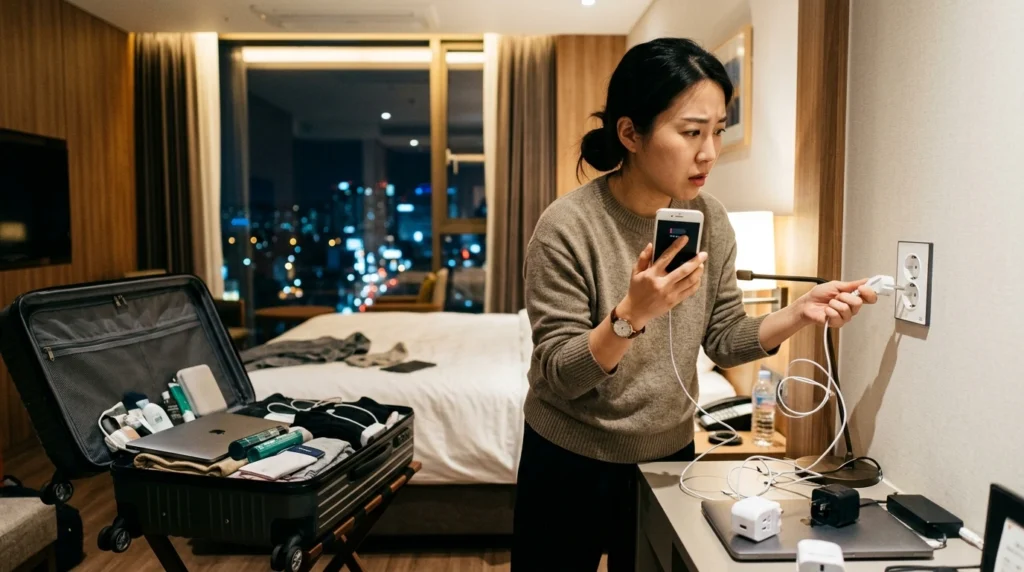
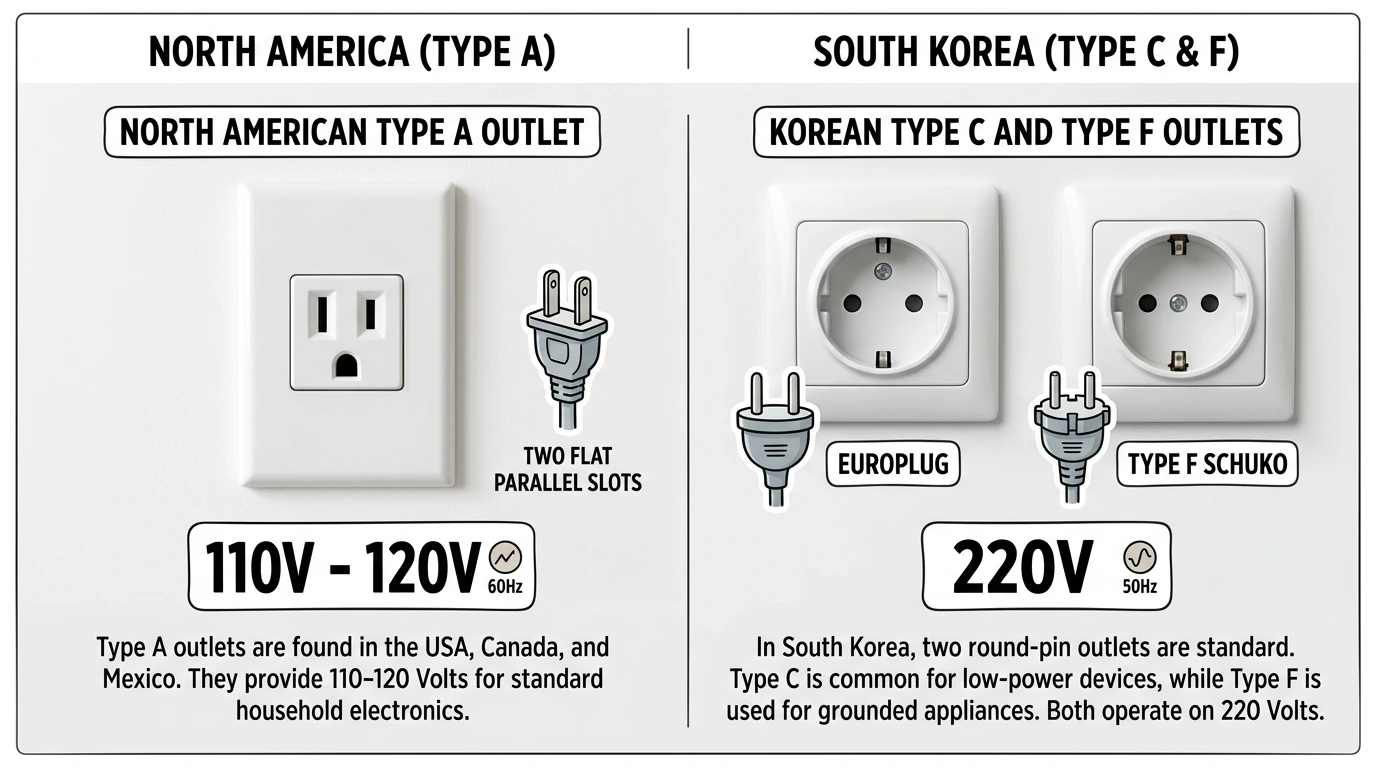
There is nothing quite like the panic of arriving in Seoul, snapping hundreds of photos of stunning palaces and bustling night markets, only to return to your hotel room with a phone battery sitting at two percent. You pull out your trusty charger, look at the wall, and suddenly realize the outlet looks nothing like the one you have back home. Worse yet, you might have heard horror stories of travelers who simply plugged their beloved electronics into a foreign wall, only to be greeted by a loud pop, a puff of smoke, and a completely destroyed device.
The fear of frying your electronics is incredibly common, but it does not have to be your reality. Understanding how electricity works in different parts of the world, specifically in South Korea, is actually quite simple once you know what to look for. Let us dive into the exact details of Korean outlets, what your phone charger can actually handle, and how to keep all your gadgets perfectly safe and fully charged during your entire journey.
The Shocking Truth About Korean Outlets and Voltage
To understand why devices can get ruined abroad, you first need to understand the basic differences in electrical systems around the world. In North America, the standard electrical voltage supplied to homes and hotels is typically 110V to 120V. The outlets are designed to accept plugs with two flat, parallel pins (known as Type A or Type B).
However, South Korea operates on a completely different standard. The electrical system in Korea delivers power at 220V. Furthermore, the physical shape of the outlets is completely different. Korea uses Type C and Type F outlets. These are characterized by two round holes instead of flat slots. Type C is the standard round two-pin plug, often referred to as a “Europlug,” while Type F is very similar but includes grounding clips on the sides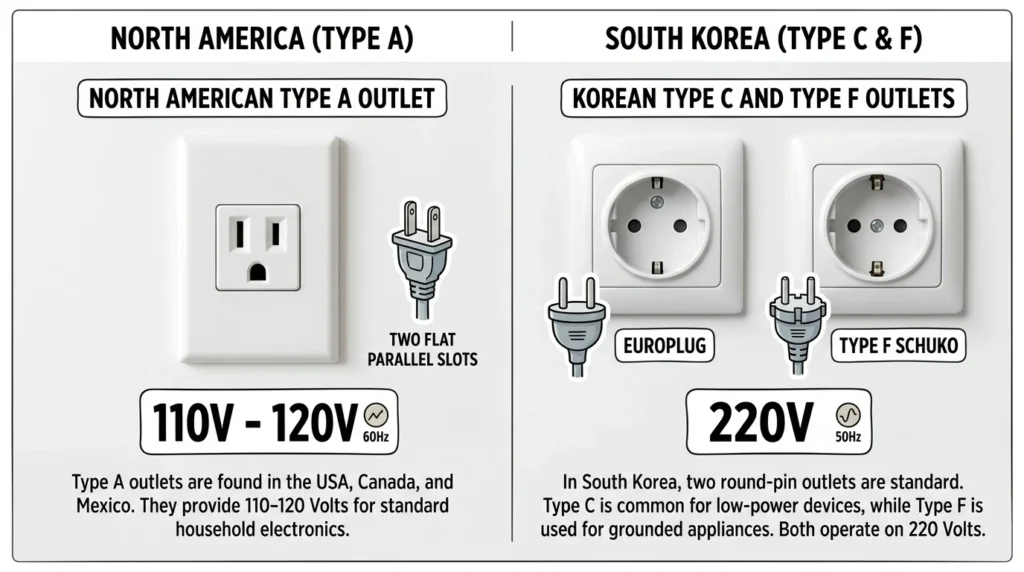
If you try to force a standard North American plug into a Korean outlet, it simply will not fit. But the physical mismatch is actually a blessing in disguise. If you could somehow force a 110V-only device into a 220V outlet without a converter, the device would draw twice the voltage it was designed for. This rapid influx of power is exactly what causes electronics to overheat, melt, or literally go up in smoke. Therefore, adapting to the Korean electrical system requires addressing two separate issues: the physical shape of the plug and the internal voltage capacity of your device.
The Magic of Free-Volt: Will Your Charger Survive?
Now for the million-dollar question: Will your standard smartphone or laptop charger work in Korea, or will it explode? The excellent news is that your phone charger is almost certainly going to be perfectly fine.
Technology companies realize that people travel, and building different chargers for every single country would be an absolute logistical nightmare. Because of this, the vast majority of modern electronic chargers—including those for iPhones, Samsung Galaxy devices, MacBooks, and most modern laptops—are built with what is known as a “free-volt” or dual-voltage capability.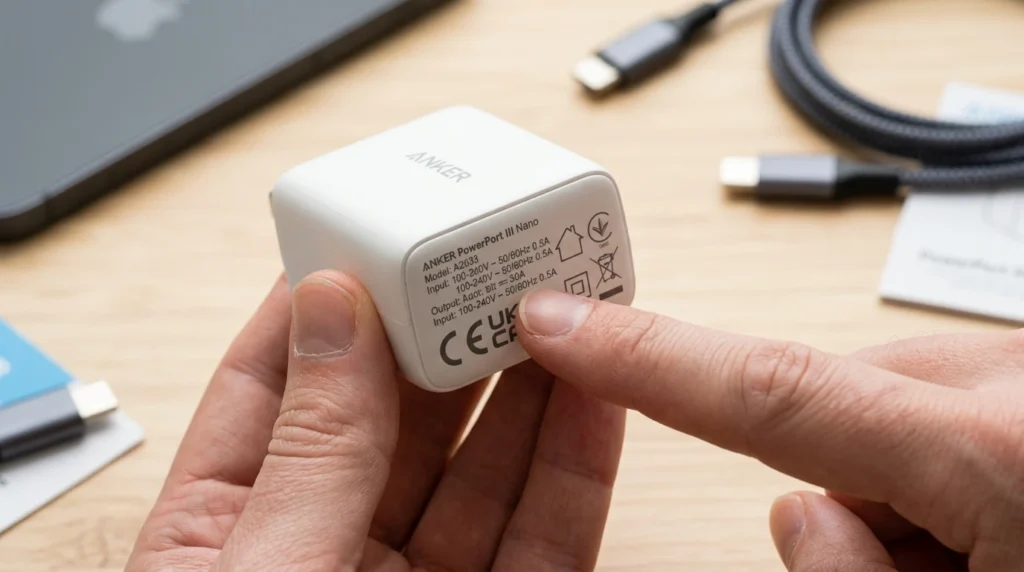
How can you be absolutely sure? You need to look very closely at the small, often hard-to-read text printed on the back or bottom of your charging brick. You are looking for the word “Input.” On a free-volt charger, the text will read something like: Input: 100–240V ~ 50/60Hz.
This tiny string of text is your golden ticket. It means that the internal circuitry of the charger is smart enough to accept any voltage between 100 volts and 240 volts and safely convert it down to the tiny amount of power your phone actually needs. Whether you plug it into a 110V socket in Seattle or a 220V socket in Seoul, the charger handles the heavy lifting automatically. You do not have to worry about your phone or laptop frying as long as that “100-240V” label is clearly printed on the power adapter.
The Essential Travel Buddy: Plug Adapters vs. Transformers
Since your smartphone charger can likely handle the 220V electrical current, you do not need to carry around a heavy, expensive voltage transformer. A transformer is a bulky piece of equipment that actively steps down the electricity from 220V to 110V. Since your charger already does this internally, buying a transformer for a smartphone is a complete waste of luggage space and money.
What you do need is a physical Plug Adapter. This is a small, cheap, and lightweight accessory that simply changes the physical shape of your plug from the flat North American style to the round Type C or Type F style used in Korea. In Korea, these simple adapters are affectionately nicknamed “pig noses” because the two round holes on the front look exactly like a pig’s snout.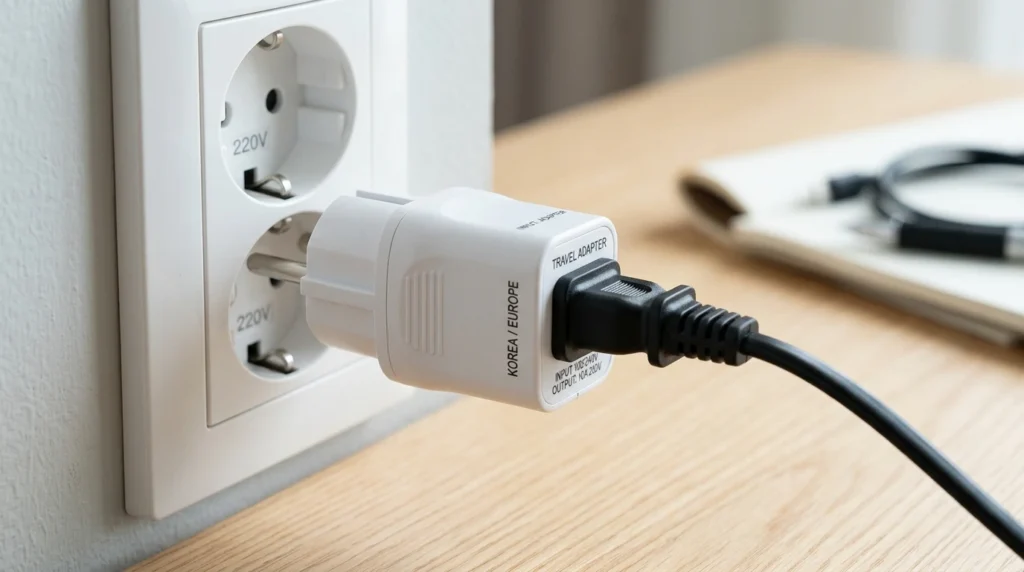
You can purchase a universal travel adapter that has sliders for multiple countries, which is highly recommended for frequent travelers. Alternatively, you can buy a handful of cheap, single-purpose Type C/F adapters. You just plug your normal phone charger into the back of the adapter, and then plug the adapter directly into the Korean wall socket. It is that simple. The electricity flows through the adapter, into your smart charger, and safely powers up your phone.
Danger Zone: What Will Actually Fry in Korea
While smartphones, tablets, handheld gaming consoles, and laptops are generally safe because they use free-volt chargers, you must exercise extreme caution with other types of electronics. The most dangerous items to travel with are things that generate heat or have heavy-duty motors.
Hair dryers, curling irons, hair straighteners, and travel kettles are notorious for ruining vacations. These devices require a massive amount of electricity to generate heat. Because of this, they are rarely built with free-volt technology. If you look at the label on a typical North American hair dryer, it will likely say Input: 120V only.
If you take a 120V hair dryer, attach a simple “pig nose” plug adapter, and plug it into a 220V Korean outlet, the results will be catastrophic. The device will draw double the power it is rated for. The heating coils will instantly superheat, the plastic casing may melt, and the internal motor will burn out—often accompanied by a loud pop, smoke, and a tripped circuit breaker in your hotel. It is a genuine fire hazard.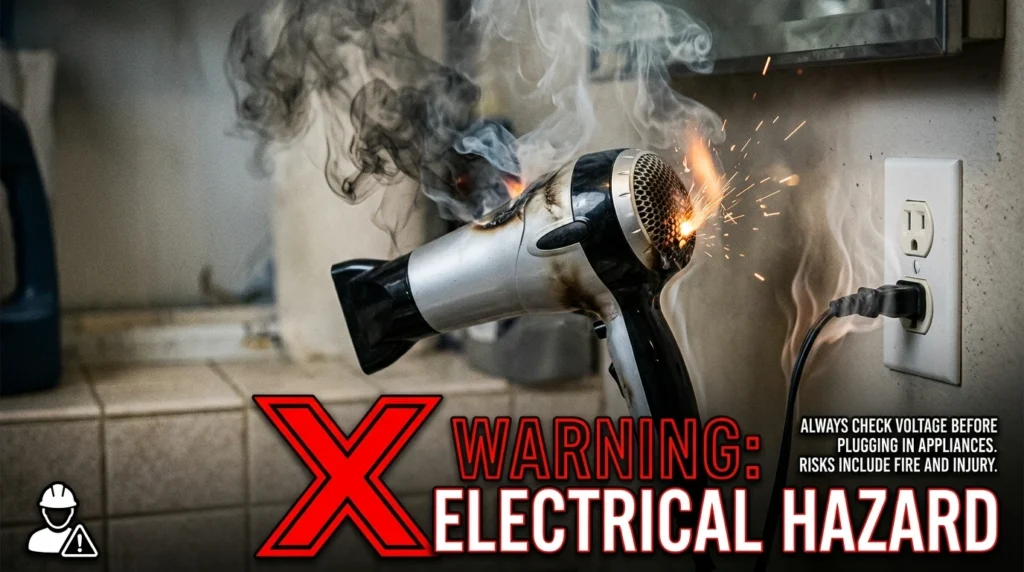
For heating tools, you have two safe options. You can either purchase a heavy-duty step-down voltage transformer (which is often heavier and more expensive than the hair dryer itself), or you can simply buy a dual-voltage travel hair dryer before your trip. Better yet, save the luggage space and rely on the hair dryer provided by your Korean hotel or Airbnb. Always double-check every single device before plugging it into a foreign wall, and when in doubt, leave the high-heat styling tools at home.
FAQ
Q: Do I need a voltage converter for my iPhone in Korea?
A: No, you do not need a voltage converter. Apple power adapters are dual-voltage (100-240V). You only need a physical plug adapter to change the shape of the prongs to fit the Korean Type C or F outlets.
Q: What is the standard voltage in South Korea?
A: The standard voltage in South Korea is 220V.
Q: What type of plug adapter do I need for Korea?
A: You need a Type C or Type F plug adapter. These feature two round pins. Type F includes grounding clips on the side, but both will generally fit into standard Korean wall outlets.
Q: Can I use my laptop charger in Korea without it breaking?
A: Yes, the vast majority of modern laptop chargers (Mac and PC) are designed to handle 100-240V. Always check the label on the power brick to confirm, but you will typically only need a simple plug adapter.
Q: Will a North American hair dryer work in Korea?
A: Generally, no. Most standard North American hair dryers are strictly 110-120V. Plugging them into a 220V outlet with just a plug adapter will cause them to overheat, break, and potentially start a fire. You must use a dual-voltage hair dryer or a high-wattage step-down transformer.
Q: What happens if I plug a 110V device into a 220V outlet?
A: The device will draw too much power, which will cause the internal components to melt, burn, or short-circuit. It will permanently destroy the device and is a severe fire hazard.
Q: How can I tell if my device is dual-voltage or free-volt?
A: Look at the small print on the power adapter or the device itself. If the “Input” section says “100-240V”, it is dual-voltage and safe to use in Korea with just a plug adapter.
Q: Where can I buy a plug adapter in Korea if I forgot mine?
A: Plug adapters are very easy to find. You can buy them at the airport upon arrival, at major convenience stores, or at large discount stores and electronics shops across the country.
Q: Is a plug adapter the same thing as a voltage converter?
A: No. A plug adapter only changes the physical shape of the prongs so they fit into the wall. A voltage converter actually alters the electrical current from 220V down to 110V.
Q: Can I use my electric toothbrush charger in Korea?
A: You must check the base of the charger. Some electric toothbrush chargers are strictly 110V, while others are 100-240V. If it only says 110V or 120V, do not plug it in.
Q: Are multi-country universal travel adapters safe to use?
A: Yes, universal travel adapters are great because they cover multiple plug types. Just remember that they act only as physical adapters, not voltage converters, so you still need to ensure your device is dual-voltage.
Q: Why do Koreans call the plug adapter a “pig nose”?
A: The term “pig nose” is a popular slang term in Korea because the two round holes on the front of the Type C/F adapter look exactly like the snout of a pig.