
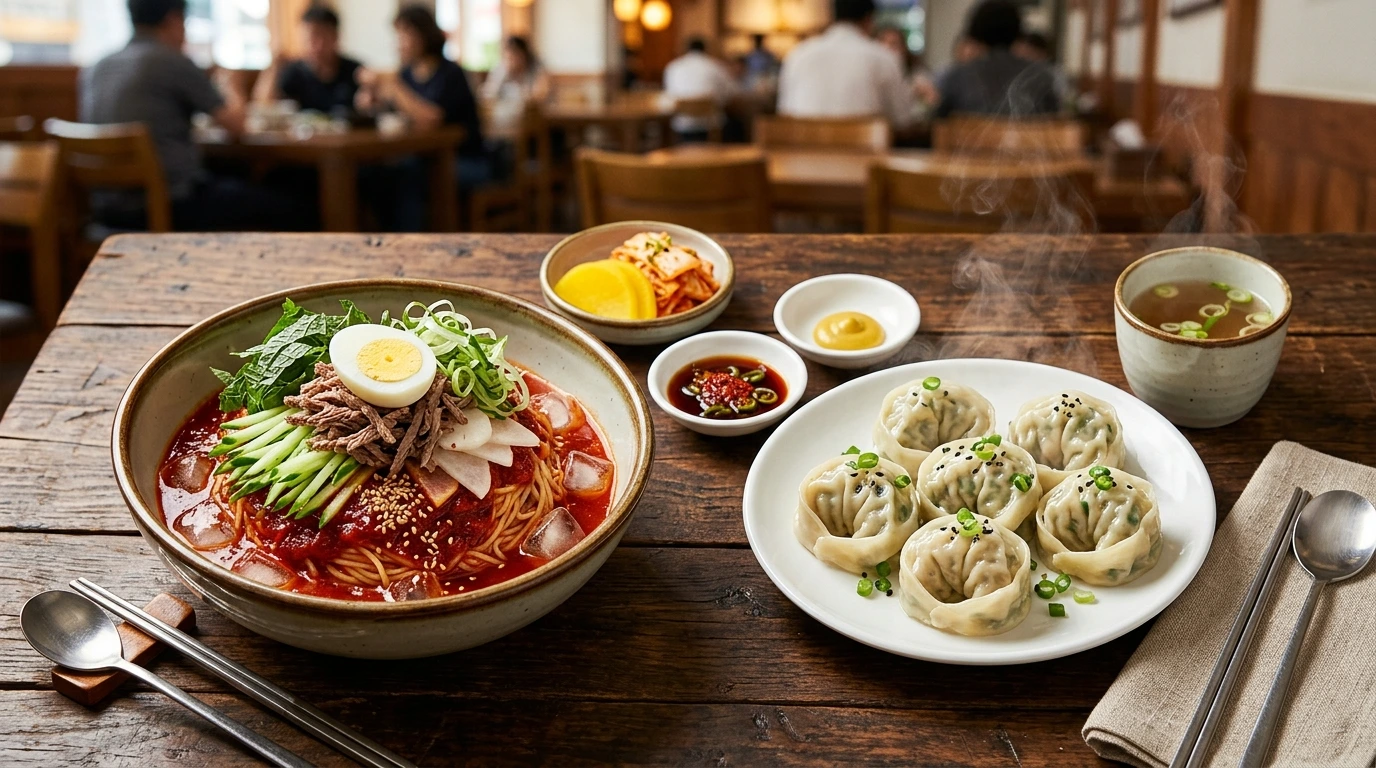
 When the summer sun beats down relentlessly, finding the perfect way to cool off becomes a daily mission. Navigating through bustling city streets, you can feel the radiant heat from the pavement, reminding me of sticky summer afternoons spent wandering through vibrant metropolitan downtowns across North America. But here in the heart of Busan, the local remedy for the sweltering weather is uniquely refreshing and wonderfully fiery. It is an experience that goes beyond merely grabbing a bite; it is about immersing yourself in the fast-paced, dynamic energy of the city while savoring a bowl of perfectly chilled, spicy noodles. The secret to beating the heat like a true local lies in the lively alleys of Seomyeon and its legendary Bibim-milmyeon.
History & Story
Seomyeon is the undeniable beating heart of Busan, a neighborhood that never seems to sleep and is always buzzing with an infectious, youthful energy. Navigating through the Seomyeon Market area, you are immediately swept up in a sea of locals and travelers. The streets are a fascinating blend of the old and the new, where modern cafes sit comfortably next to decades-old traditional eateries. The local Milmyeon (wheat noodle) shops here are institutions in their own right. Many of these cherished establishments have guarded their spots for decades, evolving from humble street-side stalls into legendary culinary landmarks.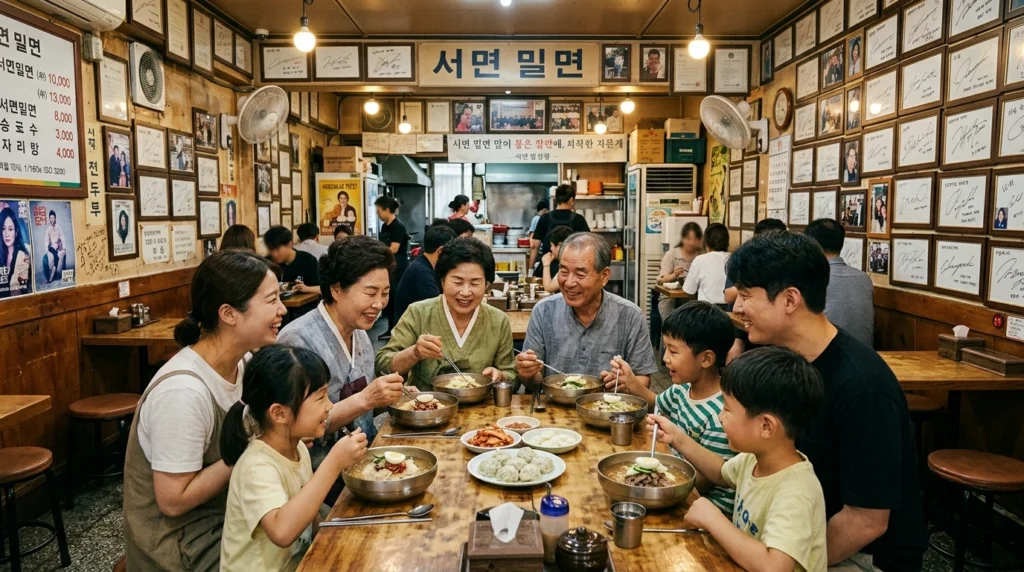
Stepping into one of these beloved restaurants feels like walking into a living archive of the city’s culinary history. The walls are typically adorned with countless autographs from celebrities, politicians, and athletes who have stopped by for a taste of authentic local flavor. What truly makes the atmosphere special, however, is witnessing the generations of loyal patrons. You will often see grandparents sharing a meal with their grandchildren, passing down the tradition of enjoying this regional specialty. The deep-rooted affection the locals have for these shops creates an incredibly warm and nostalgic vibe, offering a comforting contrast to the frantic pace of the busy streets outside.
Flavor Style
The magic of Bibim-milmyeon lies in its brilliant orchestration of textures and bold flavors. Unlike traditional cold buckwheat noodles, Milmyeon is made from wheat flour, resulting in a noodle that is delightfully chewy yet tender enough to bite through easily. The noodles are generously coated in a vibrant, crimson-red sauce that strikes a flawless balance between spicy, sweet, and tangy. This complex flavor profile dances on the palate, instantly reviving an appetite diminished by the summer heat.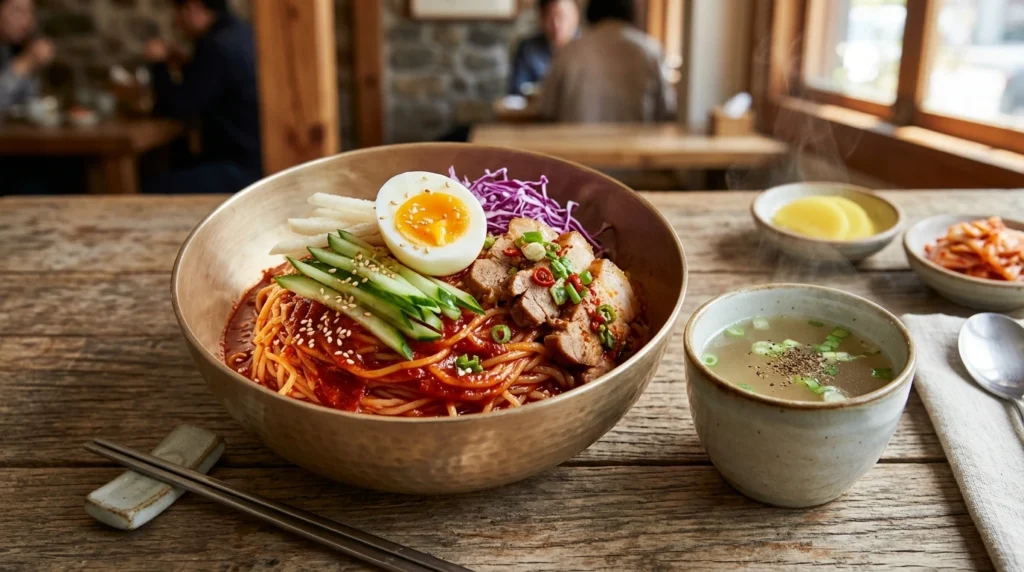
The bowl is beautifully garnished with an array of fresh toppings that add a refreshing crunch and satisfying substance. Crisp, thinly sliced cucumbers, a perfectly boiled egg, and generous cuts of savory pork—or sometimes uniquely shredded chicken breast—crown the vibrant red noodles. Before you dive into the spicy bowl, or even during your meal, you must experience the essential “On-yuksu” (warm broth). This self-serve, piping hot soup is simmered from 100% domestic beef bones and premium pork. It is exceptionally clear yet boasts a profoundly rich and savory depth, reminiscent of a high-quality Galbitang. A dash of black pepper over this warm broth elevates its aroma, providing a deeply comforting element that perfectly neutralizes the fiery kick of the Bibim-milmyeon.
Customer Reviews & Essential Waiting Tips
Because these eateries are the ultimate local favorites, you should expect to see lines forming outside, especially during peak lunch hours and hot summer weekends. However, do not let a seemingly endless queue deter you from experiencing this iconic dish. The dining culture here is built on efficiency and speed. The turnover rate is incredibly fast, fueled by the brisk, practiced movements of the staff and the straightforward nature of the menu.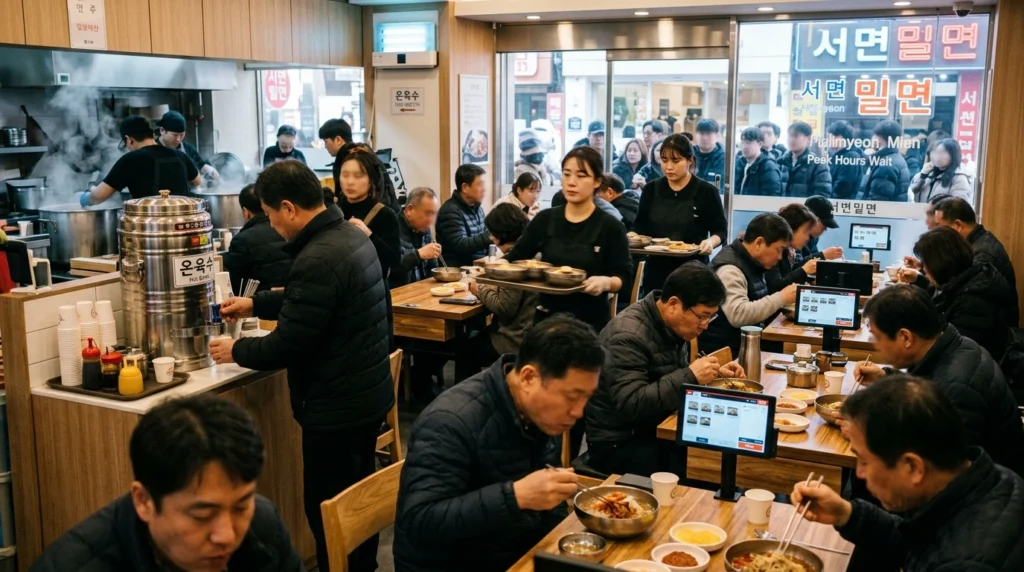
In recent times, many of these classic establishments have seamlessly integrated modern technology to enhance the customer experience. You will often find tablet PCs at every table, allowing guests to place their orders and make payments with just a few taps. This modern touch not only speeds up the service but also adds to the fast, upbeat energy of the restaurant. A crucial tip for first-timers: embrace the pace. Have your order in mind before you sit down, and do not hesitate to ask for extra warm broth from the self-serve stations while you wait for your food. The bustling environment might feel a bit chaotic at first, but it is an integral part of the authentic dining experience.
The Signature Highlight
While a bowl of Bibim-milmyeon is a spectacular meal on its own, no visit is truly complete without experiencing the ultimate local pairing: Son-mandu (handmade dumplings). The unwritten rule among regulars is to always order a steaming plate of these delicate, thin-skinned beauties alongside your noodles. The translucent dumpling wrappers are wonderfully chewy, encasing a generous, juicy filling of minced pork, tofu, and fragrant chives.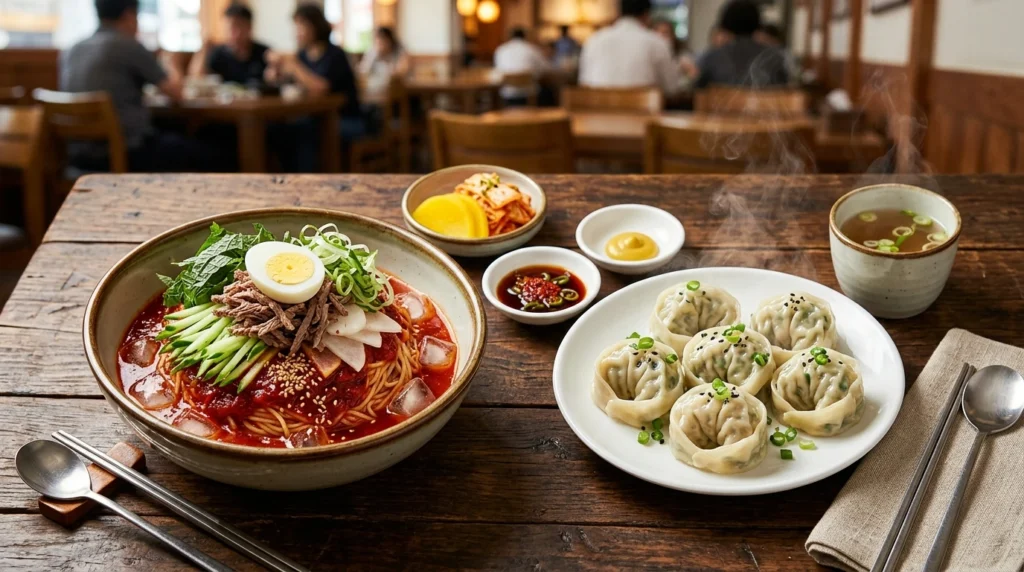
The contrast between the chilled, fiery, and tangy noodles and the hot, savory, and rich dumplings is nothing short of culinary perfection. Taking a bite of the savory dumpling followed by a slurp of the spicy noodles creates a symphony of flavors that will make you forget all about the oppressive heat outside. To truly eat like a local, remember to customize your bowl. Add a quick splash of vinegar and a small dab of mustard to the Bibim-milmyeon. This simple addition intensifies the sweet and sour notes of the sauce, cutting through the richness of the dumplings and leaving a clean, refreshing finish. It is this interactive and customizable approach to dining that transforms a simple meal into a memorable, vibrant culinary adventure.
💡 Finished your refreshing cold noodles? Now it’s time to warm your soul with Busan’s other legendary comfort food!
FAQ
What exactly is Bibim-milmyeon?
Bibim-milmyeon is a popular cold noodle dish originating from Busan, featuring chewy wheat noodles mixed with a spicy, sweet, and tangy red chili sauce, topped with fresh vegetables and meat.
How spicy is the Bibim-milmyeon?
It has a moderate, pleasant kick. The spice level is balanced with sweetness and tanginess, making it enjoyable even for those who are sensitive to very fiery foods.
What is On-yuksu?
On-yuksu is a warm, savory broth made from simmering beef and pork bones. It is typically offered complimentary and self-serve at Milmyeon restaurants.
Why do locals drink hot broth with cold noodles?
The rich, warm broth helps to soothe the stomach, prepares the palate before the meal, and perfectly neutralizes the spicy heat of the cold noodles.
Do I need to make a reservation?
No, these restaurants operate on a first-come, first-served walk-in basis. Due to the fast turnover, lines move very quickly.
Is it difficult to order if I do not speak the language?
Not at all. Many of the popular spots now use table-mounted tablet PCs with pictures and multiple language options, making ordering incredibly easy.
What is the best side dish to order?
Handmade dumplings (Son-mandu) are the absolute best pairing. The savory, juicy dumplings perfectly complement the spicy, cold noodles.
Should I cut the noodles before eating?
Unlike traditional cold buckwheat noodles which can be very tough, wheat noodles are softer. A single cut with scissors is usually enough, though many locals prefer not to cut them at all to enjoy the full chewy texture.
How should I use the vinegar and mustard provided on the table?
Add a light splash of vinegar and a small squeeze of mustard to your noodles and mix well. This enhances the tanginess and adds a sharp, refreshing flavor profile.
Are there vegetarian options available?
Traditional Milmyeon relies heavily on meat-based broths and meat toppings, so strict vegetarian options are usually not available at these specific specialty shops.
Is Seomyeon easy to access via public transportation?
Yes, Seomyeon is a major transit hub in the city. It is highly accessible via multiple subway lines and bus routes.
Can I take the food to go?
Most restaurants offer takeout options, but the dish is best enjoyed immediately dining-in to fully appreciate the perfect texture of the freshly boiled noodles and the vibrant restaurant atmosphere
🎁 The Ultimate Guide to Experiencing Busan Like a Local
Don’t miss out on the authentic flavors and hidden local stories of Busan during your BTS concert trip!
💜 Essential Guide for BTS Concert Attendees