
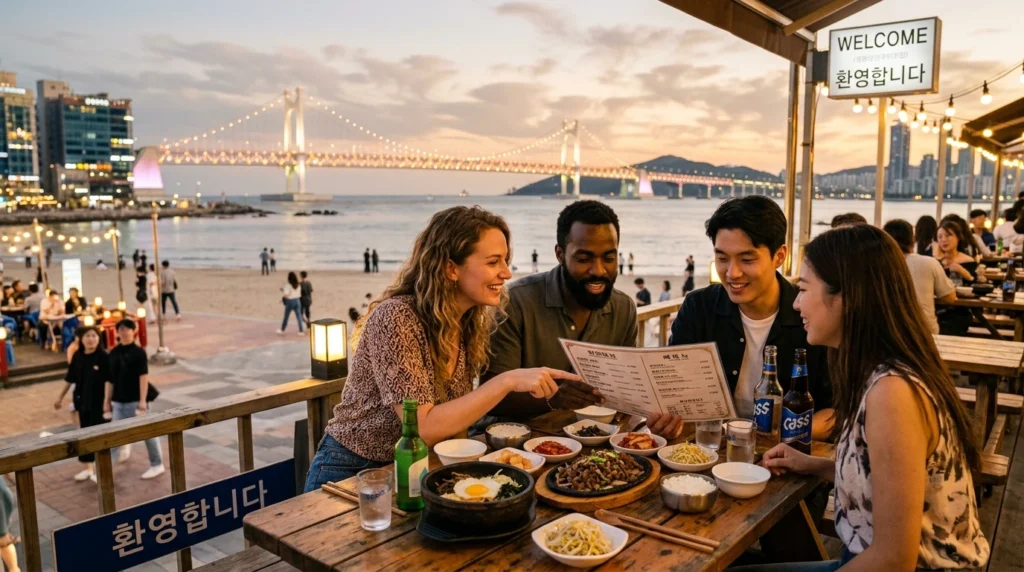
 Having integrated my life into two distinct cultural and linguistic worlds, I’ve been blessed with a deeper appreciation for how food, history, and people connect.
Whenever friends I’ve bonded with across the Pacific visit the dynamic coastal city of Busan, I naturally step into the role of their culinary guide—helping them navigate not just a menu, but the rich cultural nuances behind it.
Although Busan’s culinary heritage is magnificent, the bold spices and unfamiliar ingredients can feel overwhelming for international travelers. Understanding both the Western palate and the local food scene, I’ve curated a foolproof guide tailored to diverse preferences. From serene traditional settings to mindful vegetarian and gluten-free options, and authentic soul food, this guide ensures a seamless, unforgettable journey into the heart of Busan’s flavors.
Traditional Korean Dining Experience with a Gentle Touch
When foreign guests arrive in Korea, they often want to experience the visual and cultural beauty of the country just as much as the food itself. For an immersive traditional dining experience that caters to international tastes, Songjeongok in Songjeong-dong, Haeundae-gu, is an absolute must-visit.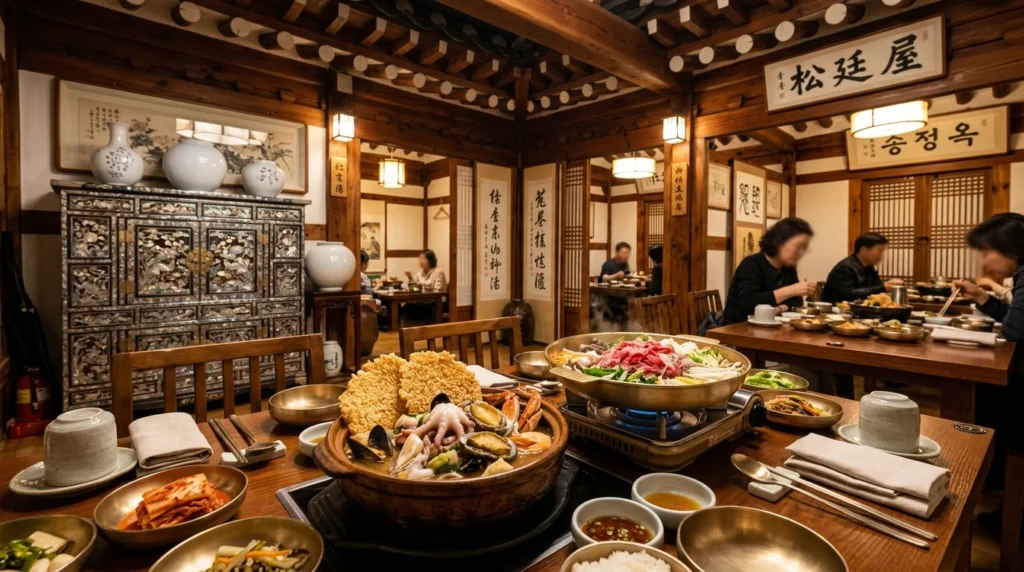
Stepping into Songjeongok feels like walking into a traditional folk museum or a high-end cultural gallery. The interior is beautifully decorated with Hanok-style rafters, stunning mother-of-pearl cabinets, white porcelain decor, and elegant brassware. It provides the perfect backdrop for photos and offers a deep dive into Korean aesthetic heritage.
The star of the menu here is the Hwangmi Nurungji Seafood Stew paired with Beef Shabu-shabu. This magnificent dish features an abundance of fresh seafood, including octopus, abalone, shrimp, and blue crab, all complemented by crispy golden brown rice crusts (nurungji). What makes this restaurant perfect for foreigners is the incredible flexibility. The kitchen allows you to adjust the spice level of the seafood stew to “not spicy” or “mild,” ensuring that even those with zero spice tolerance can enjoy the rich ocean flavors. The accompanying beef shabu-shabu provides a comforting, non-spicy broth with tender meat and vegetables, offering a perfectly balanced meal.
Vegetarian and Gluten-Free Friendly Havens
Finding vegetarian or gluten-free options in Korea used to be quite a challenge, especially in a seafood and pork-heavy city like Busan. However, things have changed dramatically. If you are a vegetarian or have gluten sensitivities, you do not have to miss out on the authentic Korean dining experience.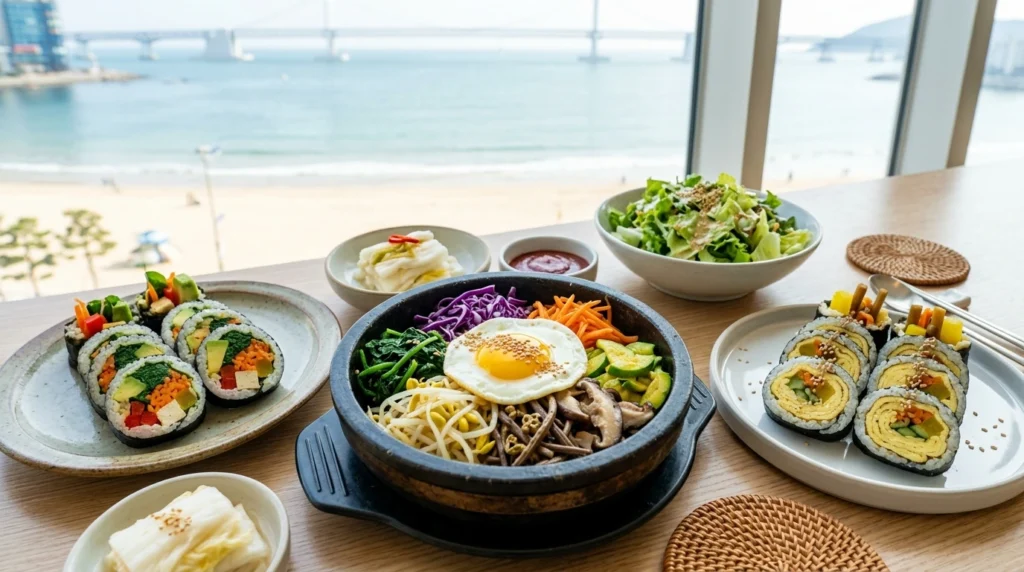
Suhun Sikdang in Gijang-gun is a fantastic choice for those looking for highly “Instagrammable” and refined plating. For vegetarians, they offer a special customized bibimbap gochujang (red pepper paste) that is entirely meat-free, replacing the standard meat-based paste often used elsewhere. Their fluffy egg gimbap is another mild, comforting option that international guests adore.
If you are exploring the bustling Seomyeon area, Woojung Dolsot Bibimbap is a legendary spot that has already gained strong word-of-mouth among budget-conscious travelers. Bibimbap is inherently one of the easiest Korean dishes to customize. You can easily ask the staff to remove any meat or specific toppings, making it a flawless and filling vegan or vegetarian option served sizzling hot in a stone bowl.
For a beachside treat, head over to Jenny & Gimbap near Gwangalli Beach. Gimbap is the ultimate Korean soul food for picnics, but it often contains processed meats like ham. This shop is incredibly accommodating to dietary restrictions, allowing you to easily omit ham or other specific ingredients. Grabbing a customized, gluten-friendly, or meat-free gimbap roll and enjoying it while watching the waves crash at Gwangalli Beach is an experience you simply cannot miss.
Authentic Local Busan Flavors for the Adventurous Foodie
For the culinary explorers who want to eat exactly what the locals eat, Busan has several iconic dishes that define the city’s gastronomic identity. These dishes are deeply rooted in the region’s history and geography.
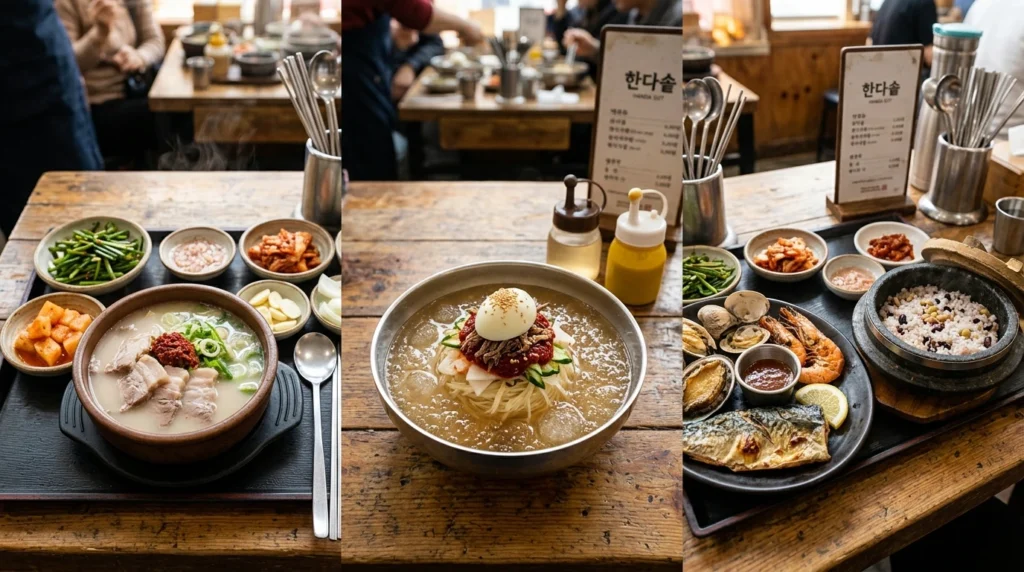
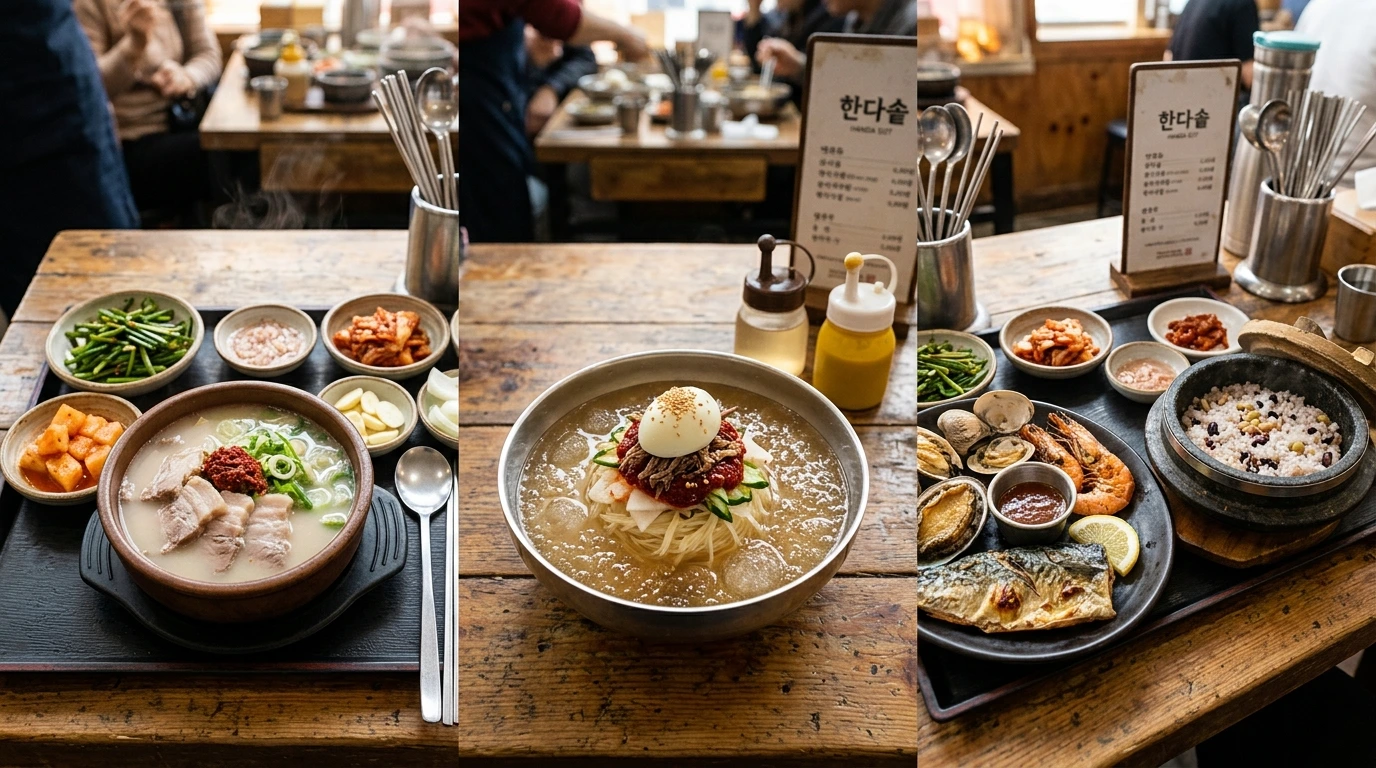
Dwaeji Gukbap (Pork Rice Soup) is the undeniable soul food of Busan. It features a rich, milky-white broth boiled for hours, filled with tender slices of pork. It is hearty, warming, and deeply comforting. Places like Seoga Dwaeji Gukbap in Haeundae offer incredibly clean and savory broths that serve as a perfect introduction to this iconic dish. You season it yourself with salted shrimp and garlic chives, making it highly customizable to your taste.
Milmyeon (Korean Chilled Wheat Noodles) is another Busan exclusive. While the rest of Korea enjoys cold buckwheat noodles (Naengmyeon), Busan locals prefer Milmyeon, which features a smoother, chewier wheat-based noodle in an icy, refreshing broth. Establishments like Somunnan Gaya Milmyeon near City Hall serve up bowls of this sweet, tangy, and slightly spicy delicacy that provides the ultimate refreshment after a long day of sightseeing.
Being a major port city, Busan’s seafood is unparalleled. For a refined seafood experience, Handa Sot in Gwangalli serves impeccable grilled fish alongside traditional stone pot rice. If you are feeling a bit more adventurous and want to try something spicy and sweet, Bulggeun Nakji near Busan Station offers mouth-watering stir-fried octopus that perfectly captures the vibrant energy of Korean seafood cuisine.
Sweet Endings at Vegan and Gluten-Free Cafes
No culinary tour is complete without dessert. The Jeonpo-dong cafe street area has become a massive hub for trendy, health-conscious, and dietary-friendly dessert spots. It is the perfect place to unwind with your foreign friends who might be sensitive to dairy or gluten.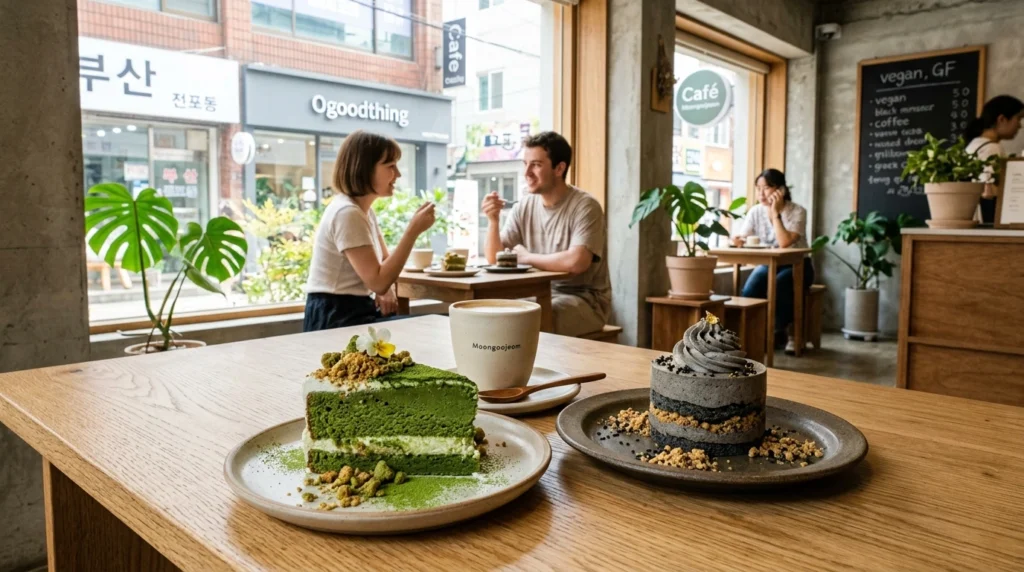
Moongoojeom is a brilliant bakery that offers soy milk alternatives instead of regular dairy milk. They specialize in vegan baked goods, including an incredible gluten-free matcha dessert that boasts deep, earthy flavors without any of the heavy, uncomfortable after-effects of traditional baking.
Another highly recommended spot in the area is Ogoodthing. This cafe focuses on utilizing traditional Korean ingredients like black sesame to create exquisite vegan desserts. The flavors are so rich and the textures so perfect that even those without dietary restrictions find it hard to believe the treats are completely vegan. It is a fantastic way to experience modern Korean cafe culture while maintaining a clean, plant-based diet.
FAQ
What is the best area to stay in Busan for food lovers?
Haeundae and Seomyeon are the best areas. Haeundae offers great seafood and traditional dining, while Seomyeon is the bustling heart of street food and accessible local joints.
Is it easy to find vegetarian food in Busan?
It is getting much easier. Dishes like Bibimbap can easily be made vegetarian by asking to remove the meat, and many modern cafes now offer vegan options.
What does “Dwaeji Gukbap” taste like?
It tastes like a very rich, savory, and clean pork bone broth. It is not spicy by default, making it a very comforting and safe choice for foreigners.
Can I ask for food to be less spicy in Korea?
Yes, you can say “An map-ge hae-ju-se-yo,” which means “Please make it not spicy.” Many restaurants are happy to adjust the heat level for you.
What is the difference between Milmyeon and Naengmyeon?
Milmyeon is made with wheat flour, making the noodles softer and easier to chew, whereas Naengmyeon is made with buckwheat or sweet potato starch, making it much chewier and elastic.
Are there gluten-free restaurants in Busan?
Dedicated gluten-free restaurants are rare, but you can easily find gluten-free options like grilled fish, unmarinated Korean BBQ, and specific vegan cafes in the Jeonpo area.
Is it safe to eat street food in Busan?
Absolutely. Street food in areas like BIFF Square and Seomyeon is generally very safe, fresh, and highly regulated.
Do I need to tip at restaurants in Busan?
No, tipping is not a part of Korean culture. Excellent service is included in the price of your meal.
What is the best way to travel between these restaurants?
The Busan Metro is incredibly efficient, clean, and has English signage. Taxis are also very affordable and convenient for places slightly off the subway lines.
Is seafood safe to eat raw in Busan?
Yes, Busan is famous for its exceptionally fresh seafood. Places like Jagalchi Market offer highly sanitary and fresh raw fish (Hoe) experiences.
Can I eat alone in Busan restaurants?
While some BBQ places require a minimum of two portions, many restaurants, especially those serving Gukbap or Bibimbap, are perfectly fine with solo diners.
What traditional Korean drink should I pair with my meal?
Makgeolli (a slightly sweet, milky rice wine) pairs beautifully with savory pancakes and spicy dishes, while Soju is the classic pairing for Korean BBQ and pork soup.
How do I order if I don’t speak Korean?
Many restaurants in tourist areas have English menus or picture menus. You can also use translation apps with a camera feature to easily translate Korean menus on the spot.
🎁 The Ultimate Guide to Experiencing Busan Like a Local
Don’t miss out on the authentic flavors and hidden local stories of Busan during your BTS concert trip!
💜 Essential Guide for BTS Concert Attendees