
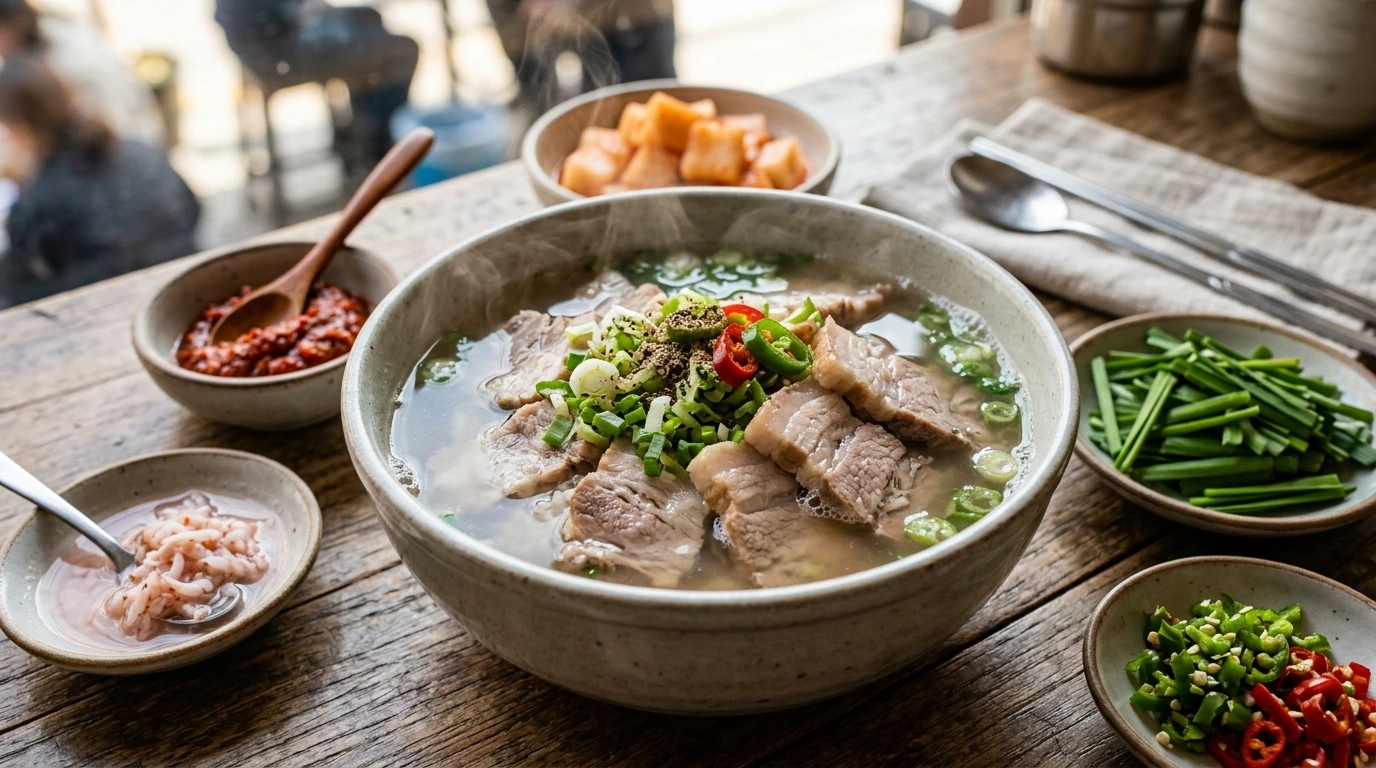
Whenever you step out of a bustling train station after a long journey, there is a universal craving for comfort food. Whether it is a classic diner breakfast on the North American East Coast, a steaming bowl of pho in a bustling Canadian metropolis, or a hearty bowl of pork soup in South Korea, the feeling is mutual. You want something warm, deeply flavorful, and authentic. Right across from Busan Station lies a place that satisfies this exact craving: Yeongdong Dwaeji Gukbap & Milmyeon. Situated in the famous Choryang-dong soup street, this restaurant offers an unmistakable taste of local soul food.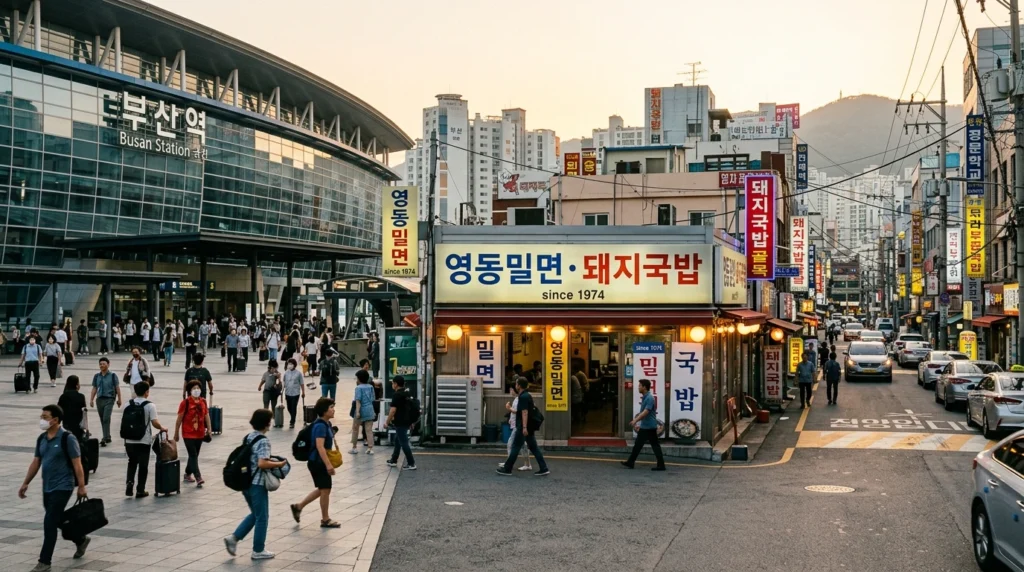
Having spent decades exploring diverse food cultures across North America and experiencing everything from high-end dining to rustic street food, I can confidently say that true culinary brilliance often lies in the simplest bowls. Dwaeji Gukbap, or Korean pork soup, is the epitome of this philosophy. This establishment brings together two regional specialties—pork soup and wheat noodles (Milmyeon)—under one roof, making it a must-visit destination. Let us dive into an honest review of its flavor profile, its rich history, and the essential tips you need to navigate the inevitable crowds.
History & Story: A Time-Honored Local Favorite
Walking into the alleys of Choryang-dong feels like stepping into a living museum of culinary history. Yeongdong Milmyeon & Dwaeji Gukbap is not just another eatery; it is a time-honored local favorite that has stood the test of time. Opening its doors in the mid-1990s, it has steadily built a reputation that transcends generations. While newer restaurants rely on trendy marketing, this humble establishment has grown its legacy purely through word of mouth and the undeniable quality of its food.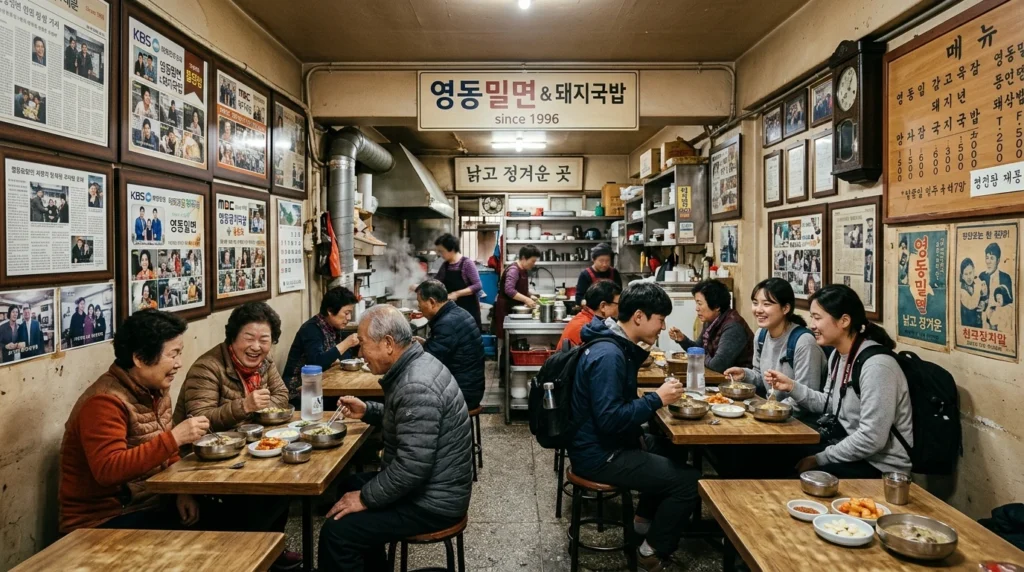
For the locals living around Busan Station, this restaurant is a household name. In fact, it is often said that you cannot call yourself a true local if you have not dined here. Over the decades, it has garnered significant media attention, appearing on various broadcasting networks and travel shows. Yet, despite the fame, the atmosphere remains unpretentious and deeply rooted in its original charm. It reminds me of those classic family-run diners in North America where the recipes never change, and the community always gathers. The blend of seasoned regulars and curious travelers creates a vibrant, welcoming dining environment that reflects the true spirit of the city.
Broth Style: Deep, Clear, and Beginner-Friendly
For many international food lovers, the idea of a pork-based soup can be daunting. In my global culinary journeys, I have seen many people shy away from overly rich or heavy broths. However, the broth style at this establishment is a delightful surprise. It is deep, clear, and incredibly beginner-friendly. Unlike some variations of pork soup that feature a milky, heavy, and sometimes overpowering base, Yeongdong serves a remarkably clean and light broth.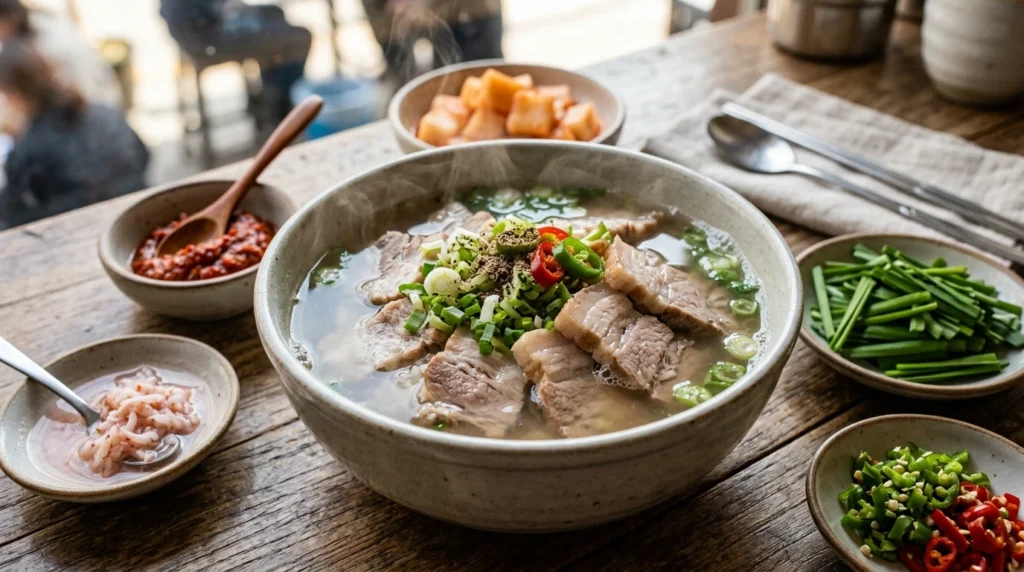
The secret lies in the careful preparation and simmering process, which extracts the savory depth of the pork without leaving a heavy or cloying aftertaste.
When the bowl arrives, you are greeted with a steaming, clear liquid topped with generous, thickly cut slices of rustic pork. The meat is tender and offers a fantastic texture. To elevate the experience, diners are encouraged to customize their bowls just like they would at a chili bar or a gourmet burger joint.
Adding a touch of salted shrimp (saeujeot), spicy seasoned paste (dadaegi), fresh garlic chives (buchu), and minced spicy peppers transforms the gentle broth into a robust, complex masterpiece. It is widely praised as an exceptional hangover cure, providing a comforting embrace to the stomach.
However, an honest review must mention that food is subjective. While the clear broth is praised by many, those who are extremely sensitive to the natural aroma of pork might find it challenging. It retains a distinct, rustic scent that is a hallmark of authentic regional cooking. If you are adventurous, it is a culinary delight, but it is always good to know what to expect before taking the first sip.
Customer Reviews & Essential Waiting Tips
Given its prime location right across from the major train station and its stellar reputation, the restaurant is naturally a magnet for crowds. Just like lining up for a famous bagel shop in a bustling North American city, waiting is part of the experience here. During peak lunch hours and weekends, you can easily expect a waiting time of thirty to forty minutes.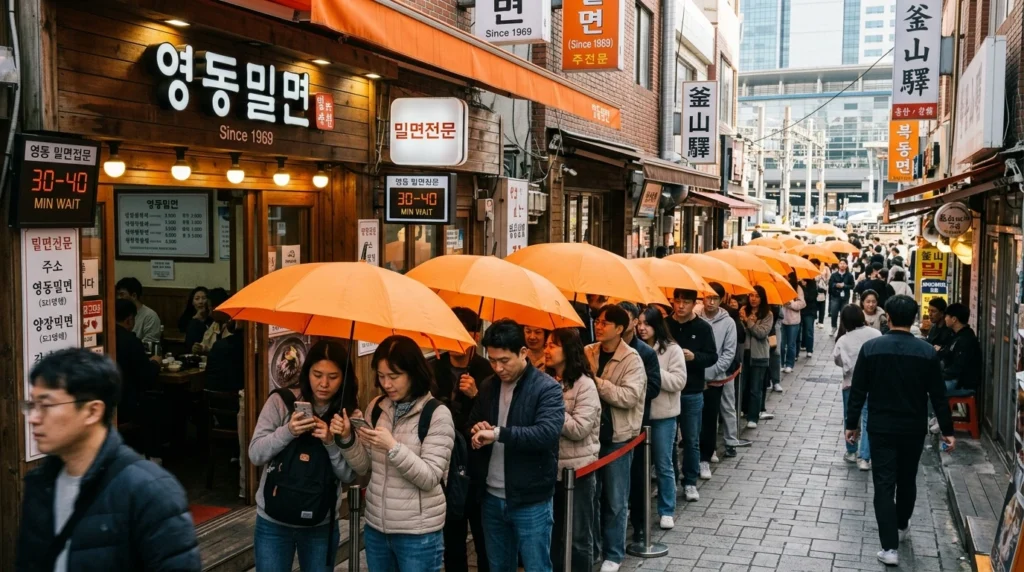
Customer reviews frequently highlight the bustling energy of the place. Because there is no dedicated indoor waiting area, eager diners must form a line in the outdoor alleyway. Depending on the weather, this can be a test of endurance. During hot summer days or rainy afternoons, the restaurant occasionally provides bright orange umbrellas for those in line, a charming touch of hospitality. Still, it is highly recommended to bring your own sun protection, an umbrella, or warm clothing depending on the season.
To bypass the long lines and enjoy a peaceful meal, strategic timing is your best friend. The ultimate waiting tip is to arrive right when the doors open or aim for a mid-morning meal around 11:00 AM, just before the lunch rush hits. Planning your visit with a comfortable buffer around your train schedule ensures that you can savor your meal without constantly checking your watch. It is all about smart scheduling to maximize your culinary enjoyment.
The Signature Highlight: What Makes This Place Unique
What truly sets Yeongdong apart from the countless other soup restaurants in the area is its dual identity. It is not just a master of Dwaeji Gukbap; it is equally celebrated for its Milmyeon (wheat noodles). In my experiences dining across different cultures, finding a restaurant that excels at two completely different signature dishes is a rare treasure.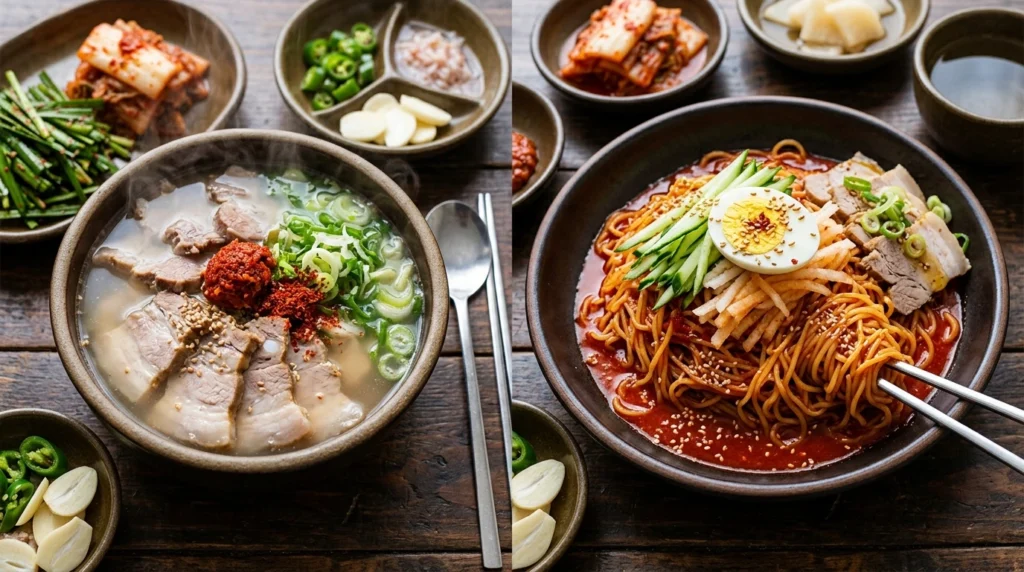
If the rustic aroma of the pork soup is not to your liking, or if you simply want to share a variety of flavors with your travel companions, the Milmyeon is a spectacular alternative. The water-based Milmyeon (Mul Milmyeon) offers a mild, refreshing taste with less of the medicinal herbal notes that sometimes overpower other local versions.
However, the absolute star among the noodle offerings is the Bibim Milmyeon (spicy mixed noodles). Tossed in a sweet, savory, and intensely flavorful sauce, it provides a mouth-watering contrast to the hot soup. The sauce is perfectly balanced, offering a rich umami kick that has earned rave reviews from virtually every customer who tries it. Pairing a hot, comforting bowl of pork soup with a cold, tangy, and spicy plate of mixed noodles creates a dynamic dining experience that captures the diverse palate of the region.
💡 Craving something refreshing after that hot soup? Don’t miss out on Busan’s other legendary noodle dish!
FAQ
Q: Where exactly is the restaurant located?
A: The restaurant is located in Choryang-dong, directly in the alleyway across from Busan Station, making it highly accessible for travelers.
Q: What are the main dishes served here?
A: The two signature dishes are Dwaeji Gukbap (pork soup) and Milmyeon (cold wheat noodles), available in both water-based and spicy mixed versions.
Q: Is the pork soup broth heavy and thick?
A: No, the broth here is known for being clear, light, and less greasy, making it quite beginner-friendly compared to thicker, milky versions.
Q: I am sensitive to the smell of meat. Will I enjoy the soup?
A: While the broth is clean, it still retains a rustic, authentic pork aroma. If you are highly sensitive, you might want to try their Milmyeon instead.
Q: How should I season my pork soup?
A: You can customize your broth by adding salted shrimp, spicy dadaegi paste, fresh chives, and minced spicy peppers to your liking.
Q: How long is the typical wait time?
A: During peak lunch hours and weekends, you can expect to wait outside for about thirty to forty minutes.
Q: Is there an indoor waiting area?
A: Unfortunately, there is no indoor waiting space. Guests line up in the outdoor alley, so please dress appropriately for the weather.
Q: What is the best time to visit to avoid the lines?
A: The best time to visit is right at opening time or around 11:00 AM, just before the midday lunch rush begins.
Q: Between the two noodle dishes, which one is more highly recommended?
A: The Bibim Milmyeon (spicy mixed noodles) receives the most praise for its sweet, savory, and highly addictive sauce.
Q: Does the restaurant provide anything for guests waiting outside?
A: Sometimes the staff provides large orange umbrellas to help guests block out the sun or rain while waiting in line.
Q: Can I order both soup and noodles if I dine alone?
A: The portions are quite generous, but if you have a hearty appetite, ordering both provides a wonderful contrast of hot and cold flavors.
Q: Is this place famous among locals or just tourists?
A: It is deeply loved by both. It is a historic local staple that has gained widespread fame among tourists due to its television appearances and excellent reputation.
🎁 The Ultimate Guide to Experiencing Busan Like a Local
Don’t miss out on the authentic flavors and hidden local stories of Busan during your BTS concert trip!
💜 Essential Guide for BTS Concert Attendees