
When the summer heat begins to shimmer over the Korean Peninsula, all roads—and high-speed trains—seem to lead to one place: Busan. As South Korea’s second-largest city and its undisputed maritime capital, Busan offers a coastal experience that rivals the world’s most iconic beach destinations. For first-time visitors, however, a classic dilemma always arises: Haeundae vs Gwangalli?
Choosing between these two legendary coastal hubs is like choosing between the grand, high-octane energy of Miami’s South Beach and the artistic, laid-back charm of a Mediterranean seaside town. Both offer sun, sand, and surf, yet they possess distinct personalities that cater to very different travel styles. Whether you are looking for high-rise luxury and bustling markets or a romantic night view with a local, trendy pulse, this guide will dissect every detail to help you decide where to plant your beach umbrella.
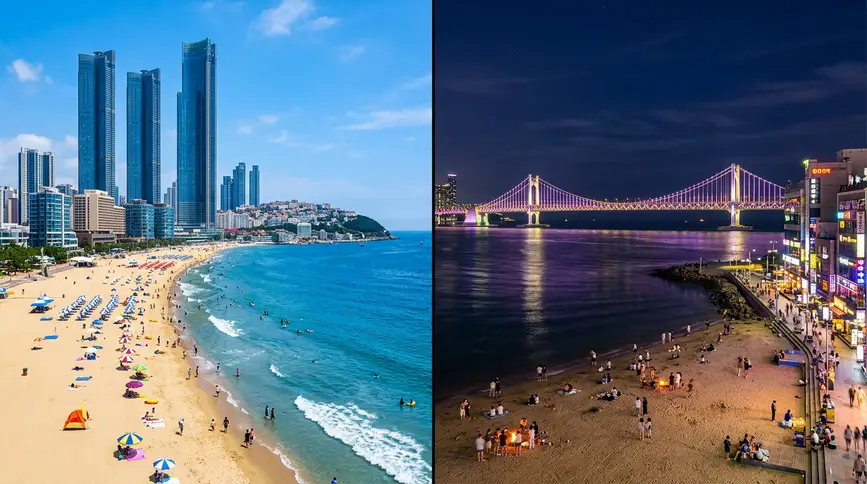
The Vibe Check: Haeundae’s Grandeur vs Gwangalli’s Romance
To understand the Haeundae vs Gwangalli debate, you first have to understand the “vibe” of each area. Haeundae is the heavyweight champion of Korean tourism. It is grand, polished, and international. When you step onto the white sands of Haeundae, you are greeted by a massive crescent of beach flanked by some of the tallest residential and hotel skyscrapers in the world. It feels like a world-class resort city, bustling with energy from dawn until long after dusk. It is where you go to see and be seen, making it the premier choice for Haeundae travel enthusiasts who want to be at the center of the action.
In contrast, Gwangalli offers a more intimate, “neighborhood” feel despite its popularity. If Haeundae is the glamorous older sibling, Gwangalli is the artistic, trendy younger one. The beach is slightly smaller, but it is perfectly framed by the majestic Gwangan Bridge (Diamond Bridge), which stretches across the horizon. The atmosphere here is deeply rooted in local youth culture—think indie cafes, craft breweries, and street performers. For those seeking a Gwangalli night view that stays in your memory forever, this is the place. It’s less about grand hotels and more about the romantic synchronicity between the city lights and the ocean waves.
Haeundae: The Hub of Luxury, Markets, and Coastal Adventures
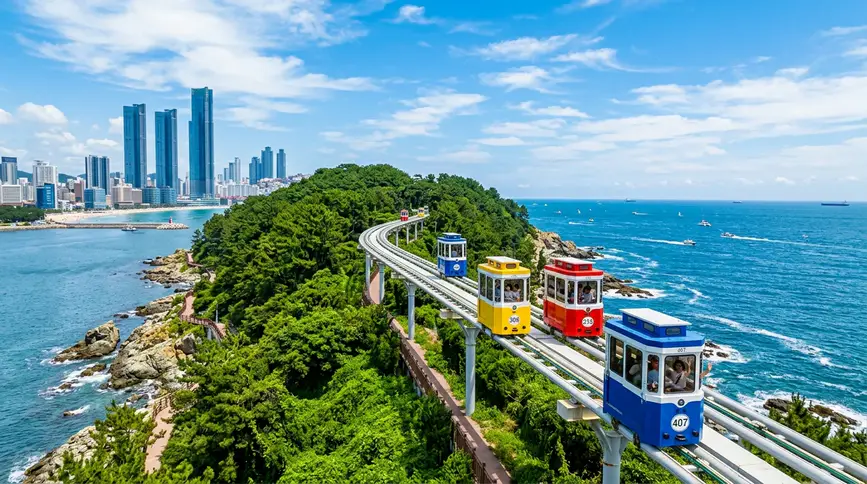
If you are a first-time visitor who loves convenience and variety, Haeundae is hard to beat. The infrastructure here is designed for tourism at the highest level. One of the crown jewels of the area is the Haeundae Blue Line Park. This converted coastal railway offers a nostalgic yet modern way to see the jagged cliffs and hidden coves of the Busan coastline. Riding the colorful Sky Capsules or the Beach Train from Mipo to Cheongsapoe provides a vantage point that you simply cannot get on foot.
Foodies will find their paradise at the Haeundae Traditional Market. Nestled just a few blocks from the shore, this market is a sensory explosion. You can walk through narrow alleys lined with fresh seafood tanks, where the famous Busan hagfish (ggomjangeo) sizzles on grills. Don’t forget to try the legendary “Ssiat Hotteok” (seed-filled sweet pancakes) or a steaming bowl of Dwaeji Gukbap (pork soup), which is the literal soul food of the city.
For those wondering where to stay in Busan for a premium experience, Haeundae is the clear winner. The coastline is dotted with five-star establishments such as Paradise Hotel Busan, known for its outdoor hot springs overlooking the ocean, and the Grand Josun Busan, which offers a sleek, contemporary aesthetic. Staying here means you have immediate access to the beach, high-end shopping at Centum City (just a short subway ride away), and the scenic walking trails of Dongbaek Island, which lead you to the Nurimaru APEC House.
Gwangalli: The Capital of Nightlife and Visual Spectacles
While Haeundae shines in the sunlight, Gwangalli truly comes alive when the sun dips below the horizon. The Gwangalli night view is arguably the most iconic image of modern Busan. The Gwangan Bridge performs a choreographed light show every night, with colors that dance across the water’s surface. This backdrop has turned Gwangalli into a hub for photography and “Instagrammable” moments.
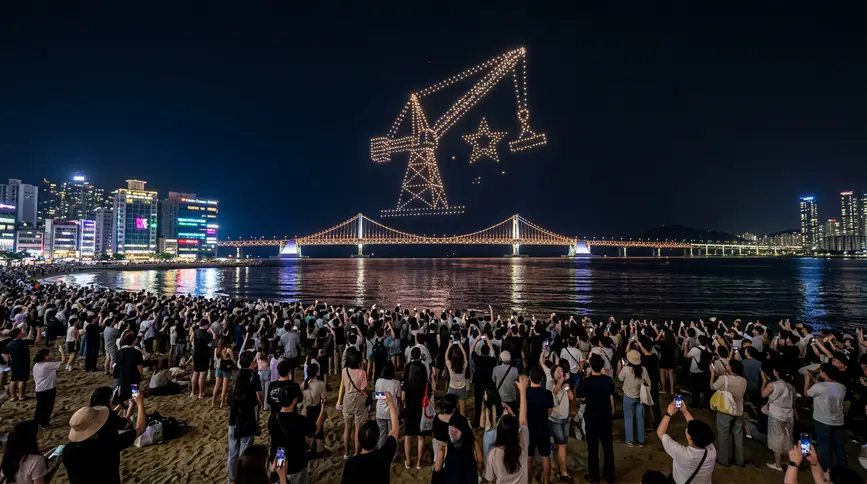
One of the most recent and spectacular additions to the Gwangalli experience is the Drone Light Show. Every Saturday night, hundreds of synchronized drones take to the sky to create massive, glowing images that tell stories or celebrate seasonal themes. It is a world-class display that brings the entire beach to a standstill, creating a shared moment of wonder among locals and tourists alike.
The culinary scene in Gwangalli is also distinct. While Haeundae has its traditional markets, Gwangalli is famous for the Millak Raw Fish Town. Here, you can select your fish fresh from the tanks on the ground floor and take it to a restaurant upstairs to be prepared. For a more “local” experience, many visitors buy their sashimi and head to the Millak Waterfront Park (though regulations on outdoor eating have changed, the spirit remains). The area is also packed with trendy brunch spots and specialty coffee roasters that offer a front-row seat to the bridge view.
Busan Beach Comparison: Practical Logistics and Travel Tips
When conducting a Busan beach comparison, you must consider the “flow” of your trip. Fortunately, you don’t necessarily have to choose just one. The two beaches are connected by Busan Subway Line 2 (the Green Line), making it easy to hop between them in about 15-20 minutes. However, during the peak summer months, the coastal roads can become incredibly congested. If you are traveling between Haeundae and Gwangalli on a weekend afternoon, the subway is your best friend to avoid the bumper-to-bumper traffic.
For those planning their itinerary, a popular strategy is the “Day-Night Split.” Spend your morning and afternoon in Haeundae—take the Sky Capsule, walk the Dongbaekseon trail, and enjoy a luxurious lunch. As the golden hour approaches, head over to Gwangalli. Grab a seat at a beachfront cafe or a craft beer pub, and settle in for the bridge lighting ceremony and the evening buskers who provide a live soundtrack to the crashing waves.
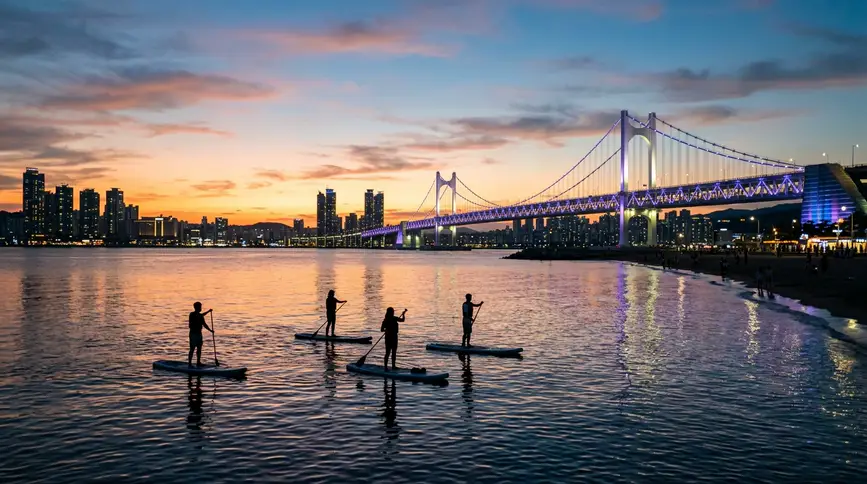
In terms of swimming, both beaches offer excellent facilities, including tube rentals, showers, and changing rooms. Haeundae tends to be more crowded with families and organized events, while Gwangalli often attracts a younger crowd interested in water sports like stand-up paddleboarding (SUP), especially during the sunrise or sunset hours.
Where to Stay in Busan: Matching Your Personality to the Neighborhood
Deciding where to stay in Busan ultimately depends on what you want to wake up to.
If you crave a resort-style vacation where everything you need is within walking distance, Haeundae is your home base. The hotels here are grander, the service is often multi-lingual, and the proximity to the Haeundae Station makes it easy to explore other parts of the city. It is the best choice for families who need easy access to amenities like the Sea Life Busan Aquarium or for business travelers who want to be near the BEXCO convention center.
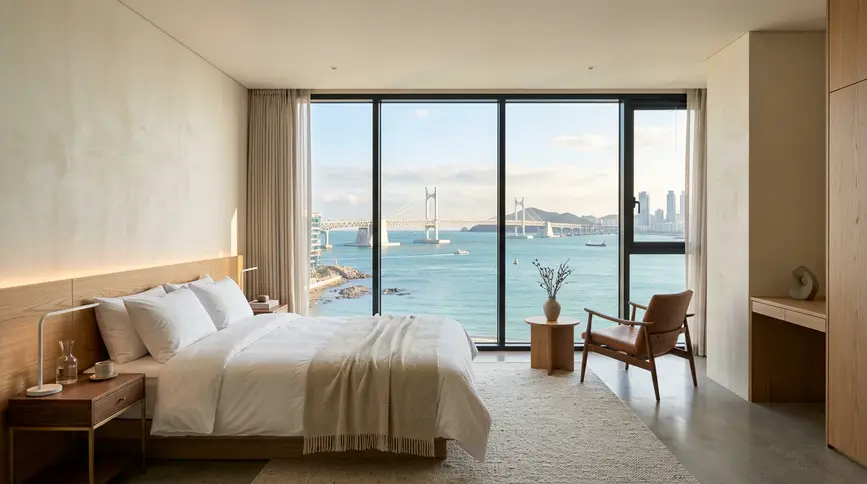
However, if you are looking for a boutique experience with a “view to die for,” Gwangalli offers some unique gems. Many smaller, modern hotels and “ocean-view” guesthouses are designed with floor-to-ceiling windows that face the bridge directly. Waking up to the sight of the Diamond Bridge stretching across a blue morning sea is an experience unique to Gwangalli. It’s perfect for couples or solo travelers who want to be steps away from the city’s best cafes and a more bohemian nightlife scene.
Final Verdict: Which Beach Should You Choose?
In the battle of Haeundae vs Gwangalli, there is no loser—only different types of winners.
Choose Haeundae if:
– This is your first time in Busan and you want the “classic” experience.
– You are traveling with family and need high-end amenities and diverse food options.
– You enjoy the energy of a world-class resort destination with high-rise views.
– You want to experience the unique coastal train at Blue Line Park.
Choose Gwangalli if:
– You are a fan of romantic cityscapes and stunning night views.
– You prefer a more local, trendy, and artistic atmosphere.
– You want to see the spectacular Saturday night Drone Show.
– You enjoy cafe hopping and craft beer with a view of an iconic bridge.
 Regardless of which you choose as your home base, Busan’s coastline will capture your heart. The city’s ability to blend mountain, sea, and skyscraper into one harmonious vista is what makes it a global treasure. Pack your sunscreen, bring your appetite, and get ready to experience the vibrant pulse of South Korea’s favorite summer playground.
FAQ
Q: Which beach is better for swimming in the summer?
A: Both are excellent, but Haeundae is much larger and has more organized rental services for tubes and parasols. Gwangalli is often preferred by those who enjoy water sports like paddleboarding.
Q: How do I get from Haeundae to Gwangalli?
A: The most efficient way is via Subway Line 2. From Haeundae Station to Gwangan Station, it takes about 15 minutes. Note that Gwangan Station is about a 10-minute walk from the actual beach.
Q: Is the Gwangalli Drone Show every night?
A: No, the Drone Light Show typically takes place every Saturday night. It is recommended to check the official Busan tourism website for exact times as they can change based on the season and weather.
Q: Where is the best place to see the Busan night view in Haeundae?
A: The “The Bay 101” area near Dongbaek Island is the most famous spot for seeing the glittering skyscrapers of Marine City reflected in the water.
Q: Are the beaches free to enter?
A: Yes, both Haeundae and Gwangalli beaches are free to enter. You only pay if you choose to rent equipment like umbrellas, chairs, or tubes.
Q: What is the must-eat food in Haeundae?
A: You should definitely try the Busan-style pork soup (Dwaeji Gukbap) and the various seafood offerings at the Haeundae Traditional Market, such as grilled hagfish.
Q: Which beach is quieter for a relaxing stay?
A: Gwangalli tends to have a more “chill” vibe during the day, but it can get very lively at night. For true relaxation, look for high-end hotels at the ends of Haeundae beach (like near Dongbaek Island) where the crowds are thinner.
Q: Can I walk between the two beaches?
A: It is possible, but it is a long walk (over an hour) that involves navigating city streets. It is much better to take a short taxi or subway ride.
Q: Is there an entrance fee for the Haeundae Blue Line Park?
A: Yes, you must purchase tickets for the Beach Train or the Sky Capsule. It is highly recommended to book online in advance, as they often sell out during the summer season.
Q: Which beach is better for nightlife?
A: It depends on your style. Haeundae has more high-end hotel bars and large clubs. Gwangalli is famous for its beachfront pubs, craft breweries, and live street music (busking).