
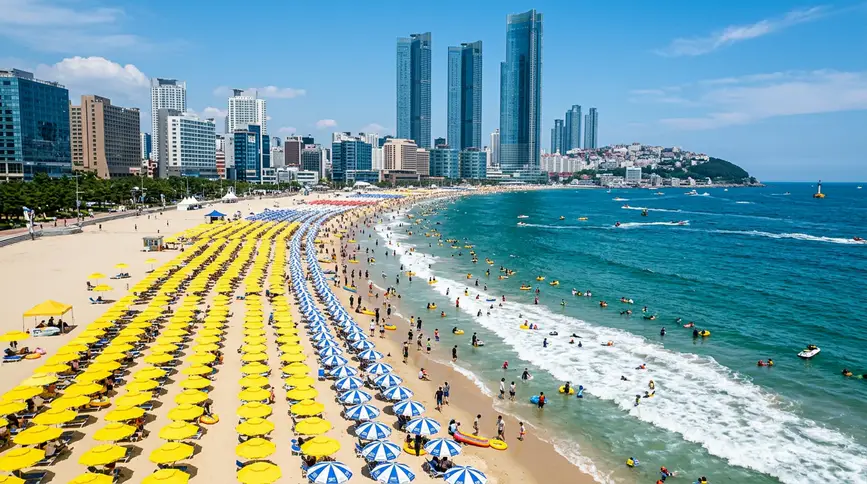
Stepping off the train at Busan Station during the peak of summer is an experience that awakens all your senses at once. There is the immediate scent of the salty sea breeze mingling with the aroma of spicy street food, but there is also something else—the “weight” of the air. If you are coming from a place with a dry climate, the Busan summer humidity will feel like a warm, damp hug that doesn’t quite want to let go. As someone who has spent decades navigating the seasonal shifts of major North American coastal hubs and global metropolitan centers, I can tell you that Busan requires a very specific approach to packing. It is a city where rugged mountains meet a glittering coastline, where traditional markets sit in the shadow of neon-lit skyscrapers. To enjoy it fully, you need to be prepared for blistering heat, sudden tropical-style downpours, and the unique logistics of Korean travel.
Understanding Busan Summer Weather: The Humidity Factor
The first thing any traveler needs to grasp about Busan in the summer is the humidity. While temperatures typically hover between 26°C and 30°C (79°F to 86°F), the high moisture content from the surrounding East Sea and South Sea makes the “feels like” temperature significantly higher. Unlike the dry heat of the American Southwest or the Mediterranean, Busan’s heat is sticky. You will find yourself perspiring the moment you step out of your hotel.
Furthermore, the late June to July period marks the “Jangma” or the monsoon season. This isn’t just a light afternoon drizzle; it is a period of heavy, consistent rainfall that can last for days or appear out of nowhere in short, intense bursts. Even outside the official monsoon window, Busan’s coastal geography makes it prone to sudden showers. Your packing list must account for this duality: the need to stay cool and the need to stay dry.
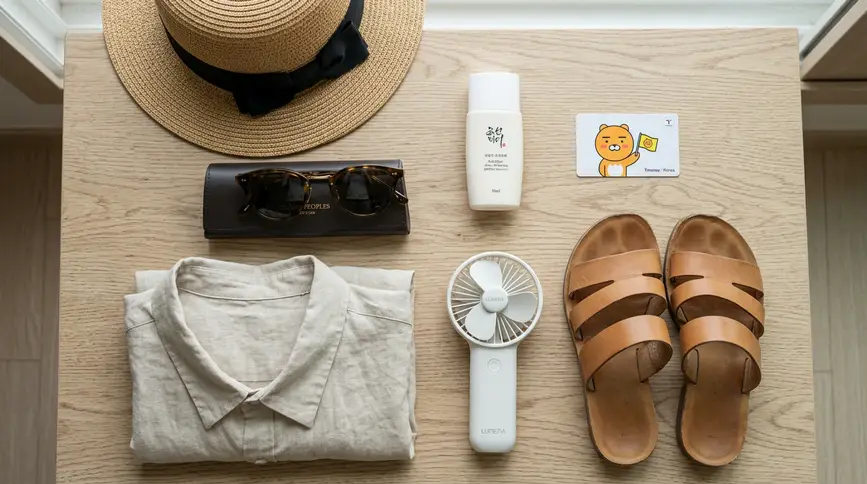
When choosing your wardrobe, prioritize breathability above all else. In many Western cultures, denim is a go-to staple, but in a Busan summer, heavy denim can feel like wearing a lead weight. Instead, look for linen blends, seersucker, or high-quality moisture-wicking synthetic fabrics often found in athletic wear. Light colors are your friends here, as they reflect the intense sun rather than absorbing it.
Clothing and Footwear: Comfort Meets Urban Style
Busan is a stylish city, but during the summer, practicality becomes the height of fashion. You will notice locals often layering their outfits. This isn’t just for aesthetics; it’s a defense mechanism. South Korean indoor spaces—subways, malls, and cafes—often blast air conditioning to sub-arctic levels to combat the outdoor heat. Walking from the 32°C humid streets into a 20°C cafe can be a shock to the system.
I highly recommend packing a “transition layer.” A very thin linen shirt or a lightweight cardigan is indispensable. You can wear it open over a tank top or t-shirt to protect your shoulders from the sun during the day, and button it up when you’re sitting in a chilled subway car heading toward the Gwangalli area.
Regarding footwear, leave the heavy boots at home. You need shoes that can handle two things: a lot of walking and a lot of water. Busan is surprisingly hilly—visiting the famous Gamcheon Culture Village or the coastal temples involves plenty of stairs and inclines. A pair of high-quality, breathable walking sneakers is a must. However, because of the rain, you should also bring a pair of sturdy, comfortable sandals with straps (like Tevas or Birkenstocks with waterproof soles). Flip-flops are great for the beach, but they won’t provide the support you need for a full day of urban exploration. If your sneakers aren’t waterproof, consider bringing a small bottle of water-repellent spray to give them an extra layer of protection before you head out.
Beach Essentials and Sun Protection Strategies
Busan is home to some of the most famous beaches in Asia, such as Haeundae and Gwangalli. While these areas are incredibly well-equipped with rental systems for tubes and parasols, there are several items you should bring yourself to save money and ensure comfort.
The Korean sun is unforgiving. If you are used to sunbathing for hours in cooler climates, be warned: the UV index here frequently hits “Extreme” levels. A high-SPF sunscreen (SPF 50+ PA++++) is non-negotiable. While you can buy excellent sunscreens locally, if you have a specific brand that works for your skin type, bring it with you. Additionally, don’t forget a wide-brimmed hat. You will see many locals using UV-shielding umbrellas or “arm sleeves”—while you might not go that far, a good pair of UV-protection sunglasses is essential.
For the beach itself, a lightweight “dry bag” or waterproof pouch is a lifesaver. It keeps your phone, wallet, and Korea plug adapter safe from both sand and the occasional splashing wave. While many beaches offer shower facilities, they can get very crowded. Packing a compact, quick-dry microfiber towel will allow you to dry off and head to a nearby restaurant without feeling like a soggy mess.
Navigating the Rain: Busan Rain Essentials
Rain in Busan is a different beast than the mist of the Pacific Northwest or the quick showers of London. When it rains here, it pours with a tropical intensity. If your trip falls during the monsoon window, your packing strategy needs to pivot toward moisture management.
A compact, wind-resistant travel umbrella is your first line of defense. However, if you plan on visiting windier coastal areas like Taejongdae or the Haedong Yonggungsa Temple, an umbrella might be useless against the gusts. In these cases, a lightweight, breathable rain poncho or a high-quality rain shell is much more effective. It keeps your hands free—essential for taking photos or checking maps on your phone.
Humidity also means that once things get wet, they stay wet. This is where the “waterproof spray” I mentioned earlier comes in handy for your bags and shoes. If you are carrying a backpack with electronics, ensure it has a rain cover. Many travelers forget that their bags are just as vulnerable to the rain as they are. Pro tip: keep a few Ziploc bags in your kit. They are the cheapest and most effective way to “waterproof” your passport and spare batteries in an emergency.
Connectivity and Power: The Korea Plug Adapter and Tech
In our digital age, staying connected is part of the travel experience. Busan is a tech-savvy city with high-speed internet everywhere, but you need the right gear to keep your devices running.
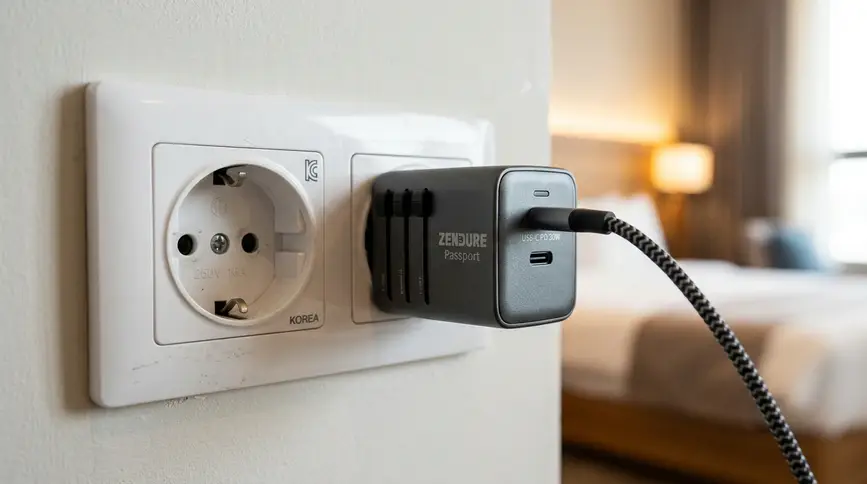
South Korea uses the Type C and Type F plug sockets, which are the same as those found in much of Europe (two round pins). The standard voltage is 220V. If you are coming from North America, where the standard is 110V, you must check if your devices are “dual voltage.” Most modern smartphones, laptops, and camera chargers are, but hair dryers and curling irons often are not. If they aren’t, they will likely fry the moment you plug them in.
I recommend bringing a universal travel adapter that includes multiple USB ports. This allows you to charge your phone, your portable power bank, and your camera all from one outlet. Speaking of power banks, don’t leave your hotel without one. Using GPS to find that hidden pork soup (Dwaeji Gukbap) spot in Seomyeon or filming the drone show at Gwangalli Beach will drain your battery faster than you expect. A 10,000mAh to 20,000mAh bank is the “sweet spot” for a full day of sightseeing.
Mastering Busan Transit: T-money and Local Passes
One of the greatest joys of visiting Busan is its incredibly efficient public transportation system. To access it, the T-money card is your golden ticket. While there are other cards like Cashbee, T-money is the most ubiquitous and works perfectly on Busan’s subways and buses.
You can purchase these cards at any convenience store (GS25, CU, 7-Eleven) at the airport or train station. You then “top up” the card with Korean Won (cash). The beauty of the T-money card is the transfer system—if you hop off a bus and onto the subway within a certain timeframe, the second leg of your journey is often free or heavily discounted.
For international tourists, the Visit Busan Pass is an option worth considering. It comes in 24-hour and 48-hour versions and provides free entry to major attractions like the X the Sky observatory, the Blue Line Park (the famous colorful beach trains), and various museums. Most versions of the physical pass also function as a transportation card; you just need to load it with cash at a convenience store. It’s an incredible way to see the city’s highlights while keeping your transit logistics simple.
Health, Hygiene, and the “Little Things”
Finally, let’s talk about the small items that can make or break your comfort in the Busan heat. First on the list: a portable handheld fan. You will see everyone from teenagers to grandmothers holding these little battery-powered lifesavers. They are essential for those moments when you’re waiting for a bus or walking through a crowded market.
Second, carry a small pack of wet wipes and tissues. While Korean public restrooms are generally very clean, during a humid summer day, a wet wipe can be a quick way to freshen up. Additionally, the heat and humidity can sometimes lead to food spoilage if you’re not careful. While Busan’s food scene is world-class and generally very safe, packing some basic digestive medicine or charcoal tablets is a wise precaution for any international traveler.
Lastly, don’t forget mosquito repellent. The combination of warmth and water makes certain parts of Busan, especially near the mountains or parks, a haven for mosquitoes. A small travel-sized spray will keep those itchy bites at bay during your evening strolls along the seaside.

FAQ
Q: Can I use my credit card for everything in Busan?
A: Most shops, restaurants, and cafes in Busan accept international credit cards (Visa/Mastercard). However, you will need physical Korean Won (cash) to charge your T-money card and for some smaller stalls in traditional markets like Jagalchi or Gukje Market.
Q: Is it okay to wear a bikini at Busan beaches?
A: Yes, it is perfectly fine to wear a bikini at Haeundae or Gwangalli. However, you will notice that many locals prefer “rash guards” (long-sleeved swim shirts) to protect themselves from the sun. If you walk away from the sand into the streets or shops, it is culturally respectful to put on a cover-up or a shirt.
Q: How do I charge my T-money card?
A: You can charge it at any convenience store or at the automated machines inside every subway station. Note that these machines usually only accept cash, so keep some bills handy.
Q: What should I do if it starts raining heavily while I’m out?
A: Busan has a “cafe culture” for a reason. If a sudden downpour hits, duck into one of the thousands of beautiful cafes. Most have floor-to-ceiling windows, allowing you to enjoy the “rainy sea” view comfortably until the weather clears.
Q: Is the tap water in Busan safe to drink?
A: While tap water in Korea is technically safe and undergoes rigorous testing, most locals and tourists prefer to drink filtered or bottled water. Most hotels and “Guesthouses” provide a water dispenser or free bottled water daily.
Q: Do I need a transformer for my electronics?
A: Most modern electronics (phones, laptops) are dual voltage (110V-220V) and only need a plug adapter. However, check the label on your device. If it says “Input: 100-240V,” you are fine. If it only says “110V,” you would need a heavy transformer, which isn’t practical for travel.
Q: Where can I buy a Korea plug adapter if I forgot one?
A: You can easily find them at “Daiso” (a very popular budget store found throughout Busan) or at major convenience stores in tourist areas. Some hotels also offer them for a small deposit at the front desk.
Q: How frequent are the buses and subways in the summer?
A: Very frequent. Subways usually run every 5 to 10 minutes. During peak summer hours, they may be crowded, but they are all very well air-conditioned, providing a much-needed break from the heat.
Q: What is the best way to deal with the humidity?
A: Stay hydrated! Drink plenty of water and try the local iced coffees or “Bingsu” (shaved ice dessert). Also, choosing the right fabrics like linen or moisture-wicking materials is the most effective way to stay comfortable.
Q: Are there any specific apps I should download for Busan?
A: Yes! Google Maps is not very accurate for walking directions in Korea. Download “Naver Maps” or “KakaoMap” for precise transit info. “KakaoTalk” is the main communication app, and “Papago” is excellent for real-time translation.