
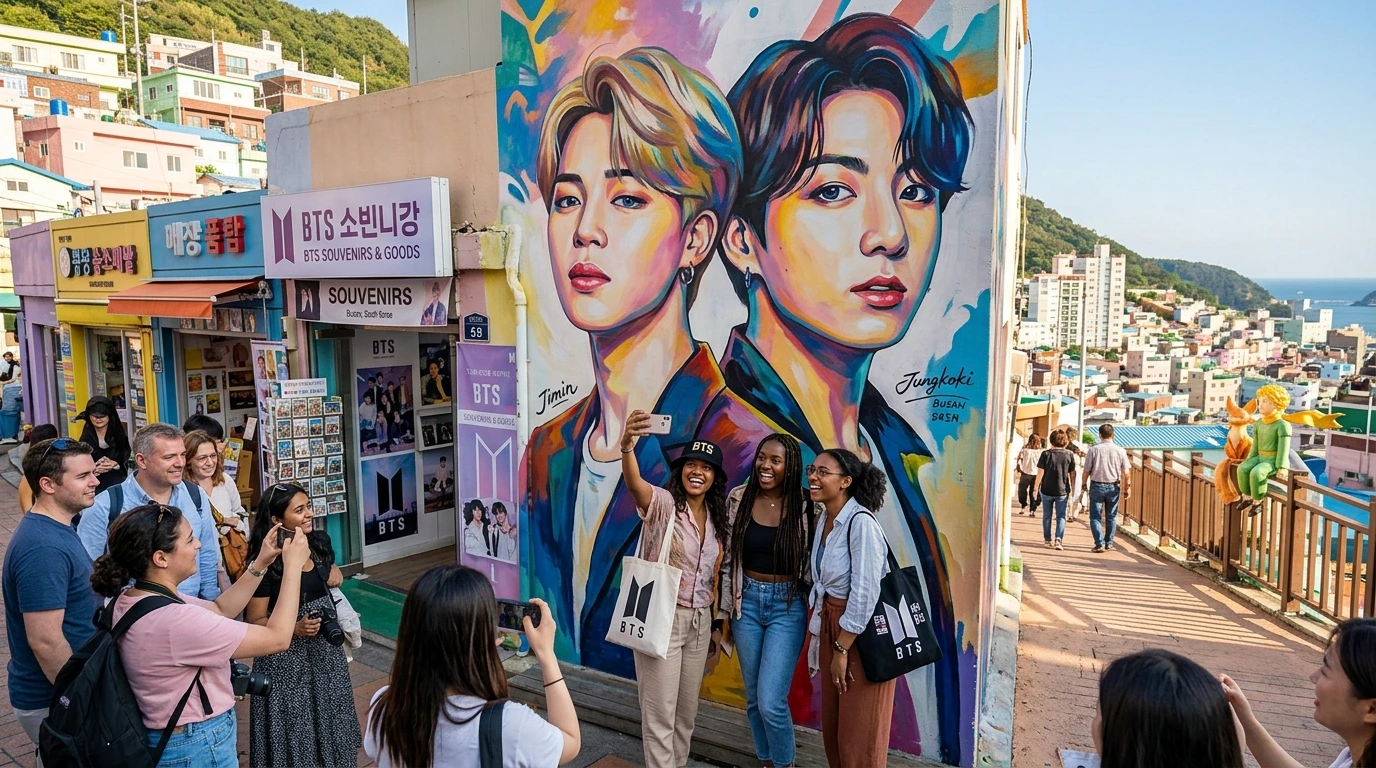
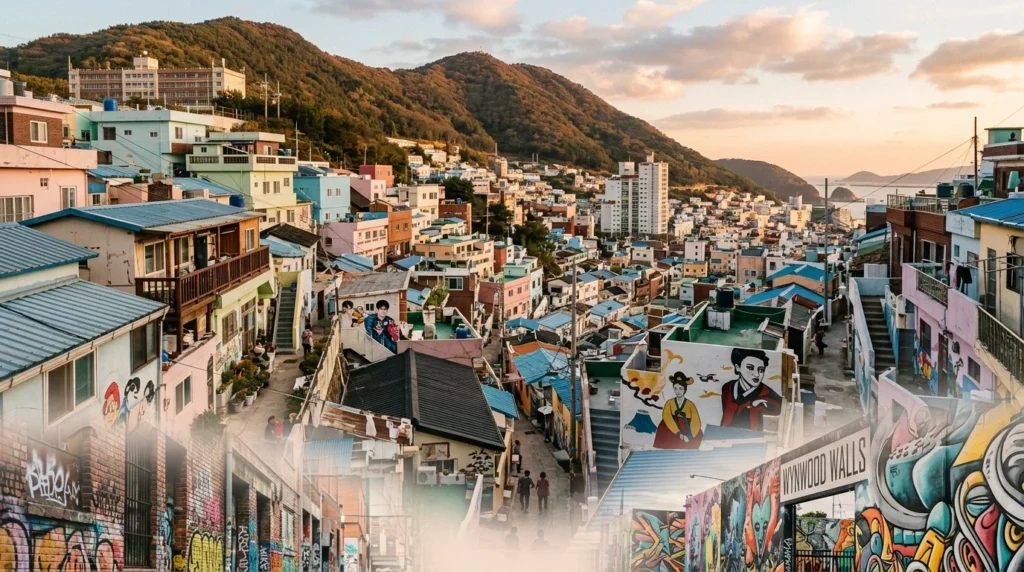
 My journeys through Canada, the US, and Korea have always driven me to look past the surface of global landmarks. In Gamcheon Culture Village, the view is truly breathtaking. Beyond the iconic murals of BTS and the vivid street art that draws millions of international travelers, lies a living history of resilience and hope. Walking through this steep, winding maze, I felt a powerful harmony between Korea’s poignant past and its modern global rhythm.
This vibrant hillside community has transformed from a desperate sanctuary for war refugees into the global tourist destination we see today. Let’s dive into the colorful soul of Busan, where history, art, and K-pop come together perfectly.
A Journey Through Time: The Refugee Origins
To truly appreciate the pastel-colored houses stacked like matchboxes on the hillside, one must understand the village’s solemn origins. During the Korean War, countless refugees fled southward, eventually reaching Busan. With the flatlands already overcrowded, these displaced families had no choice but to build makeshift homes on the steep mountain slopes and around old cemeteries.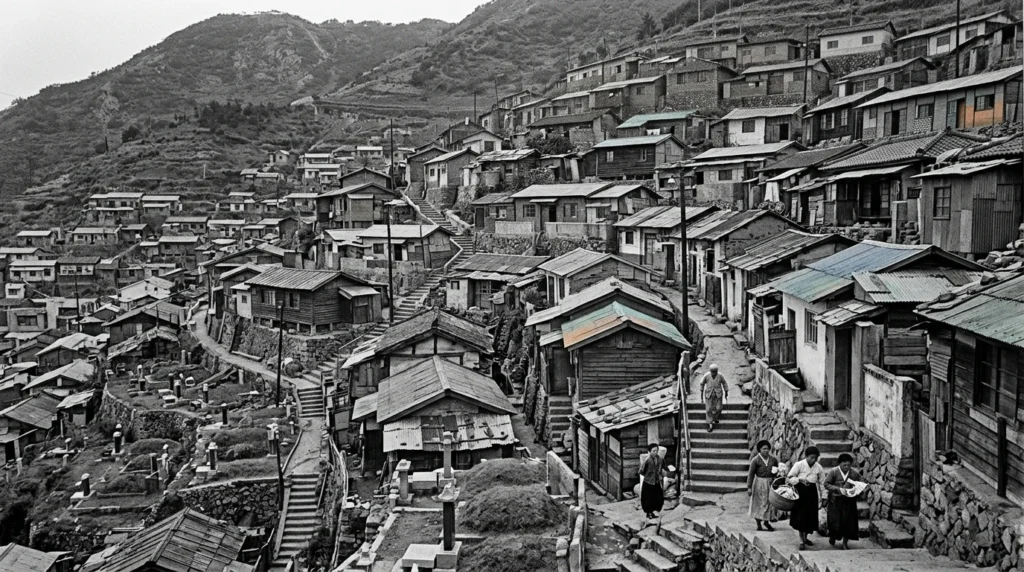
Wandering through the village today, the labyrinthine alleyways and terraced houses remain largely in their original layout. As I navigated the narrow, web-like pathways, it was easy to imagine the sheer determination and communal spirit of the people who carved out a life on these harsh slopes. The orderly yet chaotic arrangement of the homes ensures that no house blocks the view of the one behind it—a beautiful reflection of the consideration and solidarity among the refugees. It is a humbling experience that grounds you before you take in the modern artistic flair of the village.
The Transformation: Korea’s Machu Picchu
For decades, Gamcheon was considered a rundown, impoverished neighborhood. The turning point came when local artists, residents, and government initiatives joined forces for a massive village art project. Their goal was not to tear down the history but to breathe new life into it
They painted the concrete facades in bright, cheerful pastel tones and installed whimsical sculptures in hidden corners. The result is nothing short of magical. Looking down from the observation decks, the village looks like a cascading waterfall of colors spilling into the sea. The breathtaking panoramic views have earned it the loving nicknames of “The Machu Picchu of Korea” and “Lego Village.” As someone who appreciates urban renewal, seeing how art can revitalize a struggling community without displacing its soul is truly inspiring.
Global Phenomenon: BTS Murals and The Little Prince
While the village’s history and artistic revival draw many, the undeniable modern magnet for international travelers is the connection to global K-pop icons, BTS. As you stroll along the main path, you are greeted by massive, vibrant murals featuring BTS members Jimin and Jungkook, who are proud Busan natives.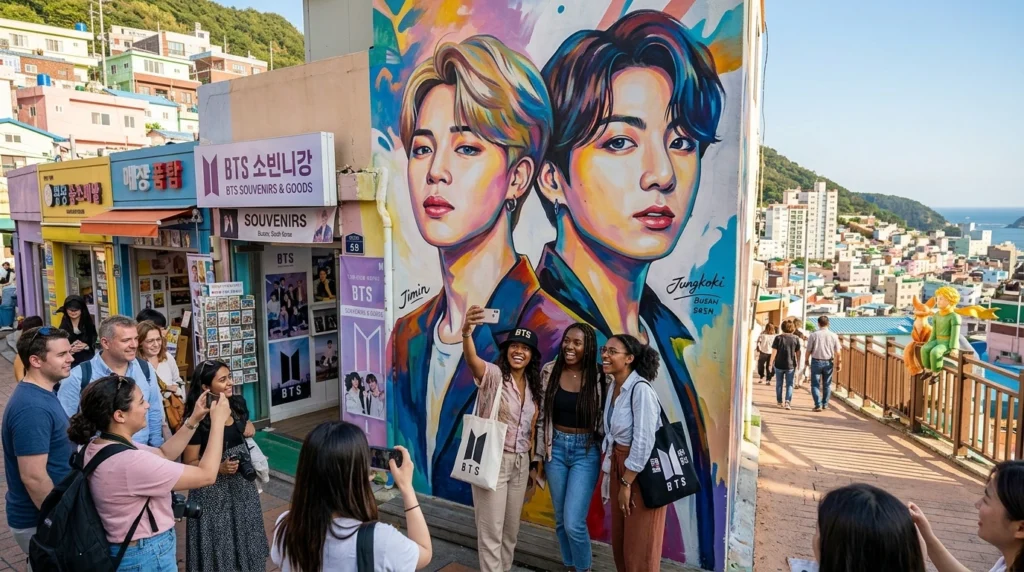
The area surrounding these murals is filled with an infectious energy. Softly playing in the background are familiar tunes like “Dynamite” and “Permission to Dance,” while nearby shops offer a variety of related souvenirs. It is a spot where fans from all over the world gather, and witnessing the sheer joy on their faces as they take photos is a delightful experience.
Just a short walk from the BTS murals lies another iconic photo spot: The Little Prince and the Desert Fox. This statue sits on a railing, quietly overlooking the sprawling colorful village and the vast ocean beyond. The poetic imagery of the Little Prince looking out over the world resonates deeply with visitors. There is almost always a line of eager tourists waiting to capture a photo sitting next to him, but the stunning backdrop makes the wait entirely worthwhile.
Practical Tips for Your Visit
Visiting a living neighborhood requires a bit of preparation and respect. Here are some essential tips to make the most of your adventure in Gamcheon Culture Village.
| Tip Category | Details |
|---|---|
| Footwear | The slopes are incredibly steep and the alleys are mostly stairs. Comfortable, sturdy walking shoes or sneakers are an absolute must. |
| Navigation | You can purchase a stamp tour map at the entrance to guide you through the alleys. However, simply sticking to the main upper road still offers fantastic viewpoints, cafes, and murals. |
| Etiquette | Remember that Gamcheon is a real residential area. Keep your voice down, respect privacy, and avoid trespassing. |
| Timing | Most shops and cafes close early in the evening to allow residents to rest. Plan your visit for the daytime. |
| Photography | For the best lighting, visit during the “magic hour” just before sunset. The soft glow of the streetlights against the darkening sky creates a deeply emotional and cinematic atmosphere. |
Experiencing Gamcheon Culture Village is like walking through a living museum where the past and present embrace. From the poignant echoes of refugee life to the vibrant brushstrokes of modern pop culture, it is a destination that captures the heart and imagination.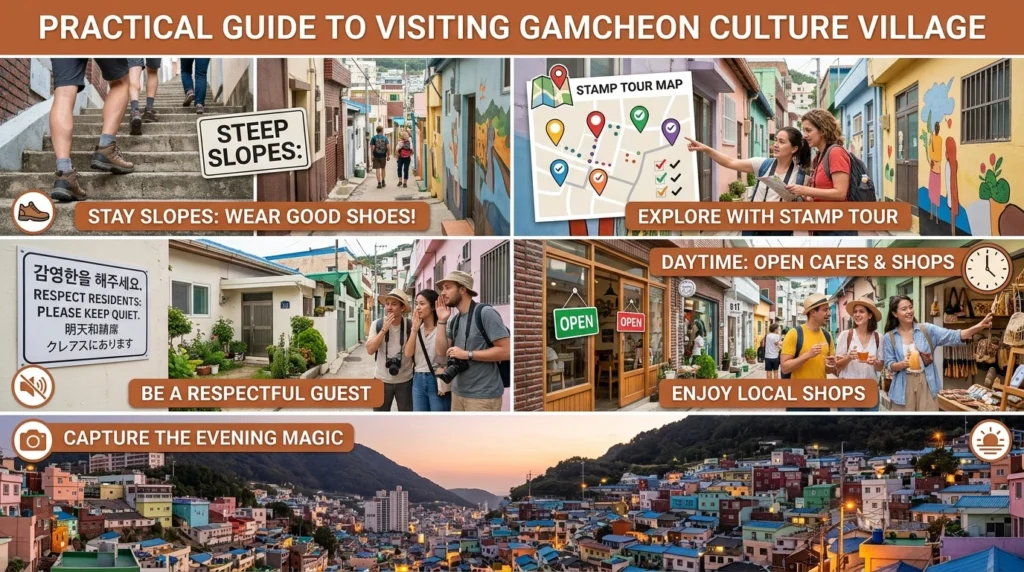
FAQ
Q. Is there an entrance fee for Gamcheon Culture Village?
A. No, entering the village is completely free. However, if you wish to participate in the stamp tour, the map costs a small fee at the information center.
Q. How much time should I allocate for my visit?
A. A typical visit takes about two to three hours. If you plan to explore the deeper alleys, take many photos, and stop at a cafe, you might want to allow up to four hours.
Q. Are there places to eat inside the village?
A. Yes, there are numerous small cafes, street food stalls, and local eateries along the main routes offering snacks, coffee, and traditional Korean street food.
Q. Is the village wheelchair or stroller accessible?
A. Due to the extremely steep inclines, uneven ground, and numerous stairs, navigating with a wheelchair or stroller is very difficult and generally not recommended beyond the very entrance.
Q. How do I get to Gamcheon Culture Village using public transportation?
A. The best way is to take the subway to Toseong Station, then take a local village bus (Maeul bus) right up the steep hill to the village entrance.
Q. Can I visit the village at night?
A. While there are no physical gates closing the village, it is highly discouraged to visit late at night. It is a residential area, and tourists are asked to leave by early evening to respect the residents’ peace.
Q. Where exactly is the BTS mural located?
A. The main BTS mural featuring Jimin and Jungkook is located along the primary upper walking path. You will easily spot it as there is usually a crowd of fans gathered around it.
Q. Do people still live in these houses?
A. Yes, thousands of residents still call Gamcheon Culture Village home. This is why visitors are constantly reminded to keep noise levels down and respect private property.
Q. Is the stamp tour worth doing?
A. The stamp tour is a fun, interactive way to ensure you see the major landmarks and hidden art installations, especially if you enjoy collecting souvenirs.
Q. What is the best time of day for photography?
A. Late afternoon leading into the “magic hour” just before sunset provides a beautiful, soft light that illuminates the pastel houses and the ocean backdrop perfectly.
Q. Are there restrooms available for tourists?
A. Yes, there are clearly marked public restrooms located at the entrance and at a few strategic points along the main tourist path.
Q. Can I fly a drone over the village?
A. Generally, flying drones over residential areas in South Korea is heavily restricted due to privacy laws. Always check local aviation regulations, but it is typically not allowed without a special permit.
Q. What should I do if I get lost in the alleys?
A. The village is famously maze-like. If you lose your way, the best strategy is to walk upwards. All the small alleys eventually lead back to the main road at the top of the hill.
🎁 The Ultimate Guide to Experiencing Busan Like a Local
Don’t miss out on the authentic flavors and hidden local stories of Busan during your BTS concert trip!
💜 Essential Guide for BTS Concert Attendees