
Busan is often called the “Summer Capital” of South Korea, and for good reason. When the humidity rises and the sun glistens off the waters of Haeundae and Gwangalli, the city transforms into a vibrant playground of coastal energy. But beyond the sandy beaches and neon lights, the true soul of a Busan summer lies in its culinary landscape. For those of us who have spent decades navigating the nuances of both North American coastal living and the deep-rooted traditions of Korean food culture, Busan offers a unique sensory experience that blends grit with refinement.
If you are visiting Busan for the first time during the warmer months, you might be tempted to stick to the air-conditioned malls. However, the real magic happens at the table—or the plastic stool at a night market. From the icy, refreshing kick of Milmyeon to the soul-warming depth of Dwaeji Gukbap, Busan’s summer menu is about balance. It is about “Iyeol-chiyeol”—the traditional wisdom of fighting heat with heat—while also mastering the art of the deep-chill. This guide will walk you through the essential eats that define a Busan summer.
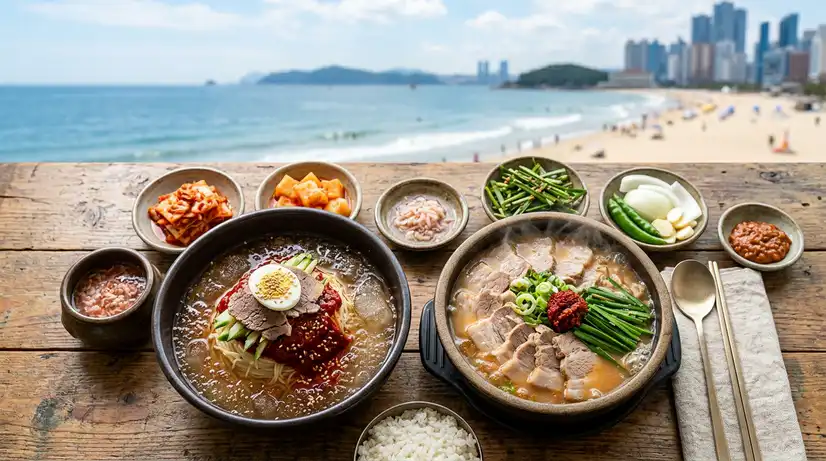
The Cold King of Busan: Milmyeon (Wheat Noodles)
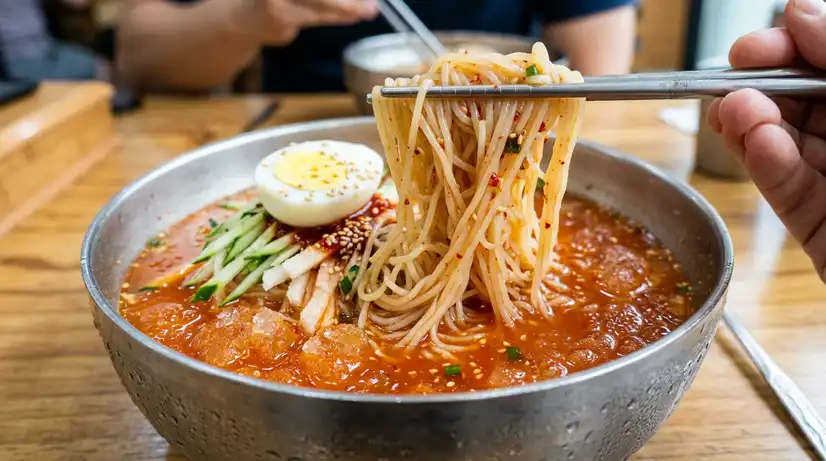
If there is one dish that summarizes the history and spirit of Busan in a single bowl, it is Milmyeon. Unlike the more famous Naengmyeon (buckwheat noodles) found in Seoul, Milmyeon is made from wheat. Its origins trace back to the Korean War when refugees in Busan used wheat flour provided through humanitarian aid to recreate the cold noodles they missed from home. The result is a noodle that is softer, more elastic, and uniquely “Busan.”
When you take your first sip of the broth, you’ll notice a complex profile. It’s not just cold; it’s infused with medicinal herbs, beef or pork bones, and a spicy kick of “dadaegi” (red pepper paste). For a first-timer, the sensation of the icy slush melting against the spicy, savory broth is the ultimate antidote to the Korean humidity.
Top Recommendations for Milmyeon:
- Haeundae Gaya Milmyeon: This is a landmark for a reason. Located near the iconic Haeundae Beach, it offers a clean, deep broth that isn’t overly sweet. The noodles have the perfect “chew.” It gets busy, but the turnaround is incredibly fast—a testament to the local efficiency.
- Gwangalli Daegyo Milmyeon: If you prefer a view with your meal, this spot near the Diamond Bridge is excellent. They are famous for their “Mul-bibim,” which is a hybrid of the watery soup version and the spicy mixed version. It’s the best of both worlds.
- Yeongdong Milmyeon & Dwaeji Gukbap: Located conveniently near Busan Station, this is the perfect first or last stop. It allows you to cross off two items on your list at once, as they serve excellent versions of both Milmyeon and pork soup.
- Yasmaru Shokudo (The Modern Twist): For those looking for something contemporary, try their ‘Parang Guksu.’ It’s not a traditional Milmyeon, but it features a cold broth packed with fresh green onions and a giant, sweet rolled omelet (tamagoyaki). It captures the coastal “cool” of modern Busan perfectly.
Fighting Heat with Heat: Dwaeji Gukbap (Pork Soup)
It might seem counterintuitive to eat a steaming bowl of pork soup in the middle of July, but in Busan, Dwaeji Gukbap is a year-round obsession. This is the city’s quintessential soul food. The broth is made by boiling pork bones for hours until it reaches a milky white or clear consistency, depending on the shop’s style. It’s rich in collagen and protein—exactly what you need to replenish your energy after a day of sightseeing.
The beauty of Dwaeji Gukbap lies in the customization. When the bowl arrives, it’s often unseasoned. You add the salted shrimp (saeu-jeot), chives (buchu), and red pepper paste to your liking. It’s a participatory dining experience that feels deeply personal and local.
Where to Experience the Best Broth:
- Geuk-dong Dwaeji Gukbap (Haeundae): Located toward the Dalmaji Hill area, this spot offers a refined, clear broth. It’s a great entry point for those who might find the traditional “funky” pork smell of older markets a bit intimidating. The interior is modern, and the pork slices are exceptionally tender.
- Busan Tobagi Dwaeji Gukbap (Gwangalli): This is where the locals go. The broth is thicker and more traditional. Eating here feels like stepping into a part of Busan’s history. It’s hearty, honest, and incredibly satisfying.
- Gukbong Subaek Jinguk (Haeundae): If you aren’t in the mood for a full soup, try the “Suyuk Baekban” (Subaek). You get a plate of tender steamed pork, a bowl of broth on the side, and rice. It’s a “deconstructed” gukbap that allows you to appreciate the quality of the meat.
| Dish Name | Key Ingredient | Flavor Profile | Best For |
|---|---|---|---|
| Milmyeon | Wheat Noodles | Sweet, Spicy, Icy | Cooling down instantly |
| Dwaeji Gukbap | Pork Broth & Meat | Savory, Rich, Hearty | Physical recovery/Energy |
| Mulhoe | Raw Fish & Ice Broth | Tangy, Sour, Fresh | Seafood lovers |
| Donmaek | Fried Pork Ribs | Salty, Crunchy, Umami | Late-night snacks |
The Evolution of Busan Chimaek: Introducing ‘Donmaek’
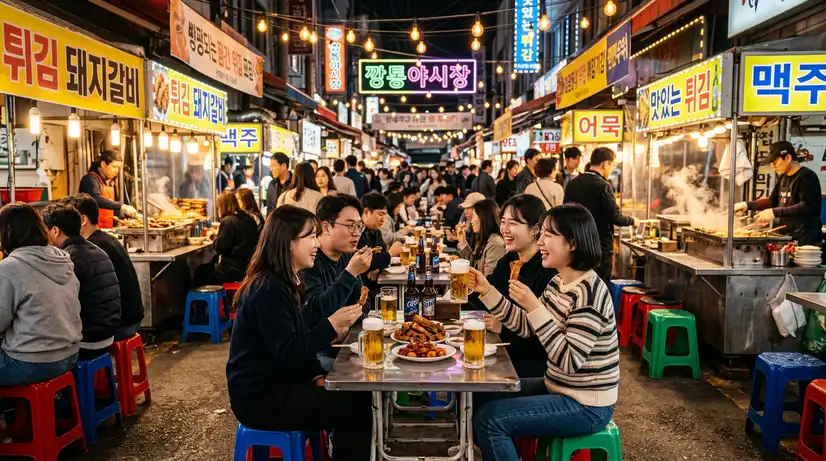
While “Chimaek” (Chicken and Beer) is a national pastime in Korea, Busan has put its own spin on the fried-and-bready delight. Enter “Donmaek”—fried pork ribs paired with cold beer. This trend has taken over the local food scene, particularly in the traditional markets.
The most famous place to experience this is Ggang-dwae-hu in the Bupyeong Kkantong Market. Instead of chicken, they take tender pork ribs, coat them in a secret batter, and fry them to a golden crisp. The result is “Geot-ba-sok-chok”—crunchy on the outside, juicy on the inside. When paired with a local craft beer or a standard cold lager, it’s the ultimate summer evening meal.
If you prefer the traditional route, Gohyang Tongdak offers that nostalgia-inducing “market-style” fried chicken. It’s double-fried for extra crunch and served in a way that reminds you of a simpler time. For the best experience, grab your fried delights and head to the waterfront near Gwangalli or the Millak the Market area. The sea breeze mixed with the smell of fried goodness is the essence of a Busan summer night.
Refreshing Coastal Delicacy: Mulhoe
You cannot visit a coastal city like Busan in the summer and skip the seafood. While “Hoe” (raw fish) is popular year-round, Mulhoe is specifically designed for the heat. It consists of thinly sliced raw fish, vegetables, and a spicy, vinegary cold broth—often served with a scoop of icy slush on top.
Places like Silla Hoe-jip in Gwangalli are legendary for this. You mix the fish and vegetables into the cold soup, eat the fish first, and then drop in some cold noodles or rice. It’s tangy, refreshing, and incredibly light, making it the perfect lunch for a scorching afternoon.
Pro-Tips for Navigating Busan’s Summer Food Scene
To eat like a local and avoid the worst of the summer heat, timing is everything. Here are a few tips gathered from years of observing the city’s rhythms:
- Embrace the Night Markets: The Bupyeong Kkantong Night Market comes alive after the sun sets. It’s cooler, the neon lights are on, and you can sample small portions of everything from “Donmaek” to grilled seafood.
- The Spa Land Strategy: If the afternoon sun becomes unbearable, head to Centum City’s Spa Land. It’s one of the best bathhouses in Asia. Spend your afternoon in the cold rooms and saunas, and then head out for Dwaeji Gukbap once the temperature drops in the evening.
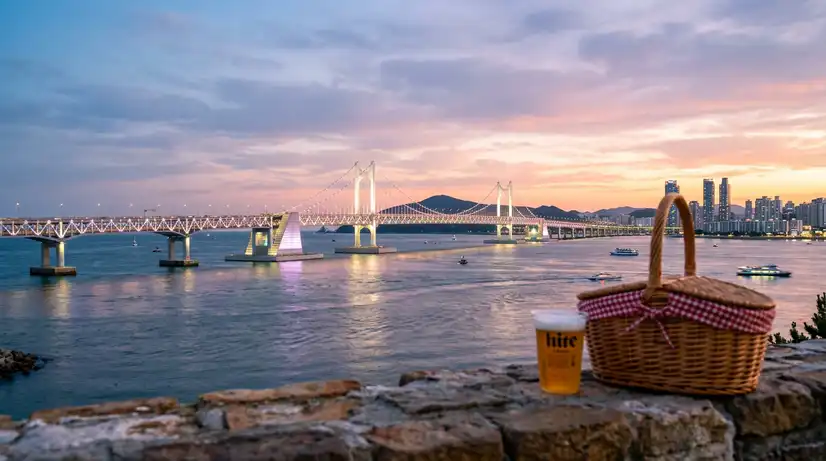
- The “Waterfront” Rule: If you are eating near Gwangalli, many places allow for takeout. Grab a box of fried chicken or pork, find a spot on the steps near the Millak Waterfront Park, and enjoy the view of the Gwangan Bridge lighting up.
Busan in the summer is a high-energy, high-flavor experience. Whether you’re slurping icy wheat noodles or sweating over a rich pork broth, you’re participating in a culinary tradition that is as resilient and vibrant as the city itself.
FAQ
Q: Is Milmyeon very spicy?
A: Most Milmyeon comes with a dollop of red pepper paste (dadaegi). It has a kick but is generally considered “medium” spicy. You can always ask for the sauce on the side if you are sensitive to heat.
Q: What is the difference between Milmyeon and Naengmyeon?
A: The main difference is the noodle base. Naengmyeon uses buckwheat (darker, chewier), while Milmyeon uses wheat flour (whiter, softer). Milmyeon is a specific regional specialty of Busan.
Q: Can I find vegetarian options in these Busan specialties?
A: Traditionally, Dwaeji Gukbap and Milmyeon are meat-based. However, some modern Milmyeon spots might offer noodle dishes with vegetable broth, but it’s rare. You may have better luck with “Bibim-guksu” (spicy mixed noodles) without meat toppings.
Q: Is Dwaeji Gukbap too heavy for a hot summer day?
A: While it is hot and rich, locals eat it as a “stamina” food to combat the fatigue caused by the humidity. It’s surprisingly revitalizing if eaten in an air-conditioned shop!
Q: Do I need to make reservations for these famous restaurants?
A: Most traditional spots like Gaya Milmyeon operate on a walk-in basis with a fast queue system. For modern spots or high-end seafood, reservations are recommended during peak weekend hours.
Q: What is the best way to eat Mulhoe?
A: First, mix the fish and vegetables with the spicy ice sauce. Eat about half of the fish. Then, add the provided noodles or rice into the remaining cold broth for a refreshing second course.
Q: What exactly is ‘Donmaek’?
A: It is a portmanteau of “Donkasu” (or Pork) and “Maekju” (Beer). In Busan’s current food scene, it specifically refers to the fried pork rib specialty paired with beer.
Q: Is the Bupyeong Kkantong Market open every day?
A: Yes, the market is open daily, but the “Night Market” food stalls usually start setting up around 7:30 PM and run until nearly midnight.
Q: Which beach area has the best food: Haeundae or Gwangalli?
A: Haeundae is great for traditional landmarks and upscale dining. Gwangalli is better for trendy cafes, “Donmaek,” and places with a view of the bridge. Both are excellent but offer different vibes.
Q: What should I drink with Busan food besides beer?
A: Try “C1” or “Daesun” Soju, which are the local Busan brands. For a non-alcoholic option, “Sikhye” (sweet rice drink) is a wonderful way to cool down after a spicy meal.