
This post details specific tips for this topic. To access the master navigation map and essential tips for international fans, please check out
Busan BTS Concert Survival Guide for First-Time Visitors ↗
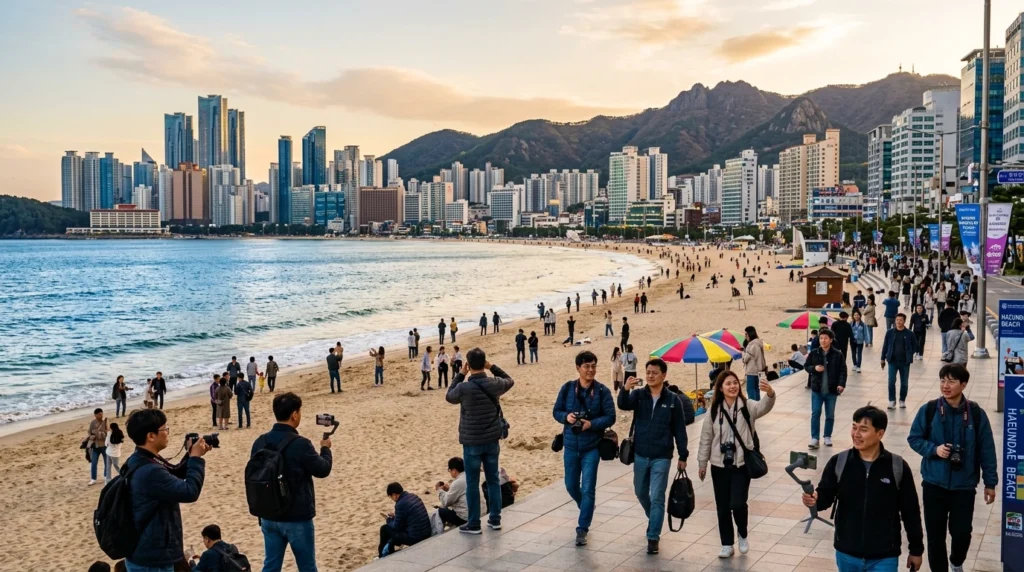 Traveling to Busan for the first time is an exhilarating experience. Having spent a significant part of my life navigating the coastal cities of North America and the vibrant streets of South Korea, I can confidently say that Busan offers a unique blend of oceanic tranquility and bustling city energy. It is a place where modern pop culture seamlessly meets deep-rooted traditions. For international fans stepping into this dynamic city, whether drawn by K-pop, K-dramas, or simply the allure of the sea, knowing a few insider tips can transform a good trip into an unforgettable journey.
Here is your comprehensive guide to making the most out of your first visit to Busan, featuring must-visit spots, incredible local K-food, and essential travel tips.
The Ultimate Fan Pilgrimage: Haeundae Beach Train at Blue Line Park
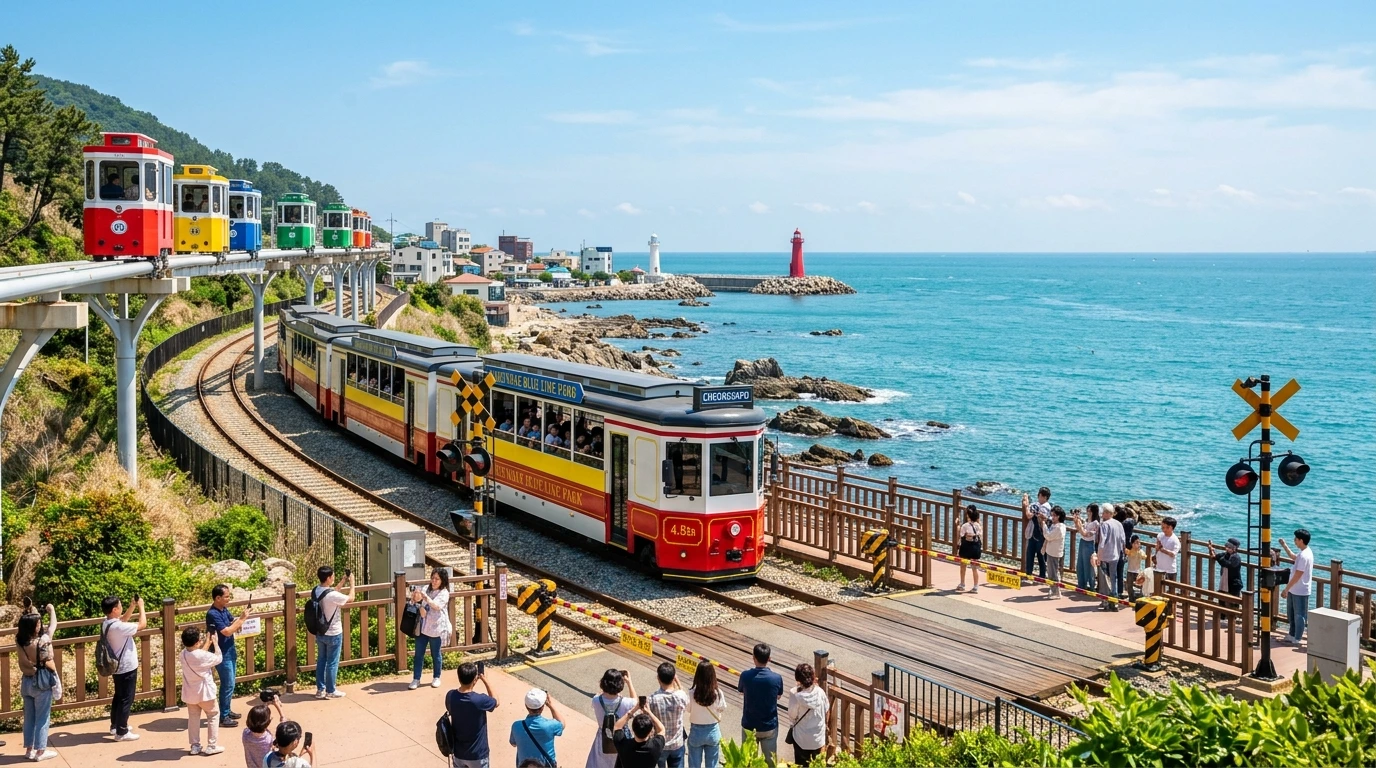
One of the most visually stunning experiences in Busan is the Haeundae Beach Train, operated by Blue Line Park. If you appreciate cinematic landscapes, this is your spot. The train runs along a 4.8-kilometer coastal railway from Mipo, passing through Cheongsapo, and ending at Songjeong. Because the train moves at a leisurely pace, it offers a perfect, healing view of the Haeundae ocean.
What makes this place incredibly popular among international fans and tourists is the Cheongsapo station area. When you step out of the station, the view of the train tracks with the ocean in the background looks strikingly similar to the famous Kamakura crossing in the Japanese animation “Slam Dunk.” It has become a massive hotspot for taking photos.
Here is a quick breakdown of the stations:
* Mipo Station: The most accessible starting point, located very close to the center of Haeundae Beach.
* Cheongsapo Station: This is where you can transfer to the Sky Capsule and visit the Daritdol Observatory. The iconic “Slam Dunk” photo zone is right outside.
* Songjeong Station: Known as a surfer’s paradise, this area is filled with trendy cafes and offers a quieter, more relaxed vibe.
A one-way ticket for the Beach Train costs around 7,000 KRW, while a round trip is about 12,000 KRW. If you want a more private and romantic experience, highly consider the Sky Capsule, which runs on an elevated rail (around 30,000 KRW for a one-way trip).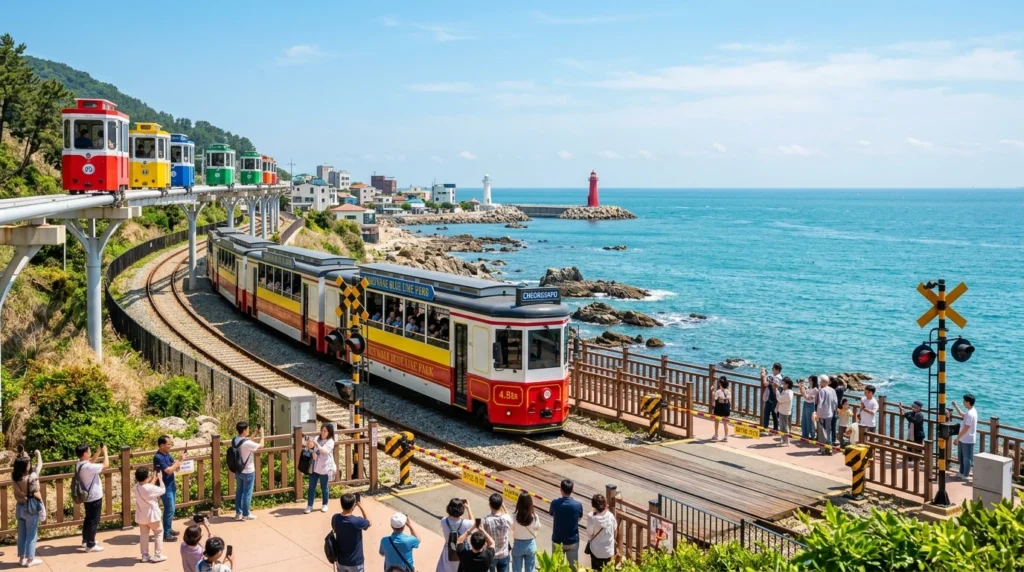
Experiencing True K-Food: Nakgopsae at Gaemijip
When exploring local cuisine, you must try “Nakgopsae,” a signature Busan dish. The best place to experience this is the Gaemijip International Market Main Branch in Haeundae. Nakgopsae is a spicy, savory hot pot made with octopus (nakji), beef intestines (gopchang), and shrimp (saewoo).
To eat it like a true local, adopt the “K-Food Bibimbap Style.” You will be given a large bowl of rice. Add a generous amount of bean sprouts, chives, and seaweed flakes. Once the Nakgopsae is fully cooked and reduced, scoop it over your rice and mix it all together. The combination of textures from the chewy octopus, rich intestines, and tender shrimp is phenomenal. To balance the spicy kick, pair your meal with a traditional Korean rice wine, specifically a local Busan Makgeolli like Saengtak.
A fun cultural element of this dining experience is the table-side cooking. The staff will manage the induction stove for you and firmly instruct you “not to open the lid” until they say so. It is a quirky, authentic K-restaurant moment. Conveniently, this spot is a short four-minute walk from Haeundae Beach and is open 24 hours a day.
If you are looking to expand your culinary adventure, check out Seoga Dwaeji Gukbap for Busan’s ultimate soul food, pork soup. For seafood lovers, Sinsa Kkotgedang in Haeundae offers incredible crab dishes. After your meals, head over to Edge 993 & Hus Humumu Bakery near Dalmaji-gil to enjoy some coffee and pastries with a panoramic ocean view.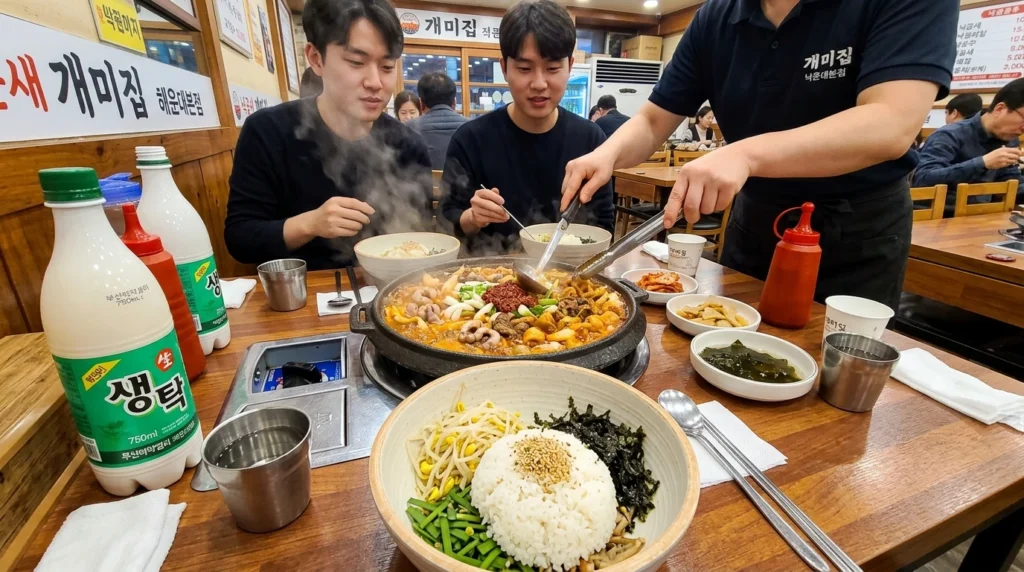
Cash or Card
South Korea is largely a cashless society, and Busan is no exception. Major credit cards like Visa and Mastercard are accepted almost everywhere, from large department stores to small local cafes. You can easily navigate the entire city just by tapping your card. However, it is highly recommended to carry a small amount of cash (around 30,000 to 50,000 KRW). You will need physical cash to reload your T-Money transit card, buy street food at places like BIFF Square or Haeundae Market, and shop at small underground subway malls where cash transactions sometimes yield a small discount.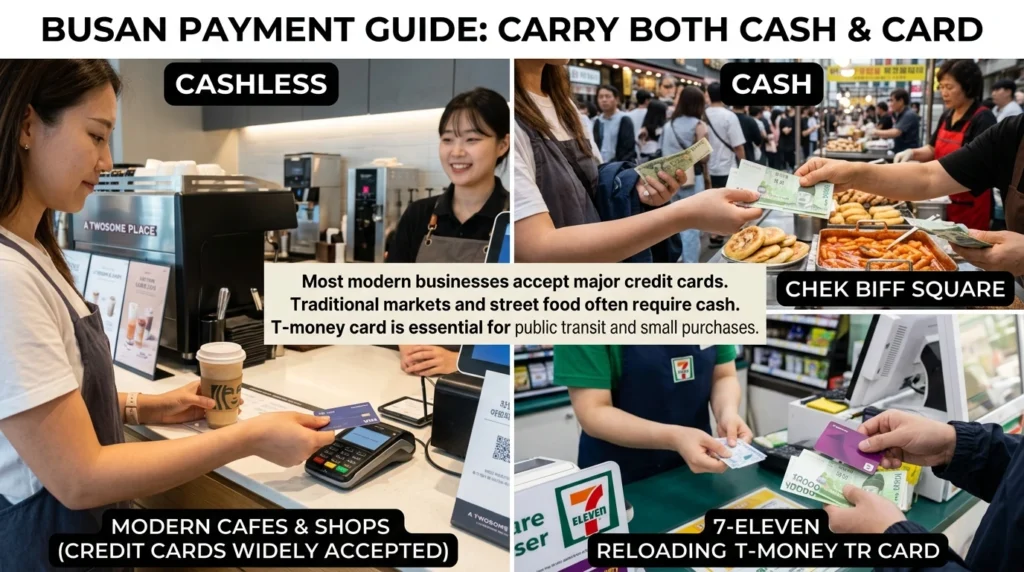
Translation Apps and Basic Korean Phrases
Navigating a new country can be daunting, but technology makes it incredibly easy. Google Maps does not work well in South Korea due to local security laws, so you must download Naver Map or KakaoMap to find your way around. For translation, bypass Google Translate and download Papago. Papago is vastly superior at understanding the nuances of the Korean language, including the local Busan dialect (Satoori), and its image translation feature is a lifesaver for reading menus.
Learning a few basic phrases will also go a long way. Locals deeply appreciate the effort.
* Hello: An-nyeong-ha-se-yo
* Thank you: Gam-sa-ham-ni-da
* Excuse me (to get attention, like at a restaurant): Jeo-gi-yo
* How much is this?: Eol-ma-ye-yo?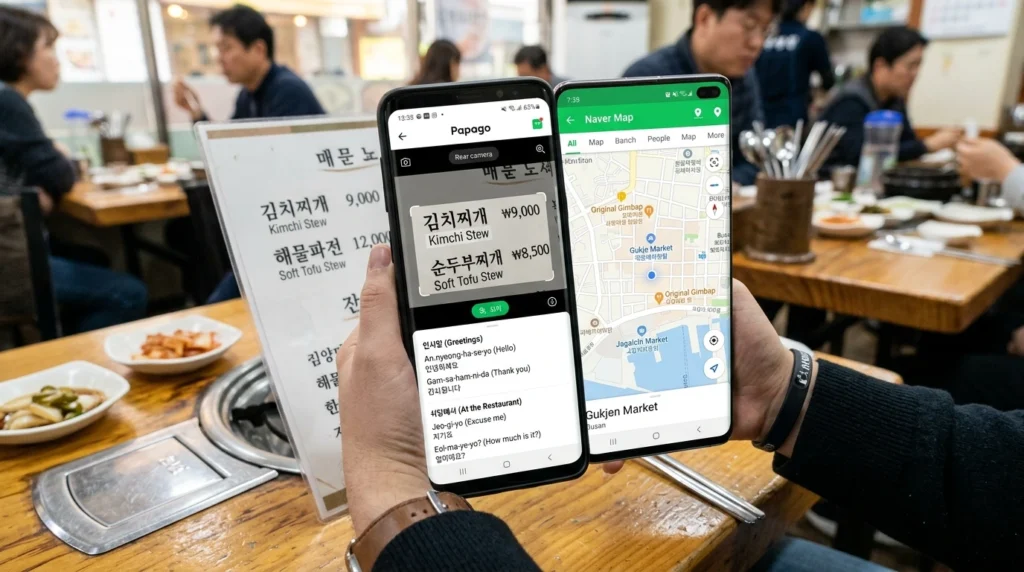
Convenience Stores
Korean convenience stores (CU, GS25, 7-Eleven, Emart24) are an absolute cultural phenomenon. They are not just places to grab a quick drink; they are 24-hour lifestyle hubs. If you are jet-lagged and hungry in the middle of the night, you can find a massive array of high-quality instant noodles, triangular gimbap, and pre-packaged bento boxes. You can even cook your ramen right there using their specialized hot water dispensers and microwaves. Additionally, you can buy and recharge your transit cards, purchase emergency toiletries, and even charge your phone. Spending a late night sitting outside a convenience store near the beach with a snack is a quintessential Korean experience.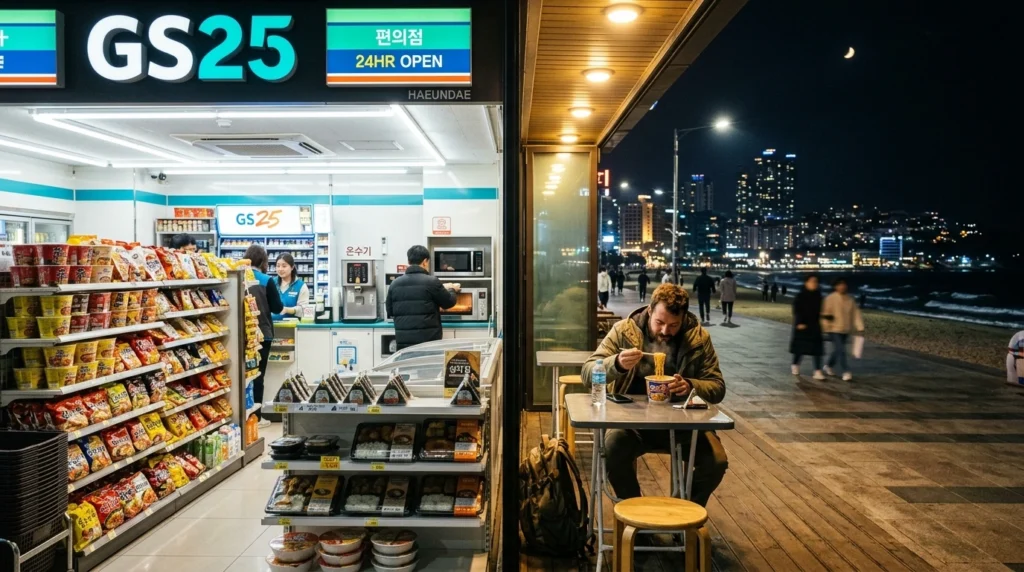
Weather and Clothing
Busan is a coastal city, which means its weather can be quite distinct from Seoul. Summers are incredibly humid and hot, so pack light, breathable clothing and always carry an umbrella, as sudden monsoon showers are common. The winters are milder than in the northern parts of Korea, but the biting sea breeze can make it feel much colder than the thermometer indicates. The key to packing for Busan is layers. A sturdy windbreaker is essential if you plan to walk along the coastal trails like Igidae or Taejongdae, regardless of the season.
Etiquette That Makes Travel Easier
Understanding a few basic Korean etiquette rules will make your interactions much smoother. First, always use two hands when giving or receiving items, especially money or credit cards. It is a sign of respect. Second, tipping is not a part of Korean culture. In fact, leaving money on the table can cause confusion, and a server might chase you down the street thinking you forgot your change. Finally, when riding the subway or bus, avoid sitting in the designated priority seating for the elderly and pregnant women, even if the train is completely empty. Respecting these small social contracts will earn you warm smiles from the locals.
FAQ
Q: Do I need a visa to visit Busan?
A: It depends on your nationality. Many countries have visa-free agreements with South Korea, but you will likely need to apply for a K-ETA (Korea Electronic Travel Authorization) online before your flight. Always check your local embassy’s guidelines.
Q: How do I get from Seoul to Busan?
A: The most efficient way is taking the KTX (Korea Train eXpress) or SRT high-speed trains. It takes roughly 2.5 hours from Seoul Station to Busan Station. Flights are also available but factor in airport travel time.
Q: Is Busan safe for solo travelers?
A: Yes, absolutely. South Korea is consistently ranked as one of the safest countries in the world. Walking around popular areas in Busan at night is generally very safe, though standard travel awareness is always recommended.
Q: What is the T-Money card?
A: It is a rechargeable smart card used for paying transit fares on buses, subways, and even taxis across the country. You can buy and reload them at any convenience store.
Q: Are there vegetarian or vegan options in Busan?
A: Traditional Korean cuisine uses a lot of meat and seafood broths, which can make strict vegan dining challenging. However, the number of dedicated vegan restaurants is growing, and temple food is naturally plant-based.
Q: Can I drink the tap water?
A: While the tap water in South Korea is technically safe and highly purified, most locals prefer to drink filtered or bottled water. Bottled water is very cheap at convenience stores.
Q: Do people speak English in Busan?
A: English proficiency varies. Young people and staff in major tourist hubs usually speak basic to conversational English. However, having a translation app ready is highly recommended for smaller shops and taxis.
Q: What is the best time of year to visit?
A: Spring and Autumn are the best seasons. The weather is crisp and clear, making it perfect for exploring coastal trails. Summer is great for beachgoers but can be very humid.
Q: How do I hail a taxi?
A: You can hail a silver or orange taxi on the street if the red light is on. Alternatively, use the Kakao T app (the Korean equivalent of Uber) to call a taxi easily, even if you don’t speak Korean.
Q: What should I buy as a souvenir?
A: Popular souvenirs include Korean skincare products, traditional snacks from local markets, and Busan-specific items like local makgeolli or fish cake (eomuk) gift sets.
Q: Is public Wi-Fi easily available?
A: Yes, public Wi-Fi is everywhere—in cafes, subway stations, and even on some city buses. However, renting a pocket Wi-Fi or getting an eSIM at the airport is recommended for uninterrupted access.
Q: How do I order food at a restaurant?
A: Many modern restaurants have digital kiosks or tablets at the table, often with an English language option. If not, look for a call button on your table to summon the waiter when you are ready to order.
💜 BTS Busan Concert Complete Guide Series
Optimize your concert experience with our curated guide series! Bookmark this section and explore these essential resources to ensure a seamless and unforgettable trip to Busan.
- • Comprehensive Guide (Hub):
The Ultimate Guide for Attending the BTS Concert in Busan - • Accommodation & Transit:
- • Food & Fan Pilgrimage:
- • Itinerary & Essential Tips: