
Navigating Seoul: A Transit System Like No Other
If you have ever relied on the subway systems in North America, you know the familiar routine. Whether it is swiping a MetroCard in the bustling stations of New York or tapping a Presto card while waiting for a streetcar in Toronto, getting around often requires navigating a mix of legacy systems and modern upgrades. Stepping into the transit network of South Korea, however, feels like entering the future. The subways and buses here are impeccably clean, incredibly punctual, and seamlessly integrated.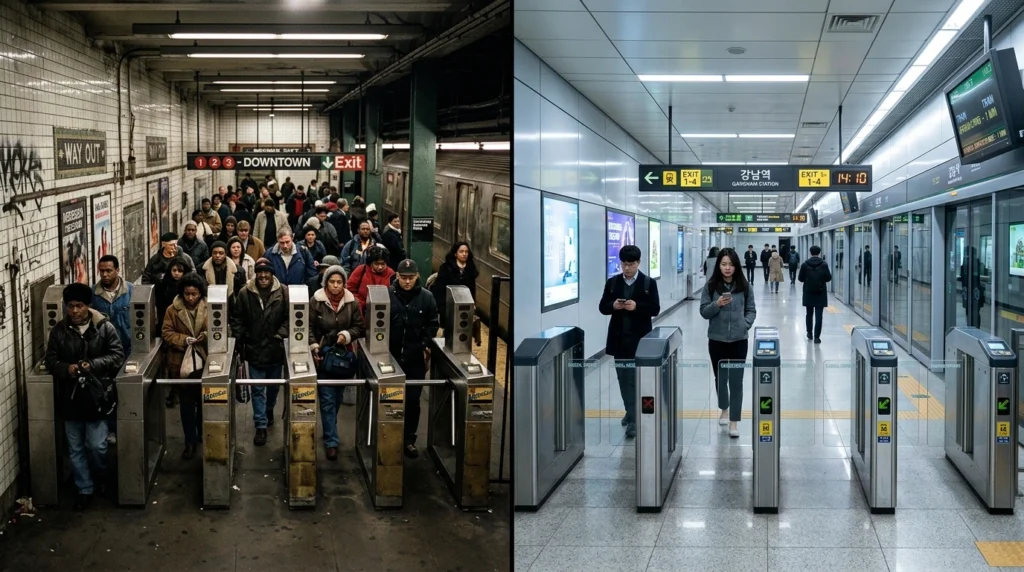
To truly experience the country like a local, mastering the public transit system is your first rite of passage. You will not find people fumbling with loose change or buying single-journey paper tickets. Instead, everyone relies on smart transit cards. The two undisputed champions of this arena are the traditional T-Money card and the highly customizable NAMANE card. Understanding how to choose, purchase, and use these cards will transform your daily commute from a confusing tourist struggle into a smooth, local-level breeze.
The Classic Essential: Mastering the T-Money Card
For the vast majority of commuters in South Korea—well over ninety percent—the T-Money card is the absolute standard. It is the most reliable, ubiquitous, and straightforward payment method for getting from point A to point B. It functions on subways, city buses, and even in taxis, making it an indispensable tool for anyone navigating the country.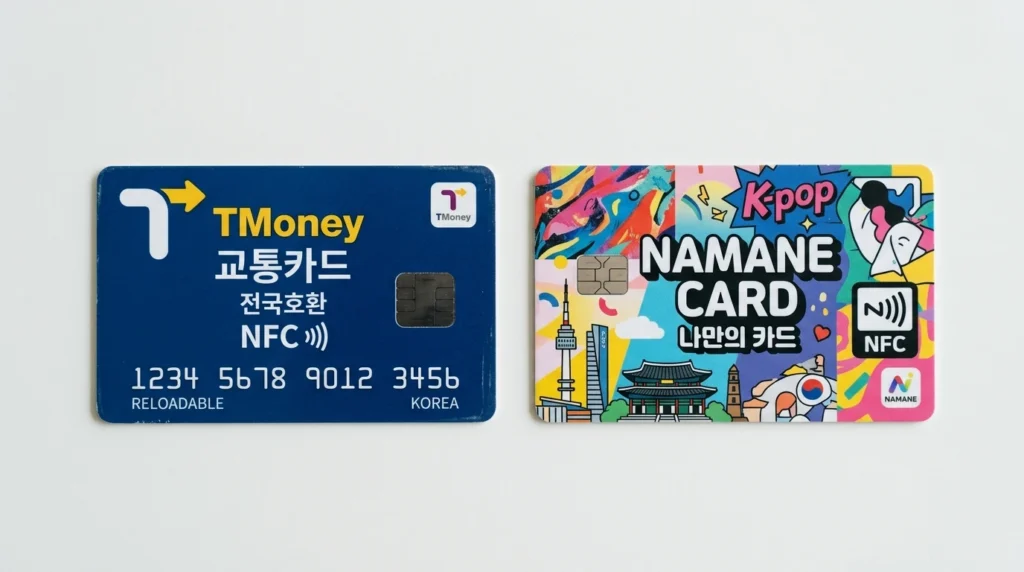
Acquiring a T-Money card is remarkably easy. As soon as you land at Incheon or Gimpo International Airport, you can pick one up. They are also available at virtually every convenience store nationwide, including CU, GS25, and 7-Eleven, as well as at automated ticketing machines inside subway stations. The card itself costs between 2,500 and 6,000 KRW, depending on the design you choose. Please note that this initial purchase fee is non-refundable.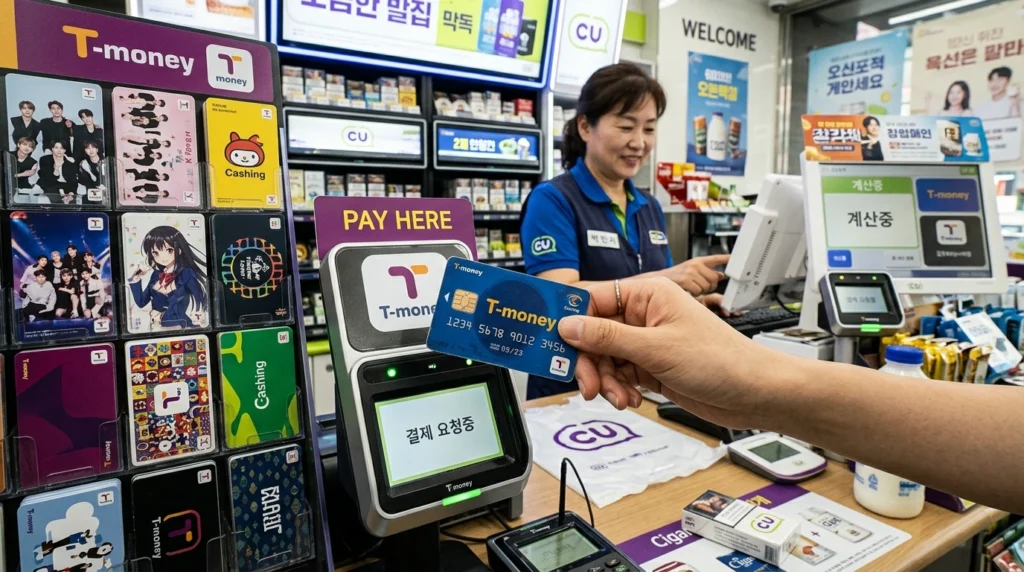
When it comes to topping up your card, you will need to embrace cash. While South Korea is largely a cashless society, reloading a T-Money card at convenience stores or subway station kiosks requires Korean Won in cash. Most locals load their cards in increments of 10,000 to 50,000 KRW at a time. If you find yourself with leftover funds at the end of your trip, you can easily get a refund for the remaining balance at any convenience store before heading to the airport.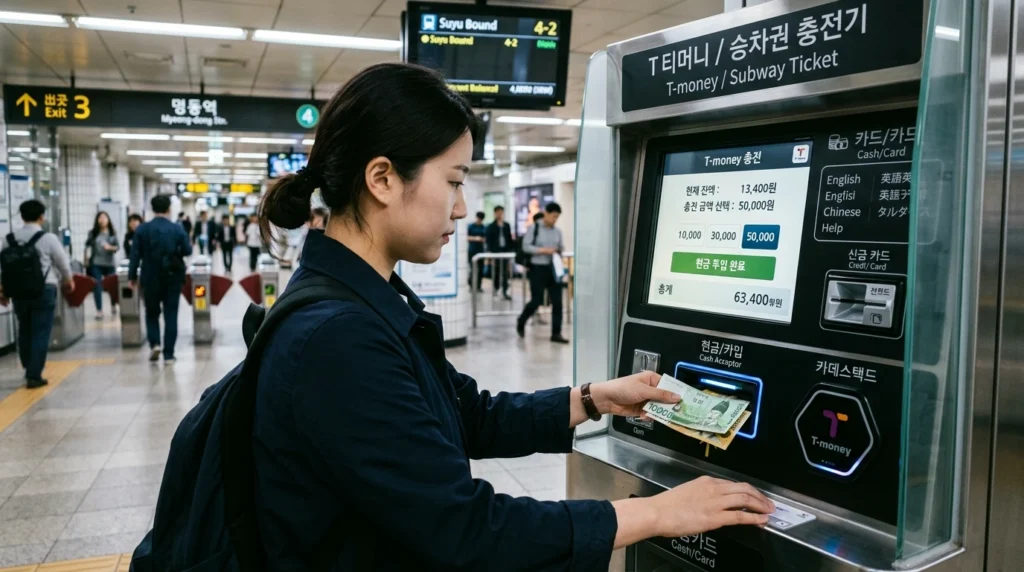
The Modern Upgrade: Express Yourself with the NAMANE Card
While the T-Money card is all about pure utility, the NAMANE card offers a unique blend of practicality, personalization, and expanded financial freedom. The NAMANE card is not just a transit pass; it functions as a prepaid debit card that you can use at restaurants, cafes, and retail shops all over the country. For international visitors who want a functional souvenir, this is the ultimate choice.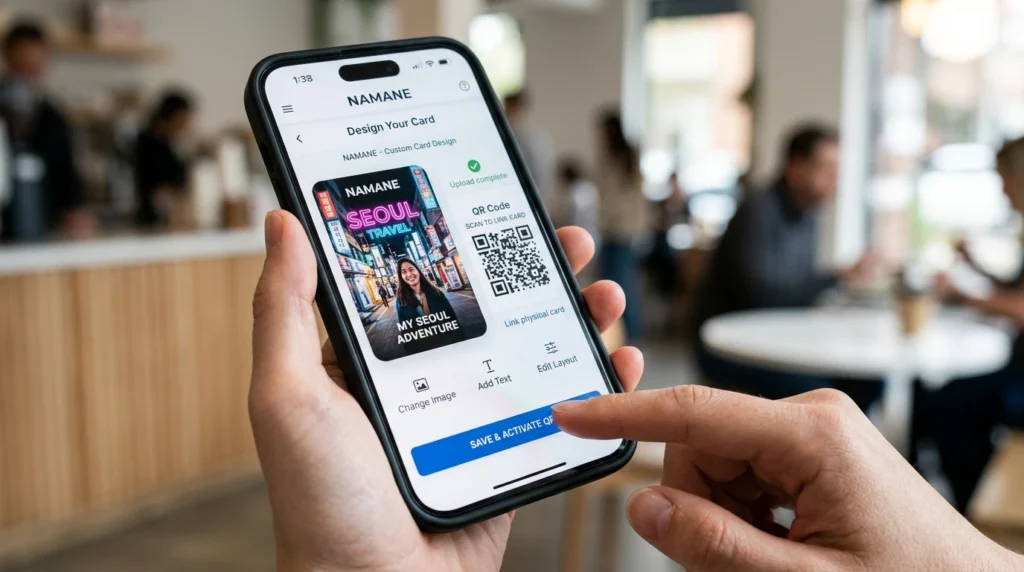
The most exciting feature of the NAMANE card is the ability to customize its design. Through the dedicated mobile application, you can upload your favorite photos—whether it is a snapshot from your travels, a picture of your pet, or an image of your favorite K-pop idol—and print it directly onto the card. Furthermore, the registration process is incredibly tourist-friendly. Unlike many Korean digital services that require complex local phone number verification, the NAMANE app simply requires an email address to sign up and manage your account.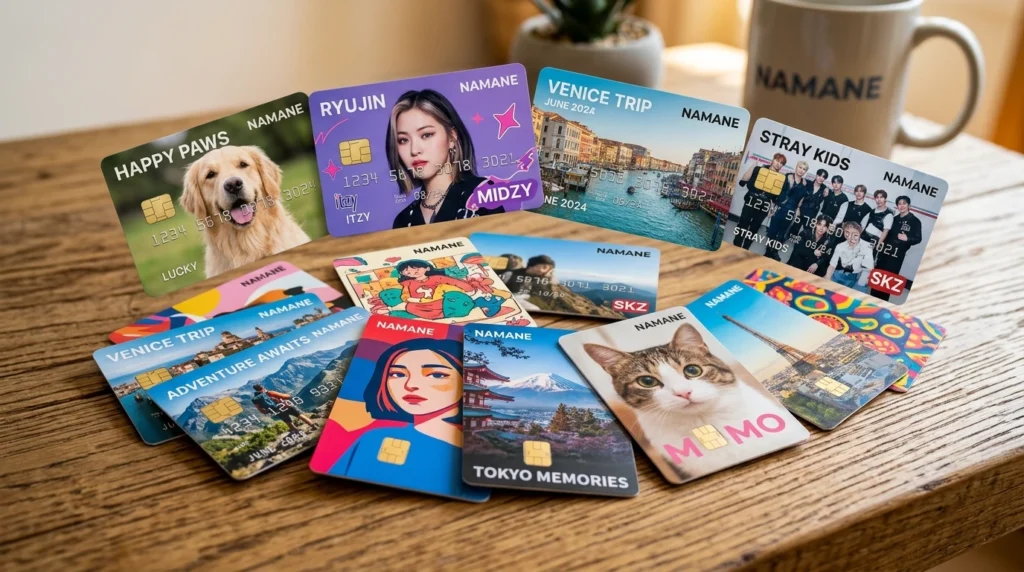
You can purchase and print your personalized NAMANE card at designated kiosks located at major transit hubs, including the CU convenience store at Incheon Airport Terminal 1. The physical card costs either 7,000 or 10,000 KRW. A crucial pro-tip: when you design your card in the app, it generates a QR code. This code does not save automatically, so you must take a screenshot of it to scan at the physical kiosk. While you can pay for the initial card issuance fee with a foreign credit card at the kiosk, reloading the card with cash at a CU convenience store will waive any top-up fees.
Pro Tips for Riding the Subway Like a True Seoulite
Having the right card is only half the battle; knowing the unwritten rules of the transit system is what truly separates the locals from the tourists. Coming from cities where you often only need to tap when entering the system, the Korean method requires a slight adjustment to your muscle memory.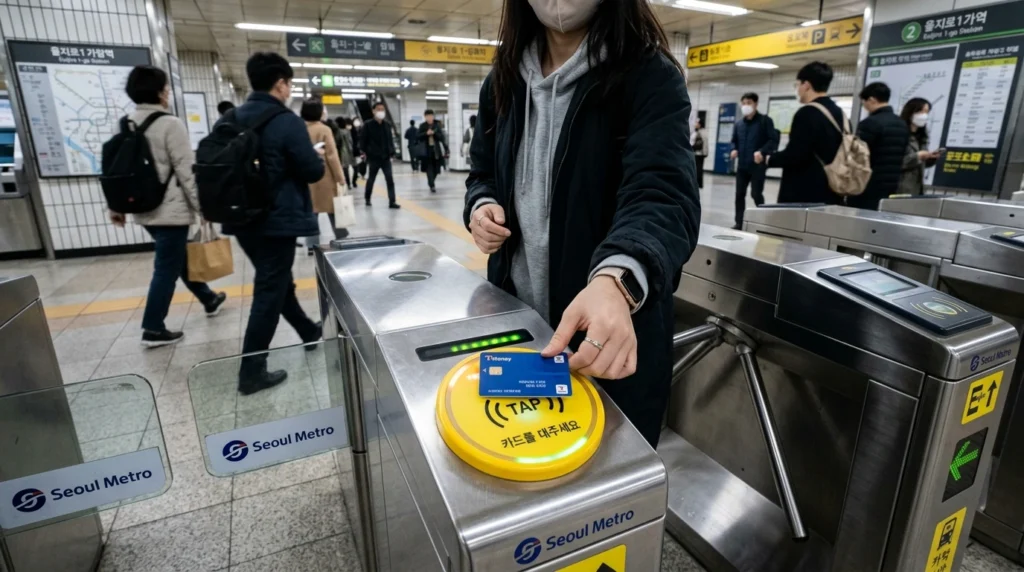
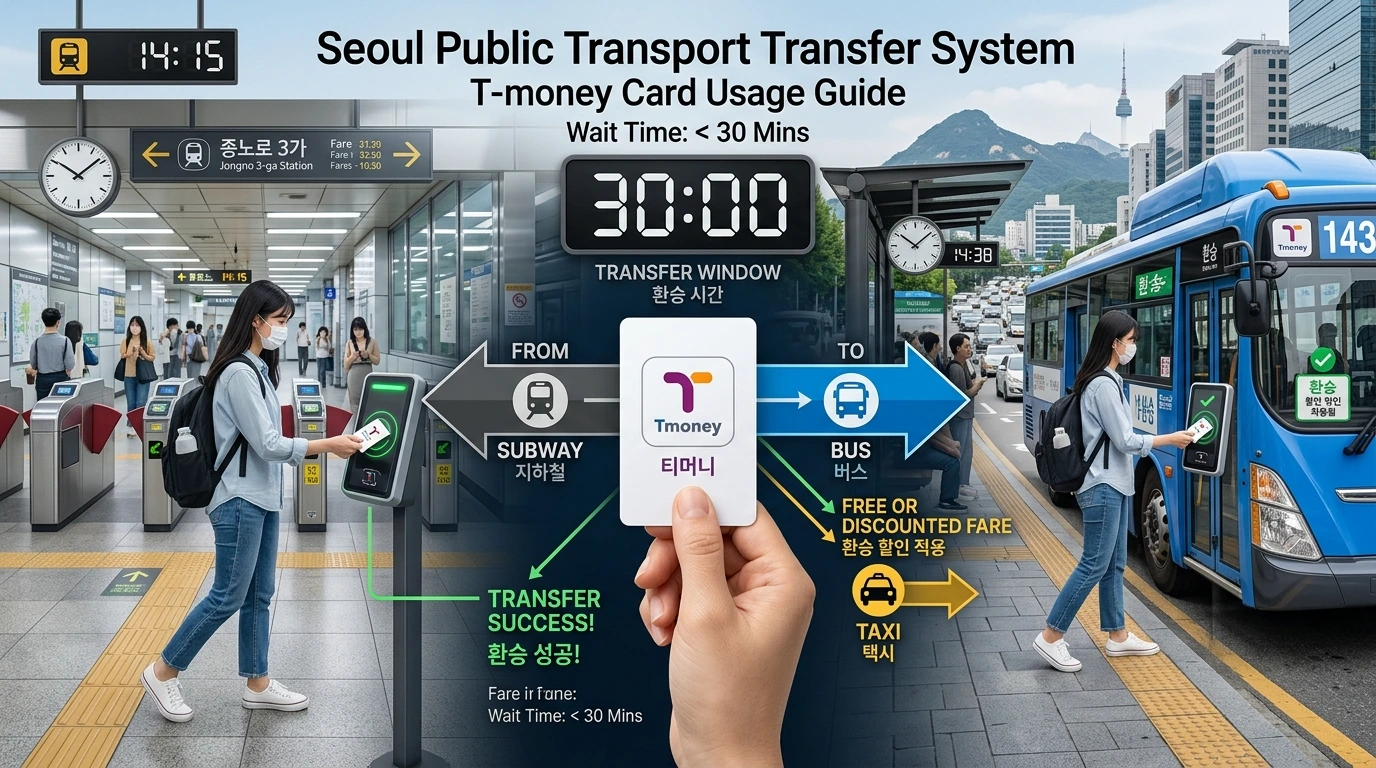
The most critical rule of Korean public transit is that you must always tap your card both when boarding and when exiting. This “tap on, tap off” system is non-negotiable. If you fail to tap your card on the scanner when getting off a bus or exiting a subway station, you will be hit with a penalty fare the next time you try to use the transit system.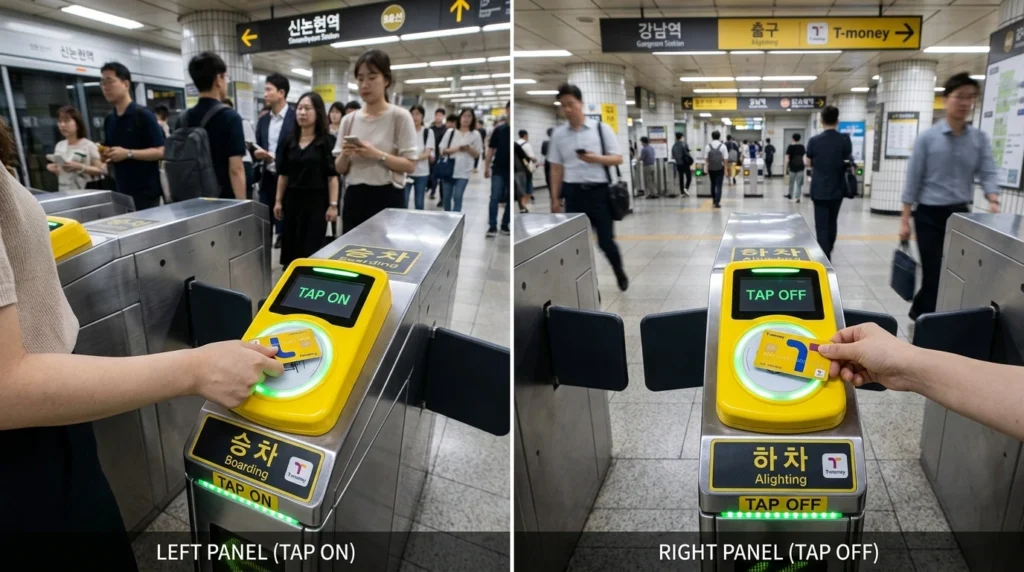
Moreover, tapping off is the secret to unlocking South Korea’s brilliant transfer discount system. If you tap off and board another mode of transit—such as moving from a subway to a bus, or from one bus route to another—within thirty minutes, your transfer will be either completely free or heavily discounted. You can take advantage of this transfer discount up to four times on a single journey. Just remember that each person must have their own individual card; you cannot tap once for yourself and pass the card back to a friend.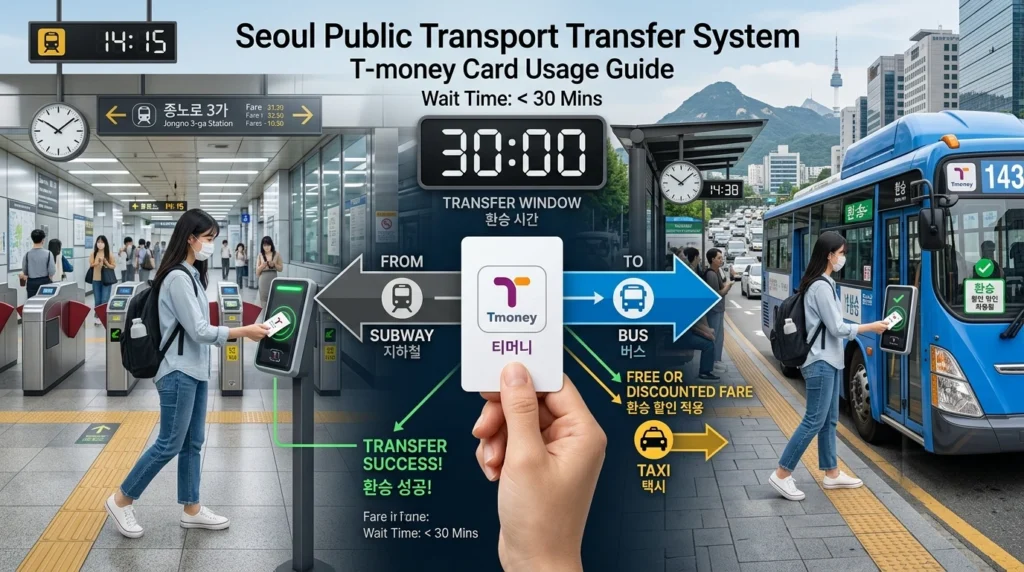
FAQ
What is the main difference between T-Money and NAMANE cards?
The T-Money card is primarily a transit card used for subways, buses, and taxis, whereas the NAMANE card combines transit functionality with a prepaid debit feature for shopping and dining, plus it offers a customizable design.
Can I use a foreign credit card to top up my T-Money card?
No, T-Money cards must be reloaded using cash (Korean Won) at convenience stores or subway station kiosks.
Do I really need to tap my card when getting off the bus?
Yes, you must always tap off when exiting buses and subways. Failing to do so will result in penalty charges and void your transfer discounts.
How long do I have to make a transfer between buses and subways?
You have approximately 30 minutes from the time you tap off your first ride to tap onto your next ride to receive the transfer discount.
Can two people share one transit card?
No, the transfer and fare systems require that every individual has their own dedicated transit card to tap in and out.
Where can I buy a T-Money card?
You can purchase them at Incheon and Gimpo airports, automated machines inside all subway stations, and convenience stores like CU, GS25, and 7-Eleven.
Is the initial purchase cost of the transit cards refundable?
No, the fee paid to purchase the physical T-Money card (2,500-6,000 KRW) or NAMANE card (7,000-10,000 KRW) is non-refundable.
How do I get my money back if I have a leftover balance on my T-Money card?
You can visit any participating convenience store and request a refund for the remaining balance on your card before leaving the country.
Do I need a Korean phone number to use the NAMANE app?
No, the NAMANE app is designed to be tourist-friendly and only requires a valid email address for registration.
How do I print the custom design on my NAMANE card?
After designing the card in the app, take a screenshot of the generated QR code and scan it at a physical NAMANE kiosk to print your card.
Are there fees for reloading the NAMANE card?
If you reload your NAMANE card balance using cash at a CU convenience store, the top-up fees are waived.
Can I use these cards outside of Seoul?
Yes, both T-Money and NAMANE cards are compatible with public transit systems in major cities all across South Korea.