
When the sun dips below the horizon and the humid heat of the day transforms into a gentle, salt-kissed breeze, Busan reveals its true character. For those who have wandered through the coastal cities of the world—from the neon-lit docks of Hong Kong to the laid-back piers of Santa Monica—there is something uniquely magnetic about a Busan summer night. It is a city where the pulse of a metropolitan powerhouse meets the rhythmic lullaby of the East Sea. A Busan night beach experience isn’t just a walk on the sand; it is a sensory journey through light, sound, and flavor.
The magic of the Busan night view lies in its diversity. You can find yourself lost in the futuristic skyline of Haeundae one moment and then sharing a quiet, reflective moment by the sea in Gwangalli the next. This guide is designed for the night owls, the photographers, and the romantic wanderers looking to navigate the best late-night vibes the city has to offer.
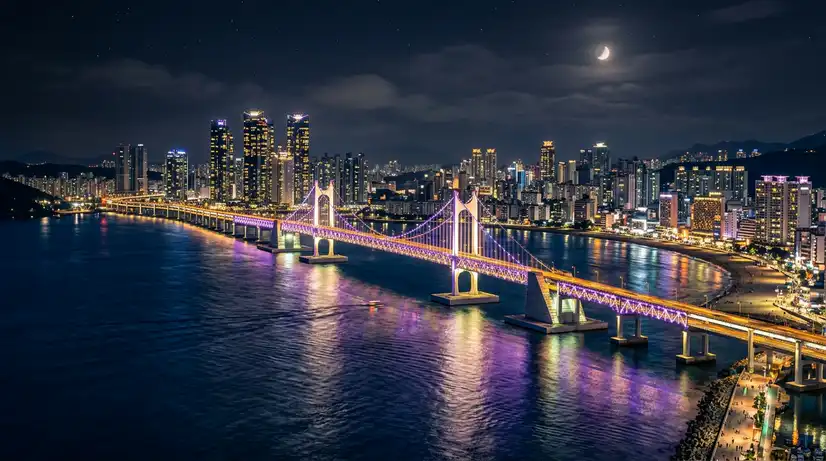
Gwangalli Beach: The Symphony of Drones and the Diamond Bridge
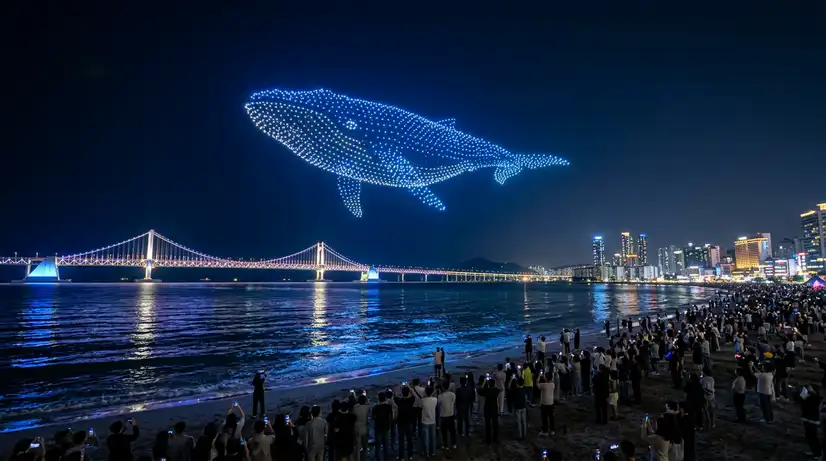
If you are looking for the heart of the Busan summer night, look no further than Gwangalli. While Haeundae offers scale, Gwangalli offers intimacy and artistry. The centerpiece of this beach is the Gwangandaegyo Bridge, affectionately known as the Diamond Bridge. At night, it becomes a massive canvas for light, but the real spectacle that has captured the world’s attention is the Gwangalli M Drone Light Show.
The Gwangalli drone show is a testament to the city’s technological soul. Every Saturday night, the sky above the ocean transforms into a three-dimensional theater. Hundreds of drones rise in unison, moving like a synchronized flock of starlight to create intricate shapes, characters, and messages. One week it might be a sprawling dragon breathing fire; the next, a touching tribute to family or a whimsical circus scene.
For the best experience, timing is everything. During the summer months, the shows typically run twice an evening on Saturdays, at 8:00 PM and 10:00 PM. The beach fills up quickly, with locals and travelers alike spreading out mats on the sand. The atmosphere is electric yet orderly, a perfect example of the city’s communal spirit. If you prefer a more elevated experience, the coastline is lined with rooftop cafes and craft beer pubs. Sipping a cold local IPA while watching the drones dance at eye level is a memory that sticks with you far longer than any souvenir.
Beyond the show, Gwangalli is the capital of the “terrace culture.” The road running parallel to the sand is packed with establishments that open their large windows to the sea. It’s the perfect place to experience the “apres-beach” lifestyle—transitioning from a day in the sun to a night of sophisticated socializing.
Haeundae Night Walk: From Skyscrapers to Serene Coastal Trails
Haeundae is perhaps the most famous beach in Korea, and for good reason. It represents the height of luxury and urban energy. A Haeundae night walk offers a different rhythm than Gwangalli; it is grander, more structured, and deeply cinematic.
The most iconic night route begins at the eastern end of the beach and moves toward Dongbaekseom Island. This is not a rugged hike but a beautifully maintained coastal trail that winds through pine trees and rocky cliffs. At night, the path is subtly lit, providing enough visibility for safety while preserving the mystery of the dark woods and the crashing waves below. As you reach the tip of the island near the Nurimaru APEC House, the view opens up to reveal the bridge and the distant city lights, offering a moment of quiet contemplation away from the beach crowds.
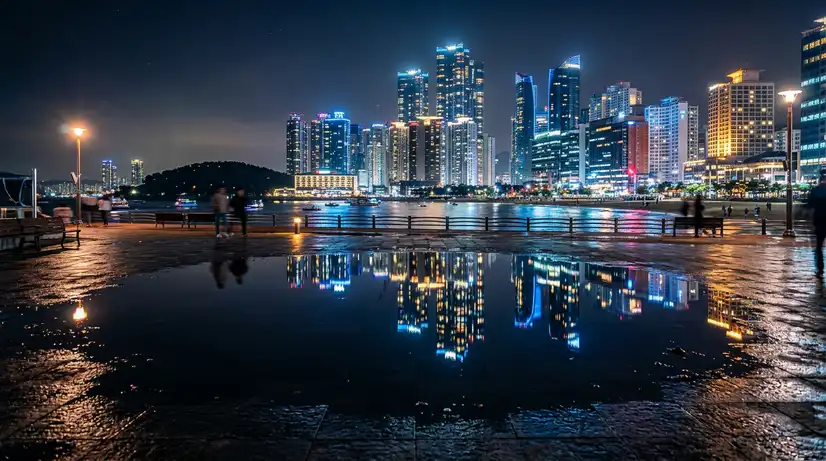
Emerging from the Dongbaekseom trail, you will find yourself at The Bay 101. This is the spot that photographers dream of. Often referred to as the “Manhattan of Busan,” the Marine City skyline across the water features some of the tallest residential buildings in Korea. The reflection of these glass towers on the dark water is stunning. A popular local “hack” is to find the flat concrete areas where water has been poured to create a perfect mirror effect for photos. It’s a place where the city feels infinite, expensive, and incredibly alive.
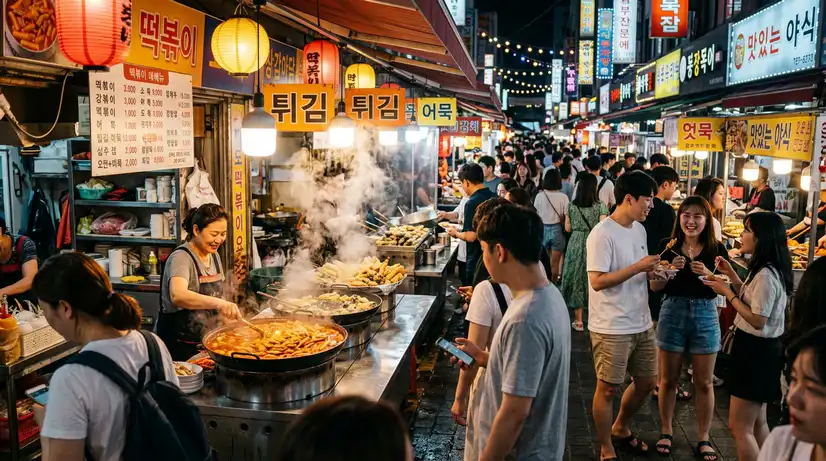
If you get hungry during your walk, the Haeundae Traditional Market is just a block away from the sand. Unlike the polished glass of the skyscrapers, the market is a raw, bustling corridor of life. Even late at night, you can find vendors searing spicy hagfish (gomjangeo), frying up golden hotteok (sweet pancakes), or serving bowls of steaming pork soup (dwaeji gukbap). It is the essential Busan night experience—a blend of high-end luxury and grit.
Hidden Gems and the Late-Night Vibe of Old Busan
While the main beaches get most of the spotlight, a true connoisseur of the Busan night view knows that some of the best perspectives are found in the older, more rugged parts of the city.
Yeongdo, an island connected to the mainland by several bridges, has transformed from an industrial hub into a creative sanctuary. The Huinnyeoul Culture Village, perched on a cliffside, offers a night view that is hauntingly beautiful. Walking through the narrow, winding alleys lit by soft yellow lamps feels like stepping back in time. Below, the coastal tunnel glows with neon installations, providing a surreal path that hugs the shoreline. From here, you can see the massive container ships anchored in the harbor, their lights twinkling like a floating city on the horizon.
For those who enjoy a late-night drive, the Busan Harbor Bridge (Busanhangdaegyo) is a must. The bridge features a sophisticated LED system that changes colors in a rhythmic pattern. Crossing it feels like driving through a rainbow. If you want to see the bridge from a distance, head to the Sinseondae Lookout. It’s a favorite among locals for “car-nic” (car picnics), where people park their vehicles, open the trunk, and enjoy the view of the industrial port and the glowing bridge with some takeout food.
Finally, no Busan summer night is complete without a visit to the Bupyeong Kkangtong Night Market. This is where the city’s international history comes to life. You can find street food from all over the world—Vietnam, Thailand, Turkey, and beyond—integrated into the local food scene. The energy is infectious, the smells are intoxicating, and it provides a perfect end to a night of exploration.
Practical Tips for Navigating the Busan Summer Night
Exploring Busan at night is generally safe and easy, but a few local tips can enhance your experience.
First, consider the transportation. During the Gwangalli drone show, the roads around the beach become incredibly congested. The subway is your best friend. Both Gwangan Station and Geumryeonsan Station (Line 2) are within a short walking distance of the beach. If you are planning to stay out very late, keep in mind that the subway stops running around midnight. Taxis are plentiful, but using a ride-hailing app can be more convenient during peak summer weekends.
Second, respect the “No Alcohol” zones. While Busan used to be famous for the outdoor drinking culture at places like Millak Waterfront Park, many areas have recently transitioned to alcohol-free zones to maintain cleanliness and reduce noise. You can still enjoy the atmosphere with coffee, snacks, or non-alcoholic drinks, and the result is a much more pleasant and family-friendly environment for everyone.
Lastly, pay attention to the lighting schedules. The major bridges usually stay lit until midnight on weekdays and until 2:00 AM on weekends during the peak summer season. If you are a photographer aiming for that perfect shot of the Diamond Bridge, make sure you get there before the lights cut out for the night.
Busan is a city that doesn’t sleep; it just changes its outfit. From the tech-heavy spectacles of Gwangalli to the serene, pine-scented paths of Haeundae, the Busan night beach experience is a highlight of any trip to the peninsula. It’s a place where the modernity of the future meets the timeless rhythm of the sea, creating a summer vibe that you will carry with you long after the sand has been washed from your shoes.
FAQ
Q: What time does the Gwangalli drone show start?
A: During the summer season (March to September), the shows are held every Saturday at 8:00 PM and 10:00 PM. Each show lasts approximately 10 minutes.
Q: Is there an entrance fee for the Gwangalli M Drone Light Show?
A: No, the show is completely free to watch from the beach or any public viewing area along the coastline.
Q: Where is the best spot to take photos of the Marine City skyline?
A: The Bay 101 near Dongbaekseom Island is the most famous spot. For the best “reflection” shot, look for the flat concrete areas near the water’s edge.
Q: How long does it take to walk the Dongbaekseom coastal trail?
A: A leisurely walk takes about 45 to 60 minutes. The path is well-paved and relatively flat, making it accessible for most people.
Q: Are the night markets in Busan open every day?
A: The Bupyeong Kkangtong Night Market is generally open every evening, usually starting around 7:30 PM and running until nearly midnight.
Q: Can I swim in the ocean at night in Busan?
A: During the peak summer season, certain sections of Haeundae and Gwangalli beaches may have designated night swimming hours with lifeguards on duty, but generally, swimming after dark is restricted for safety.
Q: What is the best way to get to Gwangalli Beach on a Saturday night?
A: Avoid buses or taxis due to heavy traffic. Take the Busan Subway Line 2 to Gwangan Station or Geumryeonsan Station and walk about 10 minutes to the beach.
Q: Is Millak Waterfront Park still a place where people drink and eat on the floor?
A: As of recently, Millak Waterfront Park has been designated as a non-smoking and alcohol-free zone. It is now a place for quiet walks, busking, and clean relaxation.
Q: When does the Gwangandaegyo Bridge (Diamond Bridge) turn off its lights?
A: On weekdays, the lights usually turn off at midnight. On Fridays and Saturdays, the illumination is typically extended until 2:00 AM.
Q: What should I wear for a Busan summer night walk?
A: Even in summer, the sea breeze can be slightly cool or very humid. Light, breathable clothing and comfortable walking shoes are recommended. A very light windbreaker might be useful if you plan to be by the windy cliffs of Yeongdo.