
There is a specific kind of magic that happens in the coastal city of Busan when the sea mist rolls in or a light drizzle begins to fall. In those moments, the city doesn’t reach for fancy fusion cuisine or high-end dining. Instead, it turns toward a humble, steaming bowl of Busan pork soup—known locally as Dwaeji Gukbap. This isn’t just a meal; it’s a warm embrace in a ceramic bowl, a culinary legacy born from resilience, and arguably the most profound Busan comfort food you will ever encounter.
To the uninitiated, it might seem like a simple pork broth. But for those who have spent years navigating the narrow alleys of this vibrant port city, Dwaeji Gukbap is a complex symphony of flavors that varies from one neighborhood to the next. Whether you are a weary traveler stepping off a train or a local looking for a “hug in a bowl,” finding the best dwaeji gukbap in Busan is a journey worth taking.
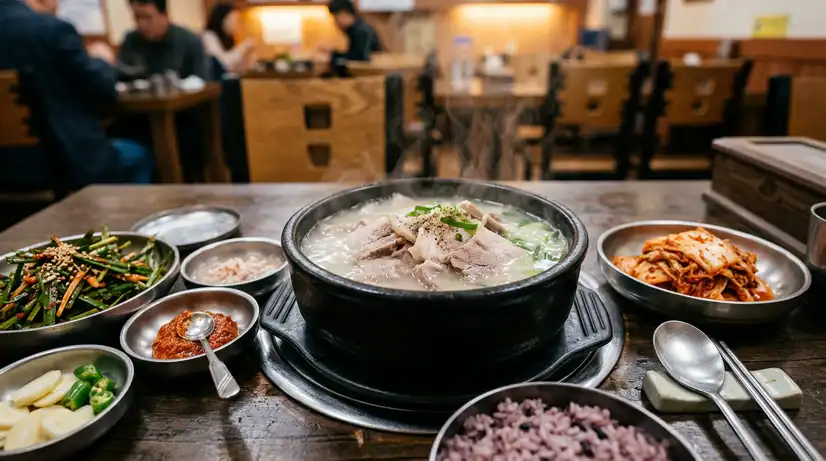
The Modern Elegance of Haeundae: Geukdong Dwaeji Gukbap
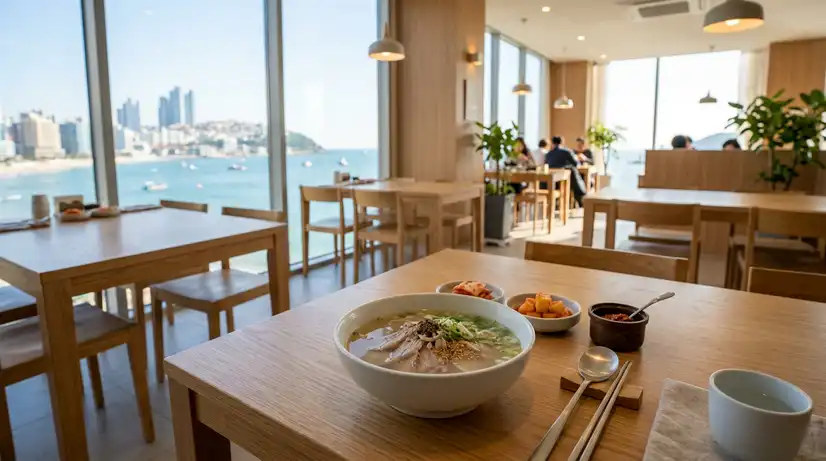
When people think of pork soup, they often imagine a thick, heavy, milky broth. However, a new wave of “clear style” soup has been taking the city by storm, and Geukdong dwaeji gukbap is at the forefront of this movement. Located near the scenic Mipo harbor at the end of Haeundae Beach, this establishment has redefined what Haeundae dwaeji gukbap can be.
Unlike the traditional “Sago-style” (bone-heavy) broths that are boiled for days until they turn white, Geukdong offers a broth that is reminiscent of a high-quality “Gomtang” or clear beef soup. It is remarkably transparent, clean, and carries a sophisticated depth that lacks any of the “porky” funk that some beginners might find intimidating. The meat here is sliced with surgical precision—thin, delicate ribbons of pork that melt the moment they hit your tongue.
The beauty of Geukdong lies in its purity. It’s the kind of place where you can truly taste the quality of the water and the pork. For those who prefer a refined dining experience without sacrificing the soul of the dish, this is a must-visit. It’s particularly popular among the younger generation and international visitors who want a lighter start to their day before exploring the Haeundae Blue Line Park.
The Titans of Tradition: A Tale of Three Iconic Spots
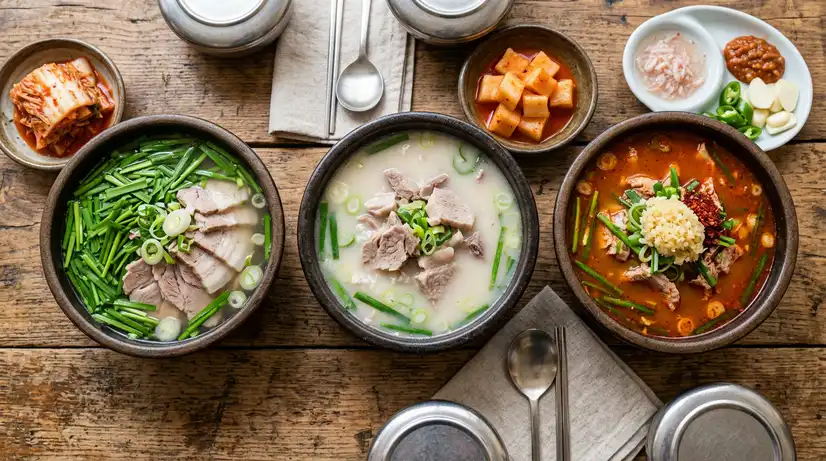
To understand the best dwaeji gukbap in Busan, one must look at the “Big Three”—the legendary establishments that have defined the city’s palate for decades. Each offers a distinct personality, catering to different moods and cravings.
First, we have Bonjeon Dwaeji Gukbap, located just a stone’s throw from Busan Station. For many, this is their first and last meal in the city. With over 45 years of history, Bonjeon specializes in a broth that strikes a perfect balance: it’s clear but incredibly deep. The secret weapon here isn’t just the soup; it’s the kimchi. They serve a “fresh” style kimchi (Geotjeori) that is vibrantly red and crunchy, providing the perfect acidic counterpoint to the rich pork. If you’re looking for a quintessential Busan pork soup experience right after hopping off the KTX, this is your destination.
Moving toward the Suyeong district, we encounter Suyeong Dwaeji Gukbap. This spot gained massive fame after being featured on high-profile food shows like ‘Wednesday Food Talk.’ The style here is the epitome of “standard excellence.” It isn’t too heavy, isn’t too light, and has zero “gaminess.” It’s the gold standard for many locals who want a reliable, high-quality meal in a clean, family-friendly environment.
Then, there is the heavyweight champion of the “intense” style: Hapcheon Illyu Dwaeji Gukbap in Sasang. This is not a soup for the faint of heart. It is bold, garlicky, and unapologetically rustic. They top their bowls with a massive dollop of minced garlic and a spicy “Dadaegi” (seasoning paste) that transforms the broth into a savory powerhouse. This is the ultimate Busan comfort food for someone who has had a long day and needs a serious caloric and emotional boost. They also practice “Toryeom,” the traditional method of repeatedly pouring hot broth over the rice to warm it up and season every grain before serving.
The Ritual: How to Eat Dwaeji Gukbap Like a Local
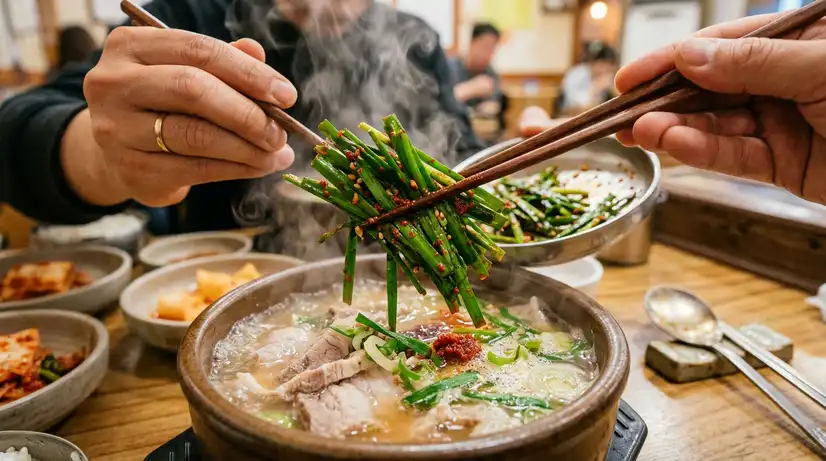
Part of the charm of eating the best dwaeji gukbap in Busan is the “ritual” involved in seasoning your own bowl. When the soup arrives at your table, it is often under-seasoned. This is intentional. The chef gives you the canvas, and you are the artist.
The first rule: do not just reach for the salt. Instead, look for the small jar of “Sae-u-jeot” (fermented salted shrimp). These tiny shrimp add more than just saltiness; they provide a concentrated burst of umami that elevates the pork fat to another level. Add them a little at a time, tasting as you go.
Next comes the “Jung-gu-ji”—the Busan dialect for chives. You will almost always be served a plate of chives seasoned with chili flakes and fish sauce. While you can eat them as a side dish, the true Busan way is to dump the entire plate into the hot soup. The heat wilts the chives just enough to release their earthy sweetness into the broth.
Finally, consider the noodles. Most traditional spots will provide a small coil of wheat noodles (Somyeon). You should drop these into the broth while it’s still piping hot, eat them first with a few slices of pork, and then move on to the rice. This two-stage process ensures you get the most out of every textural element the meal has to offer.
More Than Just a Meal: The History of Busan’s Soul Food
To truly appreciate Busan comfort food, one must understand its roots. Dwaeji Gukbap didn’t start in the kitchens of royalty. Its origins are deeply tied to the Korean War, when Busan was a city of refugees. With food being scarce, people made use of every part of the pig, including the bones and offal that might have otherwise been discarded.
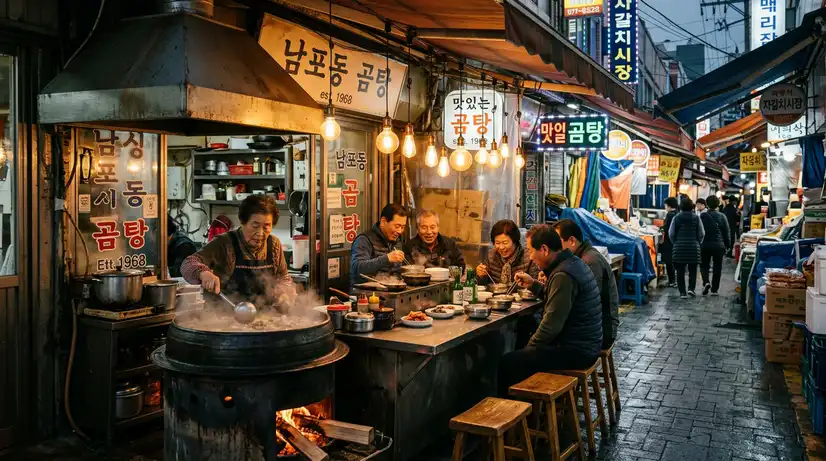
They boiled these parts for hours to create a nutrient-dense broth that could feed many. Over time, as the city grew and prospered, the recipe was refined. What started as a meal of necessity became a symbol of the city’s grit and warmth. When you sit down in a small, cramped gukbap shop in a bustling market, you are participating in a living history.
This background is why Dwaeji Gukbap is so beloved. It represents the “Busan spirit”—unpretentious, generous, and incredibly resilient. It’s why the portions are usually massive and why the owners often offer extra broth or rice for free. It’s not just about the calories; it’s about the community.
FAQ
Q: Is Dwaeji Gukbap very spicy?
A: Not usually by default. The broth is typically savory and mild. However, most places provide a red pepper paste (Dadaegi) on the side or on top, which you can mix in to reach your desired spice level.
Q: I don’t like the smell of pork. Can I still enjoy this?
A: Yes! If you are sensitive to smells, I highly recommend “clear style” places like Geukdong Dwaeji Gukbap or modern spots like Suyeong Dwaeji Gukbap. They specialize in removing any “gaminess.”
Q: What is the difference between Dwaeji Gukbap and Sundae Gukbap?
A: Dwaeji Gukbap contains only pork meat (and sometimes offal), while Sundae Gukbap includes Korean blood sausage. Most restaurants allow you to order a “Mix” (Mo-deum) if you want to try both.
Q: Do I have to put the rice in the soup?
A: You can order “Taro Gukbap,” which serves the rice and soup in separate bowls. This allows you to control the texture of your rice rather than having it pre-soaked in the broth.
Q: Is it okay to eat this alone?
A: Absolutely. Gukbap is one of the most common solo-dining meals in Korea. You will see many people enjoying a quick, solitary bowl at all hours of the day.
Q: What are the best side dishes to eat with it?
A: The essentials are kkakdugi (radish kimchi), raw onions, green peppers, and garlic dipped in ssamjang (soybean paste). These help cleanse the palate between bites of rich pork.
Q: When is the best time to eat Busan pork soup?
A: It is popular for breakfast to start the day with energy, or late at night as a “hangover cure” after enjoying some of Busan’s nightlife.
Q: Why is the soup sometimes served with a spoon already in it?
A: This is often a sign of “Toryeom” (the broth-pouring technique). The spoon is used by the chef during the process, and it signals that the soup has been properly tempered to the perfect eating temperature.
Q: Can I find good Dwaeji Gukbap outside of Busan?
A: While it exists elsewhere, the specific styles and the depth of the culture are unique to Busan. It is widely considered the “capital” of this specific dish.
Q: Is it an expensive meal?
A: No, it is known for being one of the most affordable and filling meals you can get. It provides excellent value for the quality and quantity of food served.