
Busan is a city of many faces. From the glittering skyscrapers of Marine City to the traditional alleys of Gamcheon, it offers a blend of modernity and heritage. However, if you are looking for the true heartbeat of the city’s coastal lifestyle, you must head east to Songjeong Beach. While Haeundae and Gwangalli might hog the limelight for their nightlife and skyline views, Songjeong is widely regarded as the “Mecca of Surfing” in South Korea. For foreigners visiting or living in Korea, navigating the surfing scene might seem a bit daunting due to language barriers or logistical questions, but Songjeong is remarkably accessible. Whether you are a total novice or looking to refine your pop-up, this guide will walk you through everything you need to know about riding the waves in this coastal paradise.
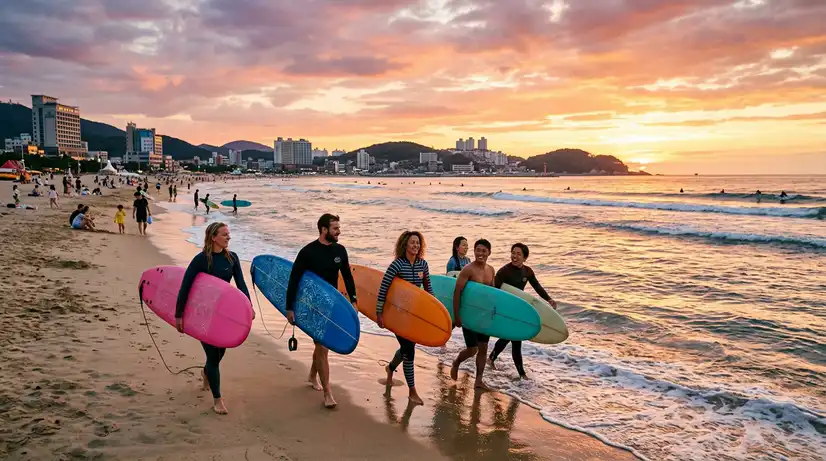
Why Songjeong Beach is the True Mecca of Korean Surfing
You might wonder why, out of all the stunning beaches along the Korean peninsula, Songjeong has earned its reputation as the ultimate surf destination. The answer lies in its unique geography. Unlike the deep, temperamental waters of some eastern beaches, Songjeong features a very gradual slope and relatively shallow waters. This creates a “safety net” for beginners who might be intimidated by deep water. The waves here are consistent and generally break softly, providing the perfect momentum for learners to practice their balance without being hammered by aggressive shore breaks.
Furthermore, Songjeong is a year-round surfing destination. While many people associate surfing with the scorching heat of summer, the local surf community is active even in the winter. The topographical layout of the bay allows it to catch swells from various directions, ensuring that there is almost always something to ride. The infrastructure here is also unparalleled. The beach is lined with dozens of professional surf shops, cafes, and eateries that cater specifically to the “surfer lifestyle,” creating a community vibe that is reminiscent of coastal towns in Southern California or the Australian Gold Coast.
Finding the Right English-Friendly Surf Lessons
One of the biggest hurdles for foreigners in Korea is finding services that offer English instruction. Fortunately, Songjeong has evolved into a global-friendly hub. Several shops specialize in catering to the international community, ensuring that the thrill of surfing isn’t lost in translation.
Two of the most prominent shops known for their English-speaking staff and foreigner-friendly environments are Monkey Surf and Surf Holic. Monkey Surf is often a top recommendation because of its cozy, welcoming atmosphere and instructors who are experienced in teaching international students. They provide a dedicated indoor space for theoretical training, which is a blessing on particularly windy or hot days. On the other hand, Surf Holic is one of the largest operations on the beach, offering a highly structured curriculum and modern facilities. Their sheer size means they have the resources to accommodate large groups and provide a very professional, streamlined experience.
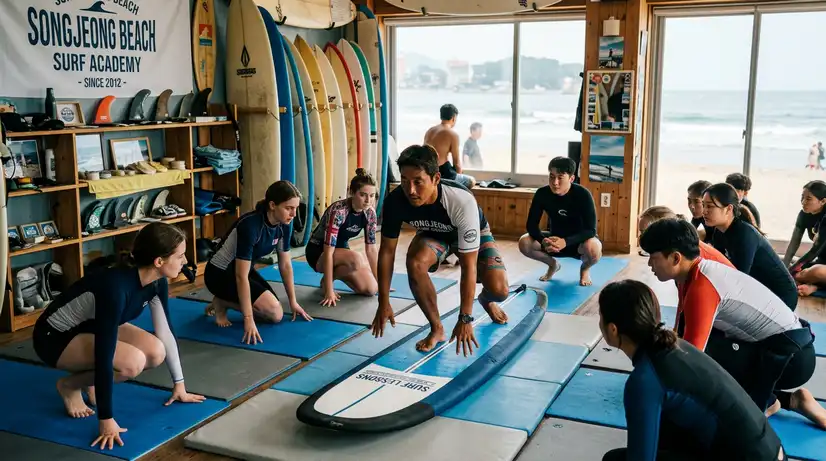
What to Expect from a Beginner Lesson Curriculum
If you have never touched a surfboard before, don’t worry. The lessons in Songjeong are designed to take you from “zero to hero” in about two hours. Most beginner programs follow a standard, proven three-step process.
First, you will start with ground training (approx. 30 minutes). This is where you learn the basics of ocean safety, surfing etiquette (which is crucial to avoid collisions in the water), and the mechanics of the “pop-up” or “take-off.” You will practice lying on the board, paddling, and jumping to your feet on the sand until the muscle memory starts to kick in.
Second is the water session (approx. 60 to 90 minutes). This is the highlight. You will head into the waist-deep water with your instructor. The beauty of a beginner lesson is that you don’t even need to know how to read the waves yet. The instructor will stand behind you, hold your board, and give you a powerful push at the exact moment a wave approaches. This allows you to focus entirely on your balance and standing up.
Finally, most shops include “free surfing” time after the formal lesson. This is your chance to take what you’ve learned and try it on your own. Most shops are quite generous with this, allowing you to keep the board and wetsuit for several hours or even until the shop closes for the day.
Understanding the Costs and What’s Included
Surfing is surprisingly affordable in Songjeong, especially when you consider that it’s an all-inclusive experience. You don’t need to bring any heavy equipment; the shops provide everything.
| Item/Service | Estimated Price (KRW) | Included Features |
|---|---|---|
| One-day Beginner Lesson | ~65,000 KRW | 2-hour lesson, board rental, wetsuit rental, shower access, and free surfing time. |
| Multi-session Pass (3-5 times) | 150,000 – 250,000 KRW | Discounted per-lesson rate for those committed to learning. |
| Board Rental Only | 25,000 – 30,000 KRW | For those who already know how to surf. |
| Wetsuit Rental Only | ~10,000 KRW | High-quality 3mm or 5mm suits depending on the season. |
Most reputable shops like Monkey Surf also offer “Season Passes” for those who plan on visiting frequently. These passes often include unlimited rentals and storage for a fixed period, which is a fantastic deal if you live in the Busan area.
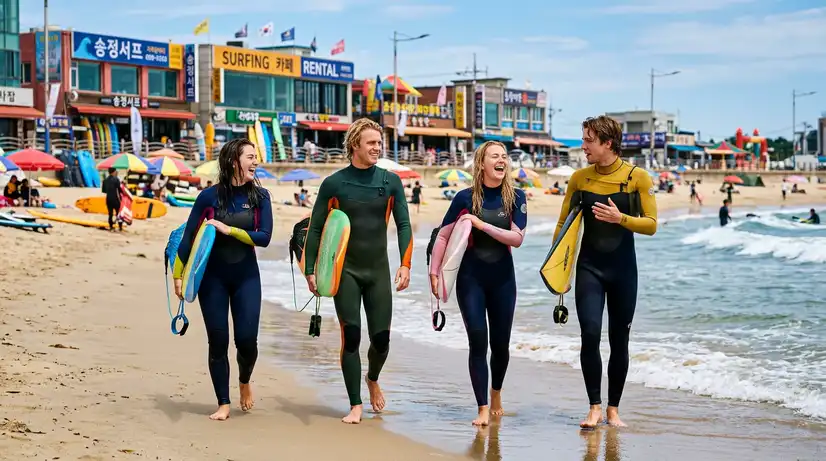
Booking Your Session and Practical Logistics
While the world is becoming more digital, booking a surf lesson in Korea can still have a few quirks. Most surf shops use the “Naver Booking” system, which is excellent but can be difficult to navigate if you don’t have a Korean phone number or struggle with the language.
The best workaround for foreigners is to use social media. Almost every major shop in Songjeong has an active Instagram account. Sending a Direct Message (DM) in English is often the most effective way to secure a spot. You can ask about English-speaking instructors’ availability and confirm the price. Alternatively, their official websites often have KakaoTalk channels or real-time chat functions.
As for what to bring, the shops provide the essentials (suit, board, towel, shampoo, body wash, and hair dryers). You simply need to bring your swimwear (to wear under the wetsuit), flip-flops, a waterproof sunscreen, and any specific skincare items you prefer. A little tip: if you have long hair, bringing your own hair conditioner is recommended, as the salt water can be quite harsh.
Beyond the Waves: The Songjeong Lifestyle
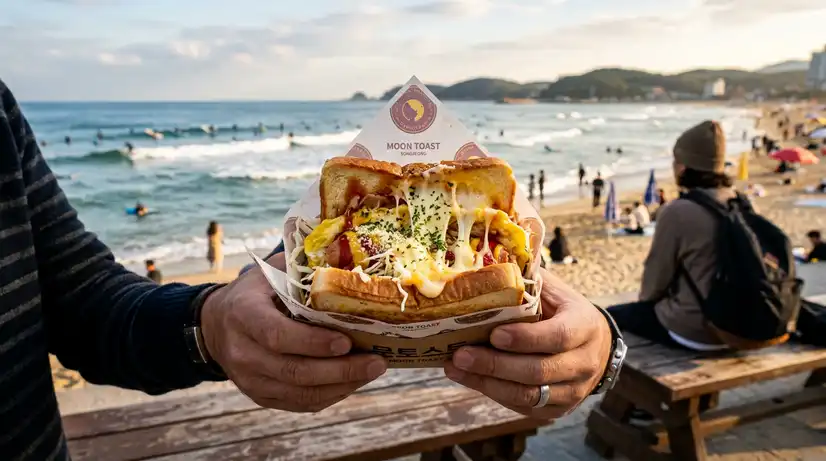
Surfing is only half the fun. The culture surrounding Songjeong Beach is what makes the experience truly memorable. After a grueling two-hour session in the water, you will likely be starving. You cannot visit Songjeong without trying the famous “Moon Toast.” This local staple is a toasted sandwich filled with eggs, sugar, and heaps of gooey cheese—it’s the ultimate post-surf fuel.
If you have some energy left, I highly recommend taking a ride on the Haeundae Blue Line Park beach train or the sky capsule. The station is located right at the edge of Songjeong Beach and offers a scenic route along the coastline back toward Mipo and Cheongsapo. It provides a stunning aerial view of the surfers in the water, giving you a whole new perspective on the waves you just conquered.
Getting to Songjeong is also quite straightforward. It is about a 15-minute taxi ride from the bustling Haeundae area, or about 40 minutes from Busan Station. If you prefer public transport, the Donghae Line (Metro) has a “Songjeong Station” which is just a short walk or a quick bus ride away from the sand.
FAQ
Q: Do I need to be a strong swimmer to take a surfing lesson?
A: While being comfortable in the water is important, you don’t need to be an Olympic swimmer. Beginner lessons are conducted in waist-deep water where you can always touch the bottom.
Q: Is surfing in the winter actually possible in Songjeong?
A: Absolutely! The shops provide thick 5mm wetsuits, boots, and even gloves to keep you warm. Many locals actually prefer winter surfing because the waves can be more consistent.
Q: Can I take photos during the lesson?
A: Most shops have staff members who take photos of the students from the shore during the session. These photos are usually uploaded to a cloud link or sent via KakaoTalk for free or a small fee.
Q: What should I wear under the wetsuit?
A: A simple swimsuit or bikini works best. For men, tight-fitting swim trunks or compression shorts are recommended to prevent chafing.
Q: Are there lockers for my valuables?
A: Yes, almost all surf shops provide lockers for your clothes and small valuables. Large items like suitcases can usually be stored behind the counter.
Q: Is it okay to go surfing alone as a foreigner?
A: Definitely. The surf community in Songjeong is very friendly. You’ll find many other solo travelers and expats there, making it a great place to meet new people.
Q: How far in advance should I book?
A: For weekends, it is best to book at least 3 to 5 days in advance. For weekdays, you can often find spots with just a day’s notice, but booking ahead is always safer.
Q: Do the shops provide towels?
A: Yes, the vast majority of premium shops like Surf Holic and Monkey Surf provide clean towels as part of the lesson or rental package.
Q: Can children take surfing lessons at Songjeong?
A: Yes, many shops offer “Kids’ Lessons.” The shallow water and gentle waves make it one of the safest places in Korea for children to learn.
Q: What happens if the weather is bad?
A: Surfing usually continues in the rain! However, if there is a typhoon warning or lightning, the lessons will be rescheduled or refunded for safety reasons.